
Compact samplers make it easier to capture sounds, build beats, manipulate textures, and perform away from a full-size studio setup. The best option depends on whether you prioritize deep sequencing, fast pad-based triggering, granular experimentation, or all-in-one portability.
We compared 10 compact samplers and related portable music tools across workflow, connectivity, sound shaping, performance features, and practical portability to help you find the right fit.
Best 10 Compact Samplers Picks for 2026
Best Pocket Sampler

- Built-in microphone for quick sample capture
- Chop, step sampling, and resampling tools
- Granular controls plus chromatic playback
Best For: Portable sample capture and creative sound design
Best Portable Workstation
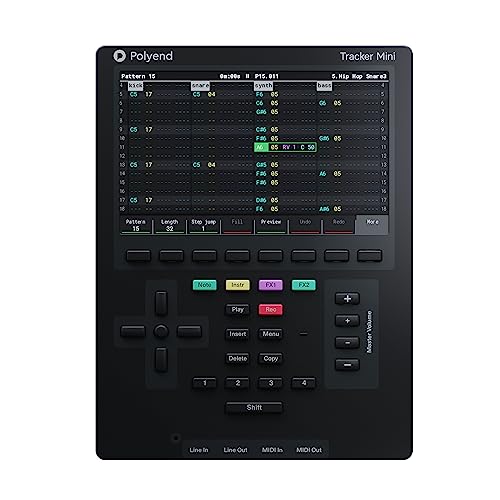
- Standalone portable audio workstation
- 4,000 preloaded samples included
- Wavetable and granular synthesis
Best For: Mobile production and tracker-based sequencing
Best Performance Sampler

- 17 velocity-sensitive RGB performance pads
- 16 GB storage and 32-voice polyphony
- Extensive effects and fast sample editing
Best For: Live beatmaking and effects-heavy performance
Best Budget Pad Sampler

- Eight velocity- and pressure-sensitive pads
- SD card sample playback for 16-bit mono WAVs
- USB and standard MIDI connectivity
Best For: Finger drumming and straightforward sample triggering
Best Micro Synth
Roland AIRA Compact S-1 Tweak Synth

- SH-101-inspired basses and leads
- Onboard sequencing and wave manipulation
- Portable one-pound design
Best For: Hands-on synth exploration and portable electronic music creation
Best Standalone Sampler
Akai MPC Sample Portable Sampler

- Standalone battery-powered sampling
- 16 MPC pads with chopping workflow
- Built-in effects, speaker, and microphone
Best For: Portable beatmaking, DAWless production, and live sampling
Best Compact Beat Machine
Roland AIRA Compact T-8 Beat Machine

- TR-808, TR-909, and TR-606-style drums
- TB-303-inspired bass sounds
- Portable step sequencing and performance effects
Best For: Quick electronic beats, acid jams, and live rhythm performance
Deep-Dive Sound Design

- Four stereo tracks with full processing chains
- Granular, modulation, scenes, and macro controls
- Built for textures, loops, and live performance
Best For: Sound designers and live performers
Portable Rhythm Practice

- 16 velocity-sensitive pads for finger drumming
- 126 patterns plus 14 user preset slots
- Battery operation with speaker and headphone output
Best For: Portable rhythm practice and accompaniment
Ableton Clip Control

- 64 RGB pads for Ableton clip launching
- Nine assignable faders for mix and device control
- USB-powered with Drum and Note modes
Best For: Ableton Live performance and looping
Best Pocket Sampler – Roland AIRA Compact P-6
The Roland AIRA Compact P-6 is a strong choice for musicians who want compact samplers with serious sound-design flexibility. Its built-in microphone, onboard keyboard, chopping tools, step sampling, resampling, and granular controls support both quick sketches and detailed sample manipulation.
Best For: Portable sample capture, granular sound design, and hands-on beat and loop creation.
Pros:
- Built-in microphone enables quick sampling without extra equipment.
- Chop, step sampling, resampling, and chromatic polyphonic playback provide a versatile workflow.
- Dedicated filters and envelopes offer per-sample sound shaping.
- Works with P-6 Sample Tool software for sample editing and transfer.
Cons:
- Its compact controls may be less comfortable for extended, highly detailed editing.
- Advanced granular features may require time to learn.
The P-6 stands out among compact samplers for combining immediate sampling with unusually deep granular sound design. It is especially appealing when portability and creative experimentation matter more than a large workstation-style interface.
Best Portable Workstation – Polyend Tracker Mini
The Polyend Tracker Mini is a portable standalone audio workstation for producers who want compact samplers with a broader sequencing and synthesis focus. It includes 4,000 preloaded samples, wavetable synthesis, granular synthesis, and a microSD-to-USB-A adapter for a self-contained workflow.
Best For: Mobile production, tracker-based sequencing, and producers who want built-in sample and synthesis resources.
Pros:
- Standalone design supports portable music production.
- Includes 4,000 preloaded samples.
- Offers both wavetable and granular synthesis.
- Includes a microSD-to-USB-A adapter and USB-A power adapter.
Cons:
- Its tracker-style workflow may take time to learn.
- The supplied notes do not specify detailed storage, battery, or audio-output capabilities.
The Tracker Mini is more than a basic sample trigger: it is aimed at users who want sequencing, synthesis, and sample content in one portable unit. Choose it when standalone production depth is more important than the simplest pad-based operation.
Best Performance Sampler – Roland SP-404MKII
The Roland SP-404MKII is a performance-focused option for shoppers comparing compact samplers for beatmaking, live triggering, and rapid sample editing. It combines 17 velocity-sensitive RGB pads, a vivid OLED display, 16 GB of internal storage, extensive effects, and flexible USB-C, battery, and AC power options.
Best For: Performance beatmaking, live effects, fast sample editing, and portable production.
Pros:
- 17 velocity-sensitive RGB pads support expressive performance.
- OLED waveform editing, auto-chop, BPM detection, pitch shifting, and resampling streamline sample work.
- Includes 32-voice polyphony, 160 samples per project, and 16 internal projects.
- Offers extensive effects, including Vinyl Simulator, DJFX Looper, lo-fi, cassette, vocoder, and amp simulation.
Cons:
- At 2.6 pounds in the product description, it is less pocketable than ultra-small samplers.
- The broad feature set may feel overwhelming to beginners.
- Its supplied dimensions and listed weight differ, so buyers should confirm final specifications.
The SP-404MKII is a compelling all-rounder when hands-on performance and effects are central to the buying decision. Its storage, pad layout, editing tools, and power flexibility make it well suited to both studio sessions and mobile beatmaking.
Best Budget Pad Sampler – Akai Professional MPX8
The Akai Professional MPX8 is a straightforward choice for shoppers seeking compact samplers centered on pad triggering and MIDI control. It uses eight backlit velocity- and pressure-sensitive pads, loads 16-bit mono WAV files from SD or SDHC cards, and connects to computers and external MIDI gear through USB and standard MIDI.
Best For: Finger drumming, simple sample triggering, and controlling software or external MIDI equipment.
Pros:
- Eight velocity- and pressure-sensitive backlit pads support expressive triggering.
- Loads samples from SD or SDHC cards up to 32 GB.
- USB MIDI and standard MIDI inputs and outputs support software and hardware control.
- Includes sample kit editing with tuning and reverb controls.
Cons:
- Internal playback is limited to 16-bit mono WAV samples at supported sample rates.
- Each sample assignment has a 30 MB maximum.
- It lacks the deeper sequencing, synthesis, and effects features found on larger samplers.
The MPX8 is best viewed as a compact sample pad and MIDI controller rather than a complete production workstation. Its low-weight design, SD-card workflow, and conventional MIDI connections make it practical for basic live triggering and finger drumming.
Best Micro Synth – Roland AIRA Compact S-1 Tweak Synth
Roland AIRA Compact S-1 Tweak Synth | Ultra-Portable Micro Polysynth. Advanced Tools
Check Price On AmazonThe Roland S-1 Tweak Synth is a strong choice for musicians seeking compact samplers and similarly portable sound-design tools, though it is primarily a micro polysynth rather than a traditional sampler. Its SH-101-inspired character, hands-on controls, sequencing, and wave manipulation features make it useful for creating basses, leads, and experimental electronic textures.
Best For: Beginners and experienced synth players who want portable sequencing, expressive leads, snappy basses, and hands-on sound exploration.
Pros:
- Compact one-pound design for portable music making
- SH-101-inspired bass and lead sounds
- Onboard sequencing and futuristic wave-manipulation features
- Intuitive controls suitable for beginners and serious synth users
Cons:
- It is a synthesizer, not a dedicated sample-recording workstation
- Its compact controls may not suit users seeking a larger performance interface
The S-1 stands out when portability and immediate synth performance matter more than traditional sample chopping. Choose it for melodic creation and sound design rather than sample-focused production.
Best Standalone Sampler – Akai MPC Sample Portable Sampler
The Akai Professional MPC Sample is the most directly focused option here for compact samplers, combining standalone sampling, sequencing, effects, and beatmaking in a portable unit. Its battery, speaker, microphone, pads, display, and microSD storage support music creation without a computer or DAW.
Best For: Beatmakers, finger drummers, DAWless producers, live performers, and beginners who want a portable MPC-style sampling workflow.
Pros:
- Standalone operation with rechargeable battery, speaker, and microphone
- 16 responsive MPC pads and a 2.4-inch full-color display
- Sample chopping, timestretching, repitching, resampling, and onboard effects
- USB-C audio/MIDI, MIDI and sync connections, and microSD storage
Cons:
- MIDI DIN connection requires an adapter, which is not included
- Its broad feature set may take time to learn
For actual sample-based production in a compact format, the MPC Sample is the most complete choice in this group. It offers a practical path from recording and chopping sounds to arranging finished grooves, with enough connectivity for studio or live setups.
Best Compact Beat Machine – Roland AIRA Compact T-8 Beat Machine
The Roland AIRA Compact T-8 is a portable rhythm and bass machine for shoppers comparing compact samplers and other small music-making devices. Rather than recording samples, it focuses on TR-style drum sounds, TB-303 bass, step sequencing, and performance effects for quickly building beats and acid-inspired patterns.
Best For: Beginners, electronic producers, and live performers who want portable drum programming, bass sequencing, and hands-on pattern manipulation.
Pros:
- Authentic Roland TR-808, TR-909, and TR-606-inspired drum sounds
- Built-in TB-303-style bass capabilities
- 16-step sequencing with probability, sub-step, velocity, and last-step controls
- USB-C audio/MIDI plus audio, MIDI, and sync connectivity
Cons:
- Not a dedicated sample-recording or sample-chopping device
- Its focus on drums and bass is narrower than an all-purpose sampler
The T-8 is a better fit for rhythm-first creators than for anyone needing sample manipulation. Its compact format, classic Roland-inspired sounds, and performance controls make it especially appealing for quick jams and live electronic sets.
Deep-Dive Sound Design – S4 Sculpting Sampler
The S4 is a powerful option for musicians seeking compact samplers for detailed sound manipulation, live performance, and experimental texture creation. Its four stereo tracks combine sampling, granular processing, modulation, scenes, macros, and spatial effects in one portable unit.
Best For: Sound designers, live performers, and producers who want hands-on granular sampling and extensive modulation in a compact format.
Pros:
- Four parallel stereo tracks with five processing devices per track.
- Supports real-time recording, overdubbing, sound-on-sound loops, and varispeed recording.
- Granular engine offers control over up to 128 grains, pitch, movement, and distribution.
- Scenes, macros, modulators, and a master mixer support performance-focused workflows.
Cons:
- Its extensive feature set may require more learning than a simple rhythm unit.
- Plastic construction may not feel as substantial as a metal-bodied device.
The S4 stands out when flexibility and sound shaping matter more than simplicity. It is a particularly capable choice for evolving textures, layered loops, and expressive live manipulation.
Portable Rhythm Practice – Korg KR-11 Compact Rhythm Box
The Korg KR-11 is one of the most straightforward compact samplers and rhythm tools for practice and casual play. It offers velocity-sensitive pads, genre-based patterns, a metronome, built-in speaker, and battery operation in a small body.
Best For: Drummers, songwriters, and musicians who want portable rhythm accompaniment and finger-drumming practice.
Pros:
- Sixteen velocity-sensitive pads support nuanced finger drumming.
- Includes 126 patterns across styles such as Blues/R&B, Country, and Island.
- Battery-powered design, built-in speaker, headphone/line output, and optional AC adapter support flexible use.
- Built-in metronome and optional pedal control add useful practice and performance features.
Cons:
- It is primarily a rhythm box rather than a deep sample-editing workstation.
- Its 14 user preset slots may feel limited for users who save many custom patterns.
The KR-11 prioritizes immediacy over complex sound design. Choose it if you want quick access to varied rhythms, portable practice, and simple pattern customization.
Ableton Clip Control – Akai APC Mini MK2
The Akai APC Mini MK2 is a compact controller for computer-based sampling, looping, and live arrangement rather than a standalone sampler. Its 64 RGB pads and nine faders provide direct Ableton Live control for launching clips, managing mixes, and triggering drum or melodic material.
Best For: Ableton Live users who want a portable USB controller for clip launching, live looping, and hands-on mixing.
Pros:
- Eight-by-eight RGB pad matrix provides visual feedback for clip launching.
- Nine assignable faders offer control over mixer channels, devices, or Ableton macros.
- Drum and Note modes support Drum Rack control and visually guided melodic playing.
- USB-powered plug-and-play operation avoids batteries and power adapters.
Cons:
- It requires a computer and is designed specifically around Ableton Live.
- It does not independently record or process samples without compatible software.
The APC Mini MK2 is a strong fit when your compact sampler setup is centered on Ableton Live. It delivers immediate clip and mix control, but it is less suitable for standalone sampling away from a computer.
How We Picked the Best Compact Samplers
We evaluated each device for the features that matter most in a portable sampling or beatmaking setup: sampling and playback capabilities, sequencing workflow, hands-on controls, sound-shaping tools, connectivity, portability, and suitability for live performance. We also considered whether each product serves a distinct use case rather than treating every pad controller, rhythm box, sampler, and compact workstation as interchangeable.
The selection includes dedicated samplers, grooveboxes, sample controllers, rhythm-focused devices, and compact instruments that can complement a sampling rig. This gives you options ranging from quick, tactile triggering to deeper standalone production.
Quick Comparison
- Best for deep standalone production: Polyend Tracker Mini and Akai Professional MPC Sample.
- Best for effects and live resampling: Roland SP-404MKII.
- Best for compact creative sampling: Roland AIRA Compact P-6.
- Best for simple pad triggering: Akai Professional MPX8.
- Best for rhythm-focused setups: Korg KR-11 and Roland AIRA Compact T-8.
- Best for portable control: Akai Professional APC Mini MK2.
Key Buying Factors for Compact Samplers
Sampling Workflow
Check how sounds are captured, trimmed, assigned, and recalled. Some devices are designed for immediate one-shot triggering, while others support more involved chopping, looping, resampling, and arrangement.
Sequencing and Standalone Operation
If you want to create without a computer, prioritize internal sequencing, onboard storage, battery operation, and a clear way to arrange complete patterns or songs. Controller-style products may require a computer or another hardware device.
Sound Shaping and Performance Controls
Look for filters, envelopes, effects, modulation, granular processing, velocity-sensitive pads, and real-time parameter controls if expressive performance is important. Effects-heavy models can be especially useful for live transitions and resampling.
Connectivity and Portability
Review USB, MIDI, audio inputs and outputs, memory options, and power requirements. A smaller device is not automatically more portable if it needs several adapters or external equipment to function.
Who Should Buy Which Compact Samplers?
Choose the Roland AIRA Compact P-6 if you want a small, dedicated creative sampler with an emphasis on portable beatmaking. The Polyend Tracker Mini is better suited to users who enjoy detailed sequencing and tracker-style composition, while the Roland SP-404MKII is a strong choice for hands-on effects, resampling, and performance-oriented workflows.
For straightforward sample triggering, the Akai MPX8 is a practical choice. Buyers building a compact electronic setup may prefer the Roland T-8 or Korg KR-11 for rhythm duties, while the Roland S-1 adds synthesis rather than serving as a traditional sampler. The Akai MPC Sample is worth considering for a broader standalone production workflow.
Finally, choose the Akai APC Mini MK2 when software control is your priority, and consider the S4 sculpting sampler if granular processing, stereo sampling, modulation, and live sound manipulation are central to your work. Before buying, confirm the device’s storage, input requirements, and computer dependence match your intended setup.