
When you need to move or clone huge photo libraries, video archives, backups, or workstation drives, speed and reliability matter. The best hard drive duplicators for large files cut downtime by copying drive-to-drive without tying up your PC.
Below, we focus on practical options for offline cloning, multi-bay capacity, and everyday compatibility so you can choose a dock that fits your workflow and drive sizes.
Best 10 Hard Drive Duplicators for Large Files Picks for 2026
4-Bay Standalone Cloner
StarTech 4-Bay HDD/SSD Duplicator & Eraser

- 4-bay standalone cloning and erasing
- Supports 2.5/3.5-inch SATA plus IDE adapters
- Quick Erase and Secure Erase modes
Best For: IT pros needing cloning, docking, and drive sanitizing in one unit
High-Speed Dual Bay Dock
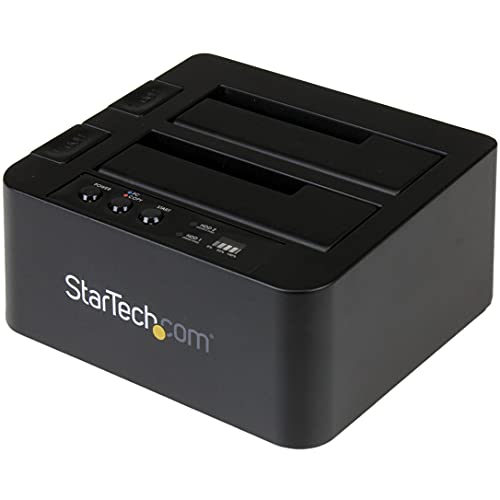
- Standalone sector-by-sector cloning
- Up to 28 GB/min duplication speed
- Works as a USB-to-SATA dock too
Best For: Fast cloning of large SATA drives without using a computer
Budget Dual-Bay Cloner
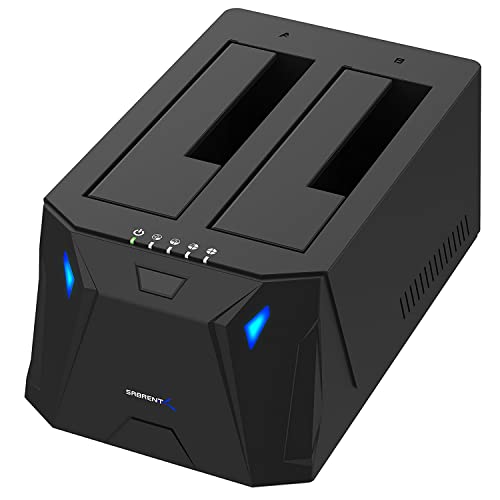
- Offline cloning with plug-and-play use
- Supports 2.5/3.5-inch SATA HDDs and SSDs
- USB 3.0 transfer speeds up to 5Gbps
Best For: Affordable offline cloning and everyday SATA dock access
5-Bay Capacity Expander
MAIWO 5-Bay HDD Dock with Offline Clone

- Offline cloning without a computer
- Supports up to five SATA HDDs or SSDs
- Up to 110TB capacity expansion
Best For: Large-storage users who need cloning plus multi-drive expansion
Offline Cloner Dock
SABRENT Dual-Bay USB-C Hard Drive Docking Station

- Offline cloning without a computer
- Dual bays for USB-mounted file access
- Tool-free support for 2.5in and 3.5in SATA drives
Best For: People who want a simple SATA duplicator and everyday dual-drive dock
High-Capacity RGB Duplicator
Dual Bay SATA Hard Drive Cloner Dock

- Offline one-key cloning with LED progress
- Up to 40TB total capacity across two bays
- 5Gbps USB 3.2 Gen 1 support
Best For: Buyers who want a large-capacity SATA cloner with quick status visibility
Compact Offline Clone Dock
ORICO Dual Bay Hard Drive Docking Station

- Offline clone support without a PC
- Up to 44TB total capacity
- UASP/TRIM and 5Gbps transfer support
Best For: People who want a versatile SATA dock for cloning and file transfer
Dual-Bay USB 3.0 Dock with Offline Clone
WAVLINK SATA HDD Docking Station

- Dual-bay dock for 2.5/3.5-inch SATA drives
- UASP USB 3.0 speeds up to 6Gbps
- Offline cloning without a PC
Best For: Simple SATA duplicator for backups and large-file transfers
Triple-Bay NVMe/SATA Cloner

- Works with NVMe SSDs and SATA HDD/SSD drives
- Three bays with one-touch offline cloning
- USB 3.2 Gen 2 up to 10Gbps
Best For: Mixed-drive users who need a versatile, fast standalone cloner
Dual-Bay Duplicator with USB Hub
MAIWO SATA HDD Docking Station

- Dual-bay clone dock for SATA HDDs and SSDs
- Three USB 3.0 hub ports built in
- Offline cloning with 5Gbps USB 3.0 support
Best For: Users who want a SATA duplicator plus extra USB hub ports
4-Bay Standalone Cloner – StarTech 4-Bay HDD/SSD Duplicator & Eraser
If you need hard drive duplicators for large files that can also wipe disks between jobs, this 4-bay StarTech dock is built for standalone cloning, erasing, and drive access. It handles 2.5/3.5-inch SATA drives and includes IDE adapters, making it a flexible pick for IT workflows that involve mixed drive types and repeated backup or transfer tasks.
Best For: IT pros and technicians who need a standalone 4-bay duplicator plus secure erase support.
Pros:
- Standalone sector-by-sector cloning with no computer required
- Supports up to 4 bays and works with 2.5/3.5-inch SATA drives
- Quick Erase and Secure Erase modes for sanitizing drives
- Also works as a dock for file transfer, backup, and recovery
Cons:
- Target drive must be equal to or larger than the source
- Cloning speed tops out at 4.2 GB/min, which is slower than some dual-bay units
This is a practical all-in-one choice if you want cloning, wiping, and docking in a single standalone unit. Its main advantage is flexibility, especially when drive sanitizing is part of the job.
High-Speed Dual Bay Dock – StarTech SATA Duplicator Dock
For hard drive duplicators for large files where speed matters, this dual-bay StarTech dock stands out with sector-by-sector cloning and a high-rated duplication rate. It supports 2.5/3.5-inch SATA HDDs and SSDs, works without a computer, and can also serve as a USB-to-SATA dock for everyday drive access.
Best For: Users who want a fast standalone cloner for SATA drives and large data copies.
Pros:
- Standalone cloning with no PC required
- Up to 28 GB/min duplication speed
- Supports 2.5/3.5-inch SATA drives and SSDs of any capacity
- Can also be used as a USB-to-SATA dock
Cons:
- Only supports two drives at a time
- Target disk must be equal to or larger than the source
This model is a strong fit if you prioritize speed and simplicity over bay count. It’s especially useful when your workflow is mostly cloning, mounting, and recovering SATA drives.
Budget Dual-Bay Cloner – SABRENT USB 3.0 Dual Bay Dock
If you want hard drive duplicators for large files without overcomplicating the setup, this SABRENT dual-bay dock covers the basics well. It supports standard 2.5/3.5-inch SATA drives and SSDs, offers offline cloning, and doubles as a simple plug-and-play dock for general transfers.
Best For: Budget-minded buyers who want a straightforward offline cloner and drive dock.
Pros:
- Supports offline cloning with no drivers needed
- Works with standard 2.5/3.5-inch SATA HDDs and SSDs
- Supports drives up to 10TB
- USB 3.0 transfer speeds up to 5Gbps
Cons:
- Cloning speed is listed at up to 60Mbps, which is modest
- Only supports two drives at once
This is a practical pick if you mainly need offline cloning and occasional dock use. It keeps the feature set simple, which can be an advantage for basic home or office workflows.
5-Bay Capacity Expander – MAIWO 5-Bay HDD Dock with Offline Clone
Among hard drive duplicators for large files, this MAIWO 5-bay dock is geared toward users who want both cloning and storage expansion in one device. It supports offline cloning from a source drive to a target drive without a computer, and its 5Gbps USB connection with UASP is suited to moving large data sets efficiently.
Best For: Users who want a 5-bay dock for offline cloning and high-capacity storage expansion.
Pros:
- Offline cloning works without a computer
- Supports up to five 2.5/3.5-inch SATA HDDs or SSDs
- Up to 110TB capacity expansion listed
- Digital cloning progress display with completion beep
Cons:
- Designed for SATA drives only
- Capacity expansion depends on using multiple large drives
This dock makes sense when cloning is only part of the job and you also need lots of connected storage. The open, tool-free design and progress display make it easy to use in busy environments.
Offline Cloner Dock – SABRENT Dual-Bay USB-C Hard Drive Docking Station
If you want hard drive duplicators for large files that can also work as a desktop dock, this SABRENT unit is a practical pick. It can clone one SATA drive to another without a computer, while also mounting both drives over USB-C for regular file access and transfer.
Best For: Users who want a simple offline cloner and a dual-bay dock for 2.5-inch or 3.5-inch SATA drives.
Pros:
- Offline one-to-one cloning works without a PC, up to 60MBps.
- Dual bays mount as separate drives over USB for file movement and multitasking.
- Hot-swappable, tool-free design with SATA HDD and SSD support.
- USB-C cable is included for plug-and-play use on Windows and Mac.
Cons:
- Clone targets must be the same size as the source or larger.
- Does not support IDE/PATA, M.2, NVMe, or 4-pin Molex drives.
- Offline cloning speed is intentionally limited by design.
This is a straightforward choice if your priority is dependable SATA duplication plus everyday dock convenience. It is especially useful when you need to move large files between two drives without opening a PC.
High-Capacity RGB Duplicator – Dual Bay SATA Hard Drive Cloner Dock
For hard drive duplicators for large files, this dual-bay SATA dock focuses on speed, capacity, and standalone cloning. It supports 5Gbps USB transfers for regular use and includes one-key offline cloning with a progress LED bar for quick at-a-glance status.
Best For: Users who want a high-capacity clone dock with convenient visual status indicators.
Pros:
- Supports offline one-key cloning without connecting to a computer.
- 5Gbps USB 3.2 Gen 1 transfer support for file access and backups.
- Each bay supports up to 20TB, for 40TB total capacity.
- Tool-free vertical insertion and broad OS/device compatibility.
Cons:
- Target disk must be larger than the source disk for cloning.
- It only supports SATA 2.5-inch and 3.5-inch drives.
- RGB styling may be unnecessary if you want a plain utility dock.
This model makes sense if you care about large storage pools and want cloning status you can see quickly. It is aimed at users who need a capable dock for backups, media libraries, and simple drive duplication.
Compact Offline Clone Dock – ORICO Dual Bay Hard Drive Docking Station
This ORICO model is a compact option among hard drive duplicators for large files, especially if you want offline cloning plus everyday dock use. It supports 2.5-inch and 3.5-inch SATA HDDs and SSDs, and it includes USB-A cables and a universal power adapter for broad setup compatibility.
Best For: Users who want a simple, broad-compatibility SATA dock with offline clone support.
Pros:
- Offline clone function works without a computer.
- Supports up to 44TB total capacity across two bays.
- UASP and TRIM support with transfer speeds up to 5Gbps.
- Works with PCs, laptops, smart TVs, routers, PS4, and multiple OS platforms.
Cons:
- Target disk must be larger than the source disk for cloning.
- The dock will not power on if no hard drive is inserted.
- USB-A connection may be less convenient for some modern setups.
This is a solid pick if you want an accessible, tool-free dock that can handle cloning and file transfers across several devices. Its strength is practical versatility rather than specialized speed or premium extras.
Dual-Bay USB 3.0 Dock with Offline Clone – WAVLINK SATA HDD Docking Station
If you want hard drive duplicators for large files that can also double as a daily dock, this WAVLINK model gives you a straightforward way to move data between 2.5-inch and 3.5-inch SATA HDDs and SSDs. It supports offline cloning, UASP for faster transfers over USB 3.0, and tool-free setup, making it a practical fit for simple backups and disk-to-disk copying.
Best For: Users who need a basic dual-bay SATA duplicator for large-file backups and straightforward offline cloning.
Pros:
- Supports 2.5-inch and 3.5-inch SATA HDD/SSD drives
- UASP support for up to 6Gbps transfer speeds over USB 3.0
- Offline cloning works without connecting to a computer
- Tool-free installation with hot-swapping support
Cons:
- Offline clone speed is limited to 60Mbps
- Not compatible with M1/M2-based Mac systems
- Offline cloning requires the target drive to be equal or larger than the source
This is a solid no-frills choice if your priority is easy SATA drive duplication rather than advanced multi-drive workflows. It balances simple operation with useful everyday dock features, especially for users who need occasional large-file transfers and backups.
Triple-Bay NVMe/SATA Cloner – ICY BOX USB-C 10Gbps Dock
For hard drive duplicators for large files where flexibility matters, this ICY BOX triple-bay unit stands out by supporting M.2 NVMe SSDs as well as 2.5-inch and 3.5-inch SATA SSDs and HDDs. It offers one-touch offline cloning, 10Gbps USB 3.2 Gen 2 connectivity, and tool-free drive access, so it suits mixed-drive setups and faster transfer needs.
Best For: Users who want a versatile cloner for NVMe and SATA drives in one compact dock.
Pros:
- Supports cloning between NVMe and SATA drive types
- Three independent bays for multi-drive access
- USB 3.2 Gen 2 connection with up to 10Gbps speeds
- Tool-free design and one-touch offline cloning
Cons:
- Designed around a smaller 2.5-inch hard disk form factor listing
- Plastic enclosure instead of metal
- May be more than needed if you only clone standard SATA drives
This is a strong pick when your file-moving workflow includes different drive formats and you want a standalone cloner that avoids software setup. It is especially useful for users who value speed, versatility, and a three-slot design in one device.
Dual-Bay Duplicator with USB Hub – MAIWO SATA HDD Docking Station
If you’re comparing hard drive duplicators for large files, this MAIWO dual-bay dock focuses on easy offline cloning and practical USB expansion. It supports 2.5-inch and 3.5-inch SATA HDDs and SSDs, offers USB 3.0 transfer speeds, and adds three USB-A hub ports, which makes it useful when you want duplication and extra connectivity in one unit.
Best For: People who need a simple dual-bay SATA cloner with extra USB hub ports.
Pros:
- Supports 2.5-inch and 3.5-inch SATA HDD/SSD drives
- Offline cloning works without a computer
- USB 3.0 interface delivers up to 5Gbps bandwidth
- Includes 3 USB 3.0 hub ports, including one for 2.4A charging
Cons:
- Only supports two drives at a time
- Offline cloning speed details are not specified beyond the progress LEDs
- Plastic enclosure may feel less rugged than metal docks
This model makes sense if your workflow is centered on SATA drives and you also want a small hub for flash drives or charging. It is a practical all-in-one option for backups, file transfers, and basic duplication without extra setup.
How We Picked These Hard Drive Duplicators for Large Files
We looked for docks and cloners that make sense for large transfers: stable offline cloning, solid SATA compatibility, support for 2.5-inch and 3.5-inch drives, and enough throughput to avoid slow bottlenecks. We also favored models with clear status indicators, multi-bay flexibility, and features that help with frequent backup or duplication tasks.
Quick Comparison
If you need the fastest simple clone workflow, standalone duplicators are usually the easiest choice. If you want one device that also works as a desktop dock for daily access, a USB-C or USB 3.0 dual-bay station is often more versatile. For heavier workflows with multiple source copies, higher-bay units offer better batch efficiency and fewer swaps.
Key Buying Factors for Hard Drive Duplicators for Large Files
Clone Speed and Interface
Look at the rated cloning speed and the host connection standard. USB 3.0, USB-C, and eSATA can all be useful, but offline duplication is what matters most when moving very large files between drives. Faster interfaces help when the dock is also used for active file access.
Drive Compatibility and Capacity
Make sure the unit supports the drive types you already own, including 2.5-inch and 3.5-inch SATA HDDs and SSDs. If your library is growing, check maximum supported capacity so the dock will still work as your storage needs increase.
Bay Count and Workflow
Dual-bay units are ideal for routine backups and one-to-one cloning. Multi-bay options are better if you regularly duplicate several drives or want a more efficient setup for large-file media workflows.
Ease of Use and Data Safety
Simple offline clone buttons, clear progress lights, and a sturdy dock design reduce mistakes. If you handle important archives, choose a duplicator that supports erasing or cloning without needing extra software, since that keeps the process faster and more controlled.
Who Should Buy Which Hard Drive Duplicators for Large Files?
Choose a dual-bay dock if you mainly back up one drive at a time and want a compact desktop tool. Go with a 4- or 5-bay model if you manage large project libraries, maintain multiple backup copies, or need better batch efficiency. If you want a single device that doubles as a working dock and a cloning station, prioritize USB-C or high-speed USB 3.0 models with broad SATA support.
For most buyers, the best Hard Drive Duplicators for Large Files are the ones that balance cloning speed, drive compatibility, and simple offline operation. Pick the least complicated model that still matches your capacity and workflow needs.