
Need more storage, better data protection, or a faster way to manage multiple drives? The best RAID enclosures for PC can turn bare SATA drives into a practical desktop storage solution.
Below, we focus on reliable options for backups, media libraries, and performance-focused work, with choices that fit different drive counts, budgets, and workflow needs.
Best 10 Raid Enclosures for PC Picks for 2026
Editor’s Pick
TERRAMASTER D2-320 2-Bay USB RAID

- RAID 0, 1, JBOD, and Single support
- USB 3.2 Gen 2 up to 10Gbps
- Tool-free trays with temperature-controlled fan
Best For: PC users who want a compact 2-bay DAS for fast mirrored or striped storage
Compact SSD Choice
Vantec Nexstar GX Dual 2.5" RAID

- Individual, RAID 0, and RAID 1 support
- Auto RAID 1 rebuild with UASP support
- Compact aluminum enclosure for 2.5-inch drives
Best For: Users who want a small dual-drive RAID enclosure for SSDs or 2.5-inch HDDs
Backup Expansion Pick
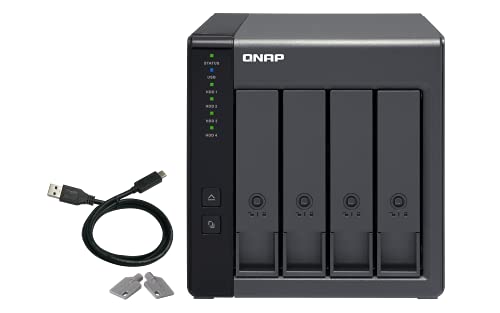
- RAID 0, 1, 5, JBOD, and individual disks
- USB Type-C DAS for Windows, macOS, and Linux
- Lockable bays for secure 4-drive storage
Best For: Users who need a 4-bay hardware RAID enclosure for backups or expansion
High-Capacity Pro Pick
ORICO 4-Bay 20Gbps RAID Enclosure

- RAID 0, 1, 5, 10, JBOD, and Normal modes
- USB 3.2 Gen 2x2 with 20Gbps support
- Up to 104TB total capacity with active cooling
Best For: Power users handling large media libraries, video projects, or pro data workflows
Flexible 4-Bay RAID Expansion
MAIWO 4-Bay 3.5" SATA RAID Enclosure

- 8 RAID modes including RAID 0, 5, 1/10, and JBOD
- Supports up to 96TB across four 3.5" SATA drives
- Dual cooling fans help manage heat during heavier use
Best For: Users who want a versatile 4-bay RAID DAS for 3.5-inch SATA drives
Aluminum Backup-Focused RAID Enclosure
ORICO 4-Bay RAID Hard Drive Enclosure

- 8 RAID modes with RAID 0, 1, 5, 10, JBOD, and clone
- Supports up to 88TB and 22TB single 3.5" drives
- 150W PSU plus aluminum case and 80mm fan for cooling
Best For: Users looking for a sturdy 4-bay RAID enclosure for large PC backups
Larger 5-Bay Hot-Swap RAID Option
Syba 5-Bay USB 3.0 RAID Enclosure

- 5-bay design supports both 2.5" and 3.5" SATA drives
- Tray-less hot swap makes drive changes fast and tool-free
- RAID 0, 1, 3, 5, 10, span, and JBOD are supported
Best For: Users who need a larger hot-swappable RAID enclosure for mixed SATA drives
5-Bay Flexible RAID Storage
Yottamaster 5 Bay USB C RAID Enclosure

- 5-bay DAS with RAID 0/1/3/5/10/JBOD/CLONE.
- Supports up to 110TB across 2.5-inch and 3.5-inch SATA drives.
- Aluminum body with 80mm auto-speed cooling fan.
Best For: PC users needing flexible multi-drive RAID storage with USB-C
Compact Dual-Bay Backup RAID

- Dual-bay enclosure with RAID 0, 1, JBOD, and Normal modes.
- Supports up to 48TB total capacity for 3.5-inch SATA drives.
- USB 3.1 Gen2, UASP, and adjustable cooling fan included.
Best For: PC users wanting a simple 2-drive RAID backup enclosure
High-Capacity Studio RAID Station
ORICO 5 Bay External RAID Enclosure

- 5-bay hardware RAID enclosure with many RAID and clone modes.
- Supports up to 110TB across 2.5-inch and 3.5-inch SATA drives.
- Built-in 150W power supply and 80mm cooling fan.
Best For: Large PC backup and media workflows needing a tidy 5-bay RAID station
Editor’s Pick – TERRAMASTER D2-320 2-Bay USB RAID
If you want one of the more flexible raid enclosures for pc, the TERRAMASTER D2-320 is built for fast direct-attached storage rather than NAS use. It supports RAID 0, RAID 1, JBOD, and Single, with USB 3.2 Gen 2 speeds up to 10Gbps and tool-free tray access for quick drive swaps.
Best For: PC users who want a compact 2-bay DAS for fast RAID 0 or mirrored RAID 1 storage.
Pros:
- Supports RAID 0, RAID 1, JBOD, and Single modes
- USB 3.2 Gen 2 connection rated up to 10Gbps
- Tool-free trays with push-lock drive retention
- Intelligent temperature-controlled fan for quieter cooling
Cons:
- Diskless, so you need to supply your own drives
- Only a 2-bay design, so expansion is limited
- Positioned as DAS, not a network NAS
The D2-320 is a practical pick if you want a straightforward hardware RAID enclosure with strong speed potential and easy drive handling. Its mix of RAID options and support for both HDDs and SSDs makes it a versatile desktop storage upgrade.
Compact SSD Choice – Vantec Nexstar GX Dual 2.5" RAID
Vantec Nexstar GX USB 3.0 Dual 2.5" SATA SSD/HDD RAID Enclosure, Black (NST-272S3-BK)
Check Price On AmazonThe Vantec Nexstar GX is a compact option among raid enclosures for pc if your focus is dual 2.5-inch SSDs or laptop drives. It supports Individual, RAID 0, and RAID 1 modes, includes auto RAID 1 rebuild, and uses USB 3.0 with UASP support for better everyday performance.
Best For: Users who want a small dual-drive RAID enclosure for SSDs or 2.5-inch HDDs.
Pros:
- Supports Individual, RAID 0, and RAID 1 modes
- Auto RAID 1 rebuild for mirrored data protection
- USB 3.0 with UASP support
- Aluminum housing with front vents for heat dissipation
Cons:
- Limited to two 2.5-inch drives
- USB 3.0 is slower than newer 10Gbps or 20Gbps models
- Requires an AC adapter and extra power through Micro-B
This enclosure makes sense when you want a small, simple dual-bay setup rather than a high-capacity desktop unit. Its strongest appeal is mirroring or stripping two SSDs in a very compact chassis.
Backup Expansion Pick – QNAP TR-004 4-Bay USB-C DAS
QNAP TR-004 4 Bay USB Type-C Direct Attached Storage (DAS) with hardware RAID (Diskless)
Check Price On AmazonThe QNAP TR-004 is one of the more capable raid enclosures for pc if you need a 4-bay USB-C DAS with broader RAID options. It supports RAID 0, RAID 1, RAID 5, JBOD, and individual disks, and it’s designed for Windows, macOS, and Linux with lockable drive bays.
Best For: Users who need a 4-bay hardware RAID enclosure for backups or capacity expansion.
Pros:
- Supports RAID 0, RAID 1, RAID 5, JBOD, and individual disks
- USB Type-C direct-attached storage for multiple platforms
- Lockable drive bays for added physical security
- Includes cable, drive tray keys, and mounting screws
Cons:
- Diskless, so drives must be purchased separately
- Not intended for NAS applications or app installation
- Compatibility notes limit use with some older QNAP models
For buyers who want a dependable desktop DAS for backup or storage expansion, the TR-004 is a very strong all-around choice. Its RAID 5 support gives it an advantage for users who want a balance of capacity and redundancy.
High-Capacity Pro Pick – ORICO 4-Bay 20Gbps RAID Enclosure
If you need more capacity from raid enclosures for pc, the ORICO 4-bay model is aimed at heavy-duty storage workflows. It supports RAID 0, RAID 1, RAID 5, RAID 10, JBOD, and Normal modes, pairs that with USB 3.2 Gen 2×2 20Gbps connectivity, and supports up to 104TB total capacity.
Best For: Power users handling large media libraries, video projects, or pro data workflows.
Pros:
- Six RAID modes including RAID 5 and RAID 10
- USB 3.2 Gen 2×2 interface rated at 20Gbps
- Supports up to 104TB with 26TB per drive
- Built-in 150W power supply and low-noise cooling
Cons:
- Diskless, so drives are not included
- Best speeds require the right USB4 or 20Gbps connection
- Four-bay desktop design is larger than compact dual-bay units
This enclosure stands out for its RAID flexibility and high-capacity ceiling, especially if you work with large files and want a more advanced setup. The included cooling and internal power supply make it better suited to sustained desktop use.
Flexible 4-Bay RAID Expansion – MAIWO 4-Bay 3.5" SATA RAID Enclosure
If you want raid enclosures for pc that can handle both backup and redundancy, this MAIWO 4-bay DAS enclosure offers a flexible set of RAID options for 3.5" SATA drives. It supports Normal, 0, 3, 5, 1/10, Clone, and Large (JBOD), while the USB A/C 3.1 connection supports up to 5Gbps for everyday file transfers and media work.
Best For: Power users, professionals, and anyone building a flexible 4-drive PC storage setup with cooling and multiple RAID modes.
Pros:
- Supports 8 RAID modes, including RAID 0, 3, 5, 1/10, Clone, and JBOD.
- Up to 96TB capacity with support for four 24TB 3.5" SATA drives.
- Includes two built-in cooling fans with a switch to control them.
- Comes with USB-A to USB-C and USB-C to USB-C cables.
Cons:
- Designed for 3.5" SATA drives only, so it is not a universal enclosure.
- Cooling fans are switch-controlled rather than fully automatic.
Overall, this MAIWO model is a strong pick if you want a feature-rich RAID enclosure with broad mode support and a high stated capacity. The included cables and dual-fan cooling make it a practical desktop storage expansion option.
Aluminum Backup-Focused RAID Enclosure – ORICO 4-Bay RAID Hard Drive Enclosure
For buyers comparing raid enclosures for pc, this ORICO 4-bay model focuses on flexible RAID expansion, solid cooling, and high-capacity backup storage. It supports RAID 0, 1, 3, 5, 10, JBOD, CLONE, and CLEAR, and the USB 3.0 connection is rated for up to 5Gbps with transfer speeds listed up to 235 MB/s.
Best For: PC users who want an aluminum 4-bay enclosure for backup, media storage, and configurable RAID setups.
Pros:
- Supports 8 RAID modes, including RAID 0, 1, 3, 5, 10, JBOD, CLONE, and CLEAR.
- Maximum capacity reaches 88TB with support for 22TB single disks.
- Built-in 150W power supply supports multi-disk operation.
- Aluminum body with an 80mm silent fan and front/rear vents for cooling.
Cons:
- Limited to 3.5-inch SATA disks.
- Tray-less design may not suit users who prefer caddies or trays.
This ORICO enclosure is a well-rounded option if you want a desktop RAID unit that balances capacity, cooling, and ease of setup. The safety lock and tray-less design add convenience, while the aluminum build gives it a more robust feel.
Larger 5-Bay Hot-Swap RAID Option – Syba 5-Bay USB 3.0 RAID Enclosure
If you need raid enclosures for pc with more drive slots, this Syba 5-bay unit is built for flexible storage expansion and hot-swap convenience. It supports both 2.5" and 3.5" SATA drives, includes RAID 0, 1, 3, 5, 10, span, and JBOD support, and connects over USB 3.0 at up to 5Gb/s.
Best For: Users who want a larger 5-bay external RAID enclosure with hot-swappable drives and broad drive compatibility.
Pros:
- Supports 5 bays with both 2.5" and 3.5" SATA drives.
- Tray-less hot-swap design makes drive changes quick and tool-free.
- RAID support includes RAID 0, 1, 3, 5, 10, span, and JBOD.
- 150W power supply is built for multiple drives under load.
Cons:
- eSATA access to multiple drives requires port multiplier support on the host.
- The enclosure is relatively large and heavy at 6 pounds.
As a 5-bay option, this Syba enclosure is better suited to users who need more drive room than a standard 4-bay box. Its hot-swap design and wide drive support make it especially practical for frequent upgrades or rotating storage.
5-Bay Flexible RAID Storage – Yottamaster 5 Bay USB C RAID Enclosure
If you’re comparing raid enclosures for pc and need a high-capacity desktop DAS, this Yottamaster 5-bay unit is built for flexible storage expansion and configurable RAID setups. It supports both 2.5-inch and 3.5-inch SATA HDDs/SSDs, with hardware RAID modes for users who want simple on-box control and software RAID support for more customized management.
Best For: PC users who want a 5-bay RAID enclosure with large capacity, multiple RAID options, and USB-C connectivity.
Pros:
- Supports RAID 0/1/3/5/10/JBOD/CLONE for flexible storage planning.
- Up to 110TB total capacity with support for 5 drives up to 22TB each.
- Aluminum shell and 80mm temperature-controlled fan help with cooling.
- Works with 2.5-inch and 3.5-inch SATA HDDs and SSDs.
Cons:
- Total drive power consumption must stay under 78W.
- New drives may need formatting and partitioning before use.
Overall, this is a strong choice if you want one enclosure to cover backups, media storage, and RAID-based workflows without adding extra complexity. The USB-C connection and broad RAID support make it a practical fit for demanding PC storage needs.
Compact Dual-Bay Backup RAID – MAIWO Dual Bay RAID Enclosure
For buyers focused on simpler raid enclosures for pc, this MAIWO dual-bay model offers a straightforward way to add mirrored backup or striped storage for 3.5-inch SATA drives. It uses a Type-C USB 3.1 connection, includes a cooling fan, and keeps the feature set focused on the essentials for everyday storage expansion.
Best For: PC users who want a compact 2-drive RAID enclosure for backup, JBOD, or normal single-drive use.
Pros:
- Offers RAID 0, RAID 1, JBOD, and Normal modes.
- Supports up to 48TB total capacity with 24TB per drive.
- Includes an adjustable cooling fan for heat management.
- USB 3.1 Gen2 with ASM1352R chip and UASP support.
Cons:
- Designed for 3.5-inch SATA HDDs; 2.5-inch drives need a bracket.
- Top speed is limited by the mechanical drive itself.
This enclosure makes sense if you want a practical two-disk setup without moving to a larger multi-bay unit. It balances basic RAID flexibility with stable power and cooling, which is useful for everyday PC storage tasks.
High-Capacity Studio RAID Station – ORICO 5 Bay External RAID Enclosure
If your priority is a larger desktop solution among raid enclosures for pc, this ORICO 5-bay DAS is designed for high-capacity storage and multi-mode RAID control. It supports both 2.5-inch and 3.5-inch SATA drives, uses hardware RAID switching, and includes a built-in power supply for a cleaner desktop setup.
Best For: Users who want a 5-bay RAID enclosure for large backups, media libraries, and workstation storage.
Pros:
- Hardware RAID controller supports RAID 0, 1, 3, 5, 10, JBOD, Clone, and Clear modes.
- Up to 110TB capacity with support for drives up to 22TB each.
- 150W built-in power supply reduces desktop clutter.
- 80mm silent fan and airflow vents are built for long-term cooling.
Cons:
- Uses USB 3.0 Type-A rather than USB-C.
- Listed transfer rate is 230MB/s, not the raw bus maximum.
For users building a dependable multi-drive PC storage station, this ORICO model combines broad RAID support with integrated power and cooling. It is especially appealing when you want a tidy, always-on enclosure for backups or creative work.
How We Picked These Raid Enclosures for PC
We prioritized enclosure quality, RAID mode support, drive capacity, interface speed, cooling, and compatibility with Windows and macOS. We also looked for useful everyday features such as hot-swap support, tool-less trays, and clear hardware RAID control.
Quick Comparison
In general, 2-bay models are best for simpler mirrored backups or compact desktop setups, while 4-bay and 5-bay units offer much more capacity and flexibility. USB-C and faster USB 3.2 options are better suited to larger arrays and higher sustained transfer needs, especially when you expect to move large video, photo, or project files regularly.
Key Buying Factors for Raid Enclosures for PC
Drive Count and RAID Goals
Start by deciding whether you need basic redundancy, fast striping, or maximum capacity. RAID 1 is ideal for protection, RAID 0 improves speed but offers no fault tolerance, and JBOD or individual-disk modes work well when you want each drive treated separately.
Drive Size and Compatibility
Check whether the enclosure supports 2.5-inch SSDs, 3.5-inch HDDs, or both. Make sure the listed maximum capacity matches your planned drives, especially if you expect to expand later.
Connection Speed
For Raid Enclosures for PC, the host connection matters as much as the array itself. USB 3.0 is fine for lighter use, but USB-C and higher-bandwidth USB 3.2 implementations are a better match for larger multi-drive setups.
Cooling and Noise
Multi-bay enclosures generate heat, so active cooling is important for long sessions and heavier workloads. A well-designed fan and aluminum chassis can help maintain drive health while keeping performance consistent.
Ease of Use
Look for tool-less trays, clear RAID switches or buttons, and hot-swap support if you expect to change drives often. Those features make daily use easier, especially for backup or content-creation workflows.
Who Should Buy Which Raid Enclosures for PC?
If you want a compact backup unit for two drives, choose a simple 2-bay enclosure. If you need more room for media archives or shared project storage, a 4-bay model is usually the best balance of size and flexibility. Power users, small studios, and growing home servers should consider 5-bay options for maximum expansion and better long-term value.
For most buyers, the right choice comes down to how much data you store today and how much you expect to add over time. Pick the smallest enclosure that still leaves room for growth, and you’ll get better value without overbuying.