
If you need more than a single external drive, RAID enclosures offer a practical way to combine speed, redundancy, and higher capacity in one box.
Below, we’ve focused on 10 options that balance build quality, drive support, connection type, and RAID flexibility for different storage needs.
Best 10 Raid Enclosures Picks for 2026
High-Capacity 4-Bay Performance
ORICO 4 Bay RAID Hard Drive Enclosure

- 6 RAID modes including RAID 5 and RAID 10
- Up to 104TB total capacity
- USB 3.2 Gen 2x2 with built-in 150W PSU
Best For: Video editors and IT users needing high-capacity RAID storage
Backup-Friendly Desktop DAS
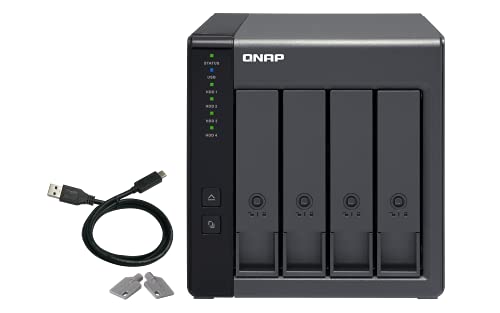
- Hardware RAID with RAID 0/1/5, JBOD, and individual disks
- USB-C DAS for Windows, macOS, and Linux
- Lockable bays and NAS backup use case
Best For: NAS backup and external RAID expansion
Budget 4-Bay RAID Combo
CENMATE Aluminum 2*2 Bay Enclosure

- 4-drive setup made from two 2-bay RAID units
- RAID 0, RAID 1, Normal, and JBOD support
- USB 3.0 with aluminum body and dual fans
Best For: Budget users needing simple 4-drive RAID storage
Compact 2-Bay RAID Storage
TERRAMASTER D2-320 USB RAID Enclosure

- RAID 0/1, JBOD, and SINGLE modes
- Up to 10Gbps over USB 3.2 Gen 2
- Tool-free trays with quiet temperature control
Best For: Quiet two-drive RAID and fast desktop backup
Flexible RAID Storage
CENMATE 4-Bay Aluminum RAID DAS
- 8 RAID modes plus NORMAL and CLONE
- Up to 80TB with 2.5/3.5-inch SATA support
- Aluminum build with built-in cooling fan
Best For: Users who need flexible RAID options in a desktop DAS
High-Speed Non-RAID DAS
TERRAMASTER D4-320 4-Bay 10Gbps DAS

- Up to 10Gbps with USB 3.2 Gen2
- Hot-swappable, tool-free 4-bay design
- Quiet cooling with sound-damping features
Best For: Users who want fast, quiet storage expansion without RAID
Large-Capacity RAID DAS
MAIWO 4-Bay 96TB RAID Enclosure

- Supports Normal, RAID 0/1/10/3/5, Clone, and Large
- Up to 96TB with four 24TB drives
- Dual cooling fans for 3.5-inch SATA drives
Best For: Professionals needing big-capacity RAID storage in a 4-bay DAS
Flexible RAID Storage Hub
ORICO 5-Bay RAID HDD Enclosure

- 8 RAID modes including RAID 0/1/5/10 and JBOD
- Supports up to 110TB across five 3.5-inch SATA drives
- 80mm silent fan, locking design, and 150W power supply
Best For: Desktop users who want flexible RAID setups and large-capacity backup storage
Flexible Mixed-Drive Storage
Yottamaster 5-Bay RAID Enclosure

- Works with both 2.5-inch and 3.5-inch SATA HDDs/SSDs
- RAID 0/1/3/5/10, JBOD, and CLONE support
- Aluminum shell with 80mm smart cooling fan
Best For: Mixed-drive users who want flexible RAID storage for home, office, or video work
Compact Backup Expansion
ORICO 4-Bay RAID HDD Enclosure

- 8 RAID modes including RAID 0/1/5/10 and JBOD
- Supports four 3.5-inch drives up to 88TB total
- 80mm silent fan, vents, locking design, and 150W PSU
Best For: Buyers who want a smaller RAID enclosure for backup and moderate storage expansion
High-Capacity 4-Bay Performance – ORICO 4 Bay RAID Hard Drive Enclosure
If you want one of the more capable raid enclosures for large local storage jobs, the ORICO 4-bay model stands out for speed, capacity, and RAID flexibility. It uses a JMS591 chip, supports USB 3.2 Gen 2×2 up to 20Gbps, and is built for users moving big media files, managing backups, or consolidating multiple SATA drives into one box.
Best For: Video editors, IT teams, and power users who need a high-capacity 4-bay RAID enclosure with flexible modes.
Pros:
- Supports RAID 0, RAID 1, RAID 5, RAID 10, JBOD, and Normal modes.
- Up to 104TB total capacity with 3.5-inch SATA drives up to 26TB each.
- Built-in 150W power supply and low-noise fan for stable multi-drive operation.
- Compatible with Windows, macOS, and Linux.
Cons:
- Using RAID mode or changing arrays will erase drive contents, so backups are required.
- Thunderbolt connections are limited to around 10Gbps instead of full 20Gbps.
- Designed for SATA drives only, not NVMe storage.
Overall, this ORICO enclosure is a strong pick when you need more than basic storage expansion and want serious RAID options in a single desktop unit. The tradeoff is that it is best suited to users who understand RAID setup and are willing to manage drives carefully.
Backup-Friendly Desktop DAS – QNAP TR-004 4 Bay USB Type-C
QNAP TR-004 4 Bay USB Type-C Direct Attached Storage (DAS) with hardware RAID (Diskless)
Check Price On AmazonThe QNAP TR-004 is a practical choice among raid enclosures if you want a straightforward USB-C direct-attached storage unit with hardware RAID. It supports Windows, macOS, and Linux, includes lockable bays, and is especially useful for expanding a QNAP NAS or keeping a separate external backup set.
Best For: Users who want a diskless 4-bay DAS for backups and QNAP NAS expansion.
Pros:
- Hardware RAID support for RAID 0, RAID 1, RAID 5, JBOD, and individual disks.
- USB Type-C direct-attached storage with a Type-C to Type-A cable included.
- Lockable drive bays add a bit of physical security.
- Works with Windows, macOS, and Linux.
Cons:
- It is diskless, so you need to supply your own drives.
- Not compatible with several older QNAP NAS models listed by the manufacturer.
- NAS applications cannot be installed on the TR-004.
For buyers who mainly need a dependable external RAID box rather than a full network storage appliance, the TR-004 keeps things focused and simple. Its limits are clear, but within its intended use case it is a solid backup and expansion enclosure.
Budget 4-Bay RAID Combo – CENMATE Aluminum 2*2 Bay Enclosure
If you need raid enclosures for basic mirrored or striped storage without paying for premium transfer speeds, this CENMATE unit is a budget-friendly option. It combines two 2-bay RAID units into one enclosure, supports 2.5-inch and 3.5-inch SATA drives, and is aimed at users who want simple external storage with built-in cooling.
Best For: Budget buyers who want a simple 4-drive RAID setup with basic USB 3.0 performance.
Pros:
- Supports 4 drives total through two combined 2-bay RAID units.
- Offers RAID 0, RAID 1, Normal, and JBOD modes.
- Aluminum-alloy body with dual fans for cooling.
- Includes USB A/C 3.0 cables and is plug-and-play on major OSes.
Cons:
- Top speed is limited to 5Gbps via USB 3.0.
- Fan noise is rated around 40-50 decibels.
- Changing RAID settings can cause data loss, and macOS has no RAID software.
This CENMATE enclosure makes sense if you want a low-cost RAID box for general storage and can live with modest performance. It is less about speed and refinement, and more about delivering the basics in a compact, cooled package.
Compact 2-Bay RAID Storage – TERRAMASTER D2-320 USB RAID Enclosure
The TerraMaster D2-320 is a compact option in raid enclosures if you only need two drives but still want hardware RAID and a fast USB 3.2 Gen 2 connection. It supports both HDDs and SSDs, includes a quiet temperature-controlled fan, and is built for users who want a simpler desktop DAS for backups or performance-focused storage.
Best For: Users who want a quiet 2-bay RAID enclosure for fast backup or SSD storage.
Pros:
- Supports RAID 0, RAID 1, JBOD, and SINGLE modes.
- USB 3.2 Gen 2 connection with up to 10Gbps transfer speed.
- Tool-free tray design with automatic push-lock mechanism.
- Works with 2.5-inch and 3.5-inch SATA HDDs plus 2.5-inch SATA SSDs.
Cons:
- Diskless, so drives must be purchased separately.
- Only two drive bays, so it is not ideal for larger arrays.
- Enclosure material is plastic rather than metal.
For buyers who value a smaller footprint and easy drive handling, the D2-320 covers the essentials well. It is a sensible choice when two-drive RAID flexibility is enough and you want a straightforward desktop enclosure rather than a larger multi-bay system.
Flexible RAID Storage – CENMATE 4-Bay Aluminum RAID DAS
If you want a RAID enclosure that balances capacity, basic RAID flexibility, and everyday desktop use, the CENMATE 4-bay model is built for that role. It supports 2.5/3.5-inch SATA HDDs and SSDs, offers 8 RAID modes, and includes USB A/C 3.0 plus eSATA connectivity for a straightforward DAS setup.
Best For: Users who want a 4-bay DAS with multiple RAID modes for personal or small business storage.
Pros:
- Supports 8 RAID modes including RAID 0, 1, 3, 5, 10, CLONE, LARGE, and NORMAL.
- Aluminum-alloy body with a built-in fan for cooling and data protection.
- Up to 80TB total capacity, with support for 2.5/3.5-inch SATA HDDs and SSDs.
- Includes USB A/C 3.0 and eSATA cables for flexible hookup options.
Cons:
- Fan noise is listed around 40-50 dB, which may bother noise-sensitive users.
- RAID switching requires a manual process and may cause data loss if changed incorrectly.
- Mac OS does not support RAID software for this enclosure.
Overall, this CENMATE enclosure is a practical pick if you need RAID-capable external storage without moving to a NAS. It is best suited to users who understand RAID setup and want a sturdy, high-capacity DAS for desktop use.
High-Speed Non-RAID DAS – TERRAMASTER D4-320 4-Bay 10Gbps DAS
The TERRAMASTER D4-320 is a good fit if you are comparing raid enclosures but do not actually need RAID. This 4-bay DAS focuses on speed, hot swapping, and simple plug-and-play storage, with USB 3.2 Gen2 and up to 10Gbps transfer rates.
Best For: Buyers who want a fast, quiet 4-bay DAS with no RAID function.
Pros:
- USB 3.2 Gen2 connection supports up to 10Gbps.
- Compatible with 3.5-inch HDDs, 2.5-inch HDDs, and 2.5-inch SATA SSDs.
- Tool-free trays and hot-swappable drive bays make drive changes easy.
- Designed for quieter operation with sound-absorbing panels and a temperature-controlled fan.
Cons:
- No RAID function, so it is not for users who need built-in redundancy modes.
- Diskless model means you need to supply your own drives.
For users who care more about speed and convenience than RAID, the D4-320 is a strong direct-attached storage option. Its quiet design and broad operating system support make it easy to recommend for simple multi-drive expansion.
Large-Capacity RAID DAS – MAIWO 4-Bay 96TB RAID Enclosure
The MAIWO 4-bay model is aimed at buyers who want a practical RAID enclosure with plenty of storage headroom. It supports multiple RAID and JBOD-style modes, includes dual cooling fans, and uses a USB A/C 3.1 connection rated up to 5Gbps.
Best For: Professionals and power users who want a 4-bay enclosure with multiple RAID modes and high capacity.
Pros:
- Supports Normal, RAID 0, 1/10, 3, 5, Clone, and Large (JBOD) modes.
- Up to 96TB total capacity with support for four 24TB drives.
- Dual built-in fans help keep 3.5-inch SATA drives cool during heavy use.
- Includes USB A/C to USB-C and USB-C to USB-C cables in the box.
Cons:
- Top transfer speed is listed at 5Gbps, which is slower than some newer USB 3.2 Gen2 enclosures.
- Designed for 3.5-inch SATA drives, so it is not as flexible for mixed-drive use.
This MAIWO enclosure makes sense if your priority is RAID flexibility and large capacity in a straightforward DAS format. It is especially appealing for backup workflows, surveillance use, or other storage-heavy setups that benefit from cooling and multiple modes.
Flexible RAID Storage Hub – ORICO 5-Bay RAID HDD Enclosure
If you need a practical RAID enclosure for centralized backup and larger media libraries, this ORICO 5-bay model gives you a lot of flexibility in one desktop unit. It supports multiple RAID modes, handles up to 110TB total capacity, and is built to keep 3.5-inch drives cool and secure during everyday use.
Best For: Users who want a 5-bay RAID enclosure for flexible backup, large-capacity storage, and simple desktop organization.
Pros:
- Supports 8 RAID modes: 0, 1, 3, 5, 10, JBOD, CLONE, and CLEAR
- Fits 5 x 3.5-inch SATA drives with up to 110TB total capacity
- Includes an 80mm silent cooling fan plus front and rear vents for heat control
- Built-in 150W power supply and safety lock help support stable, secure operation
Cons:
- Designed for 3.5-inch SATA disks only, so it is not the most versatile choice for mixed drive sizes
- Mode switching requires caution and the notes recommend backing up data first
Overall, this is a solid RAID enclosure if your priority is storage expansion with multiple hardware RAID options and strong cooling. It is especially appealing for users managing large files, backups, or long-term desktop data storage.
Flexible Mixed-Drive Storage – Yottamaster 5-Bay RAID Enclosure
This Yottamaster RAID enclosure is a strong pick if you want one box that can handle both 2.5-inch and 3.5-inch SATA drives. It supports multiple RAID layouts, offers up to 110TB of external storage, and uses an aluminum shell with smart cooling for dependable day-to-day use.
Best For: People who need a 5-bay RAID enclosure for mixed HDD and SSD setups, especially for home, office, or video workflows.
Pros:
- Supports 2.5-inch and 3.5-inch SATA HDDs/SSDs
- Offers RAID 0/1/3/5/10, JBOD, and CLONE modes
- Up to 110TB capacity with five 22TB drives
- Aluminum alloy body and 80mm temperature-controlled fan help with cooling
Cons:
- New drives may need formatting and partitioning before use
- Only supports up to 5Gbps transfer speed, so it is not the fastest option available
As a RAID enclosure, this model stands out for its mixed-drive compatibility and straightforward setup options. It is a practical choice when you want flexibility for storage expansion without committing to only one drive size.
Compact Backup Expansion – ORICO 4-Bay RAID HDD Enclosure
If you want a smaller RAID enclosure than a 5-bay unit but still need flexible storage management, this ORICO 4-bay model is a straightforward option. It supports the same broad set of RAID modes, holds up to 88TB, and includes cooling and security features designed for everyday desktop storage.
Best For: Users who want a 4-bay RAID enclosure for backup, file centralization, and moderate-capacity expansion.
Pros:
- Supports 8 RAID modes: RAID 0, 1, 3, 5, 10, JBOD, CLONE, and CLEAR
- Fits four 3.5-inch SATA drives with up to 88TB total capacity
- Includes an 80mm silent cooling fan and front/rear vents for heat dissipation
- Built-in 150W power supply and independent safety lock add convenience and protection
Cons:
- Only supports 3.5-inch SATA disks, so it is not suited to 2.5-inch drives
- Capacity tops out below larger 5-bay enclosures
This is a good RAID enclosure for users who want the benefits of flexible RAID without stepping up to a larger chassis. It balances expansion, cooling, and security in a simpler 4-bay footprint.
How We Picked the Best Raid Enclosures
We looked for Raid Enclosures that make sense for real-world use: dependable hardware RAID support, solid connectivity, broad drive compatibility, and cooling that can handle long transfers. We also favored models with clear setup paths for backup, media storage, and everyday DAS use.
Quick Comparison
In general, 2-bay models suit simple mirrored backups or a compact speed boost, while 4-bay and 5-bay units are better for larger libraries and more RAID options. USB-C and faster USB 3.2 Gen 2/2×2 connections help reduce bottlenecks, especially when working with SSDs or multiple HDDs.
Key Buying Factors for Raid Enclosures
Bay Count and Capacity
Choose the number of bays based on how much storage you need now and how quickly your library will grow. More bays usually mean more flexibility, but they also take up more desk space and cost more.
RAID Modes and Protection
Look for the RAID levels you actually plan to use. RAID 0 can improve speed, RAID 1 prioritizes redundancy, and RAID 5 or similar setups can offer a stronger balance of capacity and fault tolerance when supported.
Drive Compatibility
Confirm support for 2.5-inch or 3.5-inch SATA HDDs and SSDs if you want flexibility. Some Raid Enclosures are geared toward large hard drives, while others are better suited to SSD-based workloads.
Cooling and Noise
Multi-drive enclosures generate heat, so active cooling matters. A fan and an aluminum body can help maintain stability during long transfers, though they may add some noise.
Connection Speed
Match the enclosure to your host device. Faster interfaces help most when you move large files, edit directly from the enclosure, or use multiple drives in performance-oriented arrays.
Who Should Buy Which Raid Enclosures?
If you want simple backup protection, a 2-bay RAID enclosure is usually enough. If you manage photo, video, or business archives, a 4-bay model often offers the best mix of capacity and flexibility. Power users who expect larger arrays should consider 5-bay options for more room to grow.
For the best results, choose Raid Enclosures that fit your workflow first, then compare RAID modes, cooling, and connection speed before you buy.