
Choosing the right router for a camera setup matters more than most buyers expect. Stable Wi-Fi, strong wired throughput, and sensible security features can make the difference between smooth recording and missed footage.
Below, we focus on routers that fit security camera networks in real homes and small businesses, with options for simple installs, wired backbones, and safer remote access.
Best 10 Routers for Security Camera Networks Picks for 2026
Best for UniFi Camera Networks

- UniFi Network centralized management
- 30+ UniFi devices and 300+ clients
- 1 Gbps routing with IDS/IPS
Best For: UniFi users building a scalable security camera network with centralized control.
Best for Multi-WAN Backup

- Up to 3 WAN ports plus USB backup for better uptime
- SPI firewall, DoS defense, and filtering tools
- VPN support helps with secure remote access
Best For: Small businesses or home camera setups that need wired failover and secure remote management.
Best for Quiet Reliability
Ubiquiti EdgeRouter Lite 3-Port

- Silent fanless design for 24/7 operation
- Three Gigabit ports for wired camera networks
- Compact metal build for durable deployment
Best For: Quiet, wired camera setups that need dependable always-on routing.
Best Security Features

- WiFi 6 with MU-MIMO and OFDMA
- 4 Gigabit LAN ports for wired devices
- Built-in AiProtection and VPN support
Best For: Home users who want a secure, subscription-free router for a small camera network and smart home.
Best Value Wi‑Fi 6

- Wi‑Fi 6 with OFDMA for efficient multi-device handling
- Beamforming and 4 antennas help extend camera coverage
- Gigabit ports and broad ISP support simplify setup
Best For: Home or small-office buyers who want an affordable router for a modest security camera network.
Best for Built-In Security
NETGEAR Nighthawk RAX54S WiFi 6 Router

- Security features enabled out of the box
- AX5400 WiFi 6 with up to 2,500 sq. ft. coverage
- 1-year NETGEAR Armor included for extra device protection
Best For: Home surveillance setups that need strong WiFi, easy management, and built-in security.
Best for Easy Mesh Expansion
TP-Link Archer A54 AC1200 Router

- Dual-band AC1200 coverage for small home networks
- EasyMesh support makes future expansion simple
- WPA3 and AP mode add useful security and setup flexibility
Best For: Budget buyers building a small security camera network that may need mesh expansion later.
Best Portable VPN Router
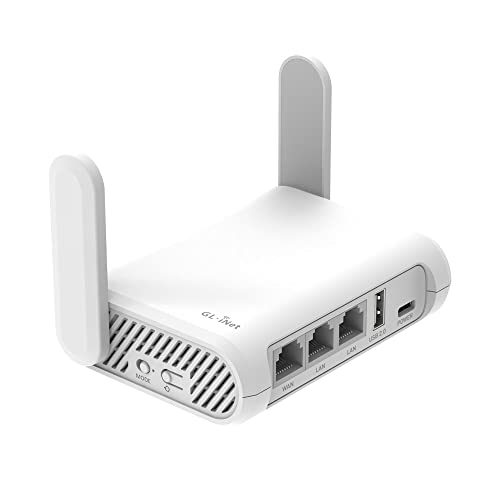
- Compact dual-band AC1200 router with gigabit ports
- OpenVPN and WireGuard support for added privacy
- Portable design works well for temporary camera setups
Best For: Travelers, RV users, and small security camera networks that need portable wired networking with VPN support.
Best for Wireless Security Coverage
TP-Link AXE5400 WiFi 6E Router

- Tri-band WiFi 6E helps handle multiple cameras and devices
- WPA3 plus HomeShield add useful network security
- OneMesh support can extend coverage to distant areas
Best For: Homes needing a secure, high-capacity router for security cameras and other connected devices.
Best for Camera-Friendly Coverage – DBIT N300 2.4GHz WiFi Router
If you need one of the more practical routers for security camera networks, this DBIT N300 keeps things simple with a 2.4GHz-only, 300Mbps design that suits everyday camera feeds, IoT devices, and basic home connectivity. Its WISP/repeater mode can also help extend coverage to spots where cameras are installed, while WPA2, guest networking, and access controls add useful everyday management.
Best For: Homes or small businesses that want an affordable, easy-to-manage router for security cameras and other 2.4GHz smart devices.
Pros:
- 2.4GHz N300 performance is a good match for many security cameras and IoT devices
- WISP/repeater mode can help expand wireless coverage to harder-to-reach areas
- Guest network and internet access control add basic network separation and management
- WPA2 and WPS support make setup and everyday security more straightforward
Cons:
- Not a 5GHz or Wi-Fi 6 router, so it is limited for faster modern devices
- 300Mbps is enough for cameras and browsing, but not ideal for heavy streaming loads
- Advanced networking users may want more features and throughput
For buyers comparing routers for security camera networks, the DBIT T1 Pro stands out as a simple, lower-cost option focused on 2.4GHz compatibility and coverage extension rather than high-end speed.
Best for UniFi Camera Networks – Ubiquiti Cloud Gateway Ultra
If you want one of the more capable routers for security camera networks, the Ubiquiti Cloud Gateway Ultra is built for centralized control with UniFi Network, making it a strong fit for homes or small businesses already using UniFi cameras and devices. It combines 1 Gbps routing with IDS/IPS, multi-WAN load balancing, and support for 30+ UniFi devices and 300+ clients, so it can handle a growing surveillance setup without feeling overmatched.
Best For: Buyers building a UniFi-based camera network who want simple management, solid routing performance, and room to expand.
Pros:
- Runs UniFi Network for centralized, full-stack management
- Supports 30+ UniFi devices and 300+ clients
- 1 Gbps routing with IDS/IPS for added network protection
- Multi-WAN load balancing helps improve uptime
Cons:
- Best value is strongest if you already use UniFi gear
- No built-in Wi-Fi, so you still need separate access points
- Limited to 1 Gbps routing, which may not suit faster internet plans
For buyers prioritizing easy management over raw flexibility, the Cloud Gateway Ultra is a smart, compact backbone for routers for security camera networks. It stands out most when paired with UniFi cameras, switches, and access points, where its monitoring and scaling tools can shine.
Best for Multi-WAN Backup – TP-Link ER605 V2 VPN Router
The TP-Link ER605 V2 is a practical choice for routers for security camera networks when you want wired stability, multiple internet failover options, and stronger network controls without moving up to a full enterprise stack. Its gigabit ports, load balancing, and VPN support make it especially useful for keeping cameras online and remote access organized.
Best For: Small businesses or home installs that need a dependable wired router with multi-WAN failover for always-on camera systems.
Pros:
- Up to 3 WAN ports plus USB WAN backup help keep camera traffic online during an outage
- Strong security tools like SPI firewall, DoS defense, and IP/MAC/URL filtering
- Useful VPN support for remote viewing and secure site-to-site access
- Five gigabit ports provide solid wired connectivity for NVRs and network gear
Cons:
- Requires a separate Wi-Fi access point if you need wireless coverage
- More feature-rich than a basic home router, so setup may feel advanced for beginners
- USB WAN depends on compatible 4G/3G modem hardware
For routers for security camera networks, the ER605 V2 stands out if uptime matters more than convenience. It is a smart fit for users who want wired reliability, failover protection, and manageable remote access in one affordable SMB router.
Best for Quiet Reliability – Ubiquiti EdgeRouter Lite 3-Port
If you need one of the more dependable routers for security camera networks, the Ubiquiti EdgeRouter Lite is a strong fit for small to medium installations. Its silent, fanless design and three Gigabit ports make it easy to place near an NVR, modem, or switch without adding noise or clutter.
Best For: Quiet, always-on camera setups that need wired Gigabit routing in a compact metal chassis.
Pros:
- Silent, fanless operation is ideal for 24/7 camera monitoring
- Three Gigabit routing ports support clean wired network layouts
- Compact metal housing is durable and easy to deploy
- High packet throughput helps with steady camera traffic
Cons:
- No built-in Wi-Fi, so it’s strictly for wired networking
- Setup may be more technical than consumer-grade routers
For buyers comparing routers for security camera networks, this model stands out for reliability and simple hardware rather than flashy extras. It’s best when you want a compact router that can run continuously and keep wired camera traffic moving without noise or fuss.
Best Security Features – ASUS RT-AX1800S WiFi 6 Router
For buyers comparing routers for security camera networks, the ASUS RT-AX1800S is a practical WiFi 6 option with enough wired ports and traffic-handling features to support a small home setup. Its combination of MU-MIMO, OFDMA, and Gigabit Ethernet makes it a solid fit when you want stable connectivity for cameras, a NVR, and other smart devices.
Best For: Home users who want a secure, subscription-free router for a small security camera system and connected smart home devices.
Pros:
- WiFi 6 with MU-MIMO and OFDMA helps manage multiple always-on devices more efficiently.
- Four Gigabit LAN ports make it easy to wire cameras, a recorder, or a switch.
- AiProtection Classic adds built-in network security without a monthly fee.
- Instant Guard VPN support is useful when you want secure remote access.
Cons:
- Coverage and throughput may be limited in larger homes or through dense walls.
- Only one WAN port and four LAN ports, so bigger camera setups may need a switch.
- Not a mesh kit by itself, though it is AiMesh compatible.
Overall, this router is a strong fit if you want a secure, affordable foundation for routers for security camera networks without paying for extra software. It works best for modest camera counts and mixed smart-home traffic rather than large, bandwidth-heavy installations.
Best Value Wi‑Fi 6 – TP-Link Archer AX21 V5
For routers for security camera networks, the TP-Link Archer AX21 V5 is a practical pick if you want Wi‑Fi 6 capacity, broad compatibility, and simple setup without paying for extras you may not need. Its dual-band design, OFDMA support, and beamforming can help multiple cameras stay connected more reliably across a typical home or small business layout.
Best For: Homeowners or small offices that need an affordable Wi‑Fi 6 router for a modest security camera setup and everyday internet use.
Pros:
- Wi‑Fi 6 and OFDMA help handle multiple connected devices more efficiently.
- Beamforming, four antennas, and FEM chipset improve coverage for cameras placed farther away.
- Gigabit ports and wide ISP compatibility make it easy to fit into existing networks.
- Extra security-minded credibility from TP-Link’s Secure-by-Design commitment.
Cons:
- Dual-band only, so there’s no 6 GHz band for newer high-end devices.
- Not ideal for very large properties or heavy-duty multi-camera deployments.
- Most users will still need a separate modem from their ISP.
Overall, this router offers a strong mix of value, coverage, and modern wireless efficiency that fits many routers for security camera networks. It is especially appealing if you want dependable connectivity for a handful of cameras plus normal household streaming and browsing.
Best for Built-In Security – NETGEAR Nighthawk RAX54S WiFi 6 Router
If you want one of the more security-minded routers for security camera networks, the NETGEAR Nighthawk RAX54S is built to help protect connected devices while still delivering fast WiFi 6 performance. Its AX5400 speeds, 2,500 sq. ft. coverage, and support for up to 25 devices make it a practical fit for homes with multiple cameras, phones, and streaming gear.
Best For: Home users who want a fast router with security features enabled out of the box and optional Armor protection for cameras and other smart devices.
Pros:
- Security features enabled out of the box, plus automatic firmware updates
- WiFi 6 AX5400 performance with coverage up to 2,500 sq. ft.
- Includes 1-year NETGEAR Armor for added protection on cameras and devices
- Four Gigabit Ethernet ports for wired gear like NVRs or desktops
Cons:
- Dual-band design may be less ideal than tri-band options for very heavy networks
- Coverage is solid for many homes, but larger properties may need extenders
- Security subscription is only included for one year
Overall, the RAX54S is a strong pick if you want routers for security camera networks that also prioritize built-in protection and simple management. It balances speed, coverage, and safety features well for typical home surveillance setups.
Best for Easy Mesh Expansion – TP-Link Archer A54 AC1200 Router
If you need one of the more affordable routers for security camera networks, the TP-Link Archer A54 is a practical fit for small homes that want solid 2.4 GHz coverage and simple expansion options. Its dual-band design, EasyMesh compatibility, and WPA3 support make it a straightforward choice for basic camera setups and other connected devices.
Best For: Budget-conscious buyers who want a simple router for a small camera network, especially if they may add EasyMesh coverage later.
Pros:
- Dual-band AC1200 speeds with four antennas for stable everyday coverage
- EasyMesh support helps extend coverage as camera needs grow
- WPA3, guest Wi-Fi, and parental controls add useful network security tools
- Access Point mode gives flexibility for wired camera or home network setups
Cons:
- Fast Ethernet ports are limited to 10/100 Mbps, not Gigabit
- Coverage is best suited to smaller spaces rather than large properties
- Not a 6 GHz router, so it is less future-proof than Wi-Fi 6E models
For shoppers comparing routers for security camera networks, the Archer A54 stands out more for value and simplicity than raw speed. It is a good pick when you want dependable wireless basics, easy setup, and room to expand without paying for advanced features you may not need.
Best Portable VPN Router – GL.iNet GL-SFT1200 Opal
If you want a compact, travel-friendly option for routers for security camera networks, the GL.iNet GL-SFT1200 (Opal) is a practical pick thanks to its dual-band Wi‑Fi, gigabit ports, and pre-installed VPN support. It’s not a full-time enterprise router, but it can be a smart fit when you need a small, secure network for a few wired cameras or a temporary monitoring setup.
Best For: Travelers, RV users, and small camera setups that need a portable router with built-in VPN and wired connectivity.
Pros:
- Dual-band AC1200 speeds help separate general traffic from camera or streaming activity
- 2 gigabit LAN ports and 1 gigabit WAN port make wired device hookups easy
- OpenVPN and WireGuard support adds an extra layer of privacy and remote access flexibility
- Compact 145g design is easy to move between home, travel, or temporary installs
Cons:
- Not ideal for large multi-camera deployments that need stronger routing hardware
- Setup may take a little extra time if you want to use the VPN toggle features
- Best suited to small networks rather than demanding 24/7 security installations
Overall, the Opal stands out as a flexible, security-minded travel router that can support routers for security camera networks when portability and VPN protection matter more than heavy-duty throughput.
Best for Wireless Security Coverage – TP-Link AXE5400 WiFi 6E Router
If you need routers for security camera networks, the TP-Link Archer AXE75 is a strong fit thanks to its tri-band WiFi 6E design, WPA3 protection, and HomeShield security tools. The extra 6GHz band and OFDMA support help reduce congestion when multiple cameras and smart devices are online at once.
Best For: Homes that want a secure, high-capacity router for a mix of security cameras, streaming, and everyday connected devices.
Pros:
- Tri-band WiFi 6E adds capacity for busy camera-heavy networks
- WPA3 and HomeShield provide useful built-in security features
- 2.5Gbps WAN port and strong hardware help with fast internet plans
- OneMesh support makes it easier to extend coverage if cameras are spread out
Cons:
- 6GHz range is shorter, so it is not ideal for distant cameras
- Advanced features may be more than simple camera-only setups need
- Most ISP installs still require a separate modem
Overall, the Archer AXE75 is a practical choice for routers for security camera networks when you want better device handling, solid security, and room to expand coverage later. It is especially appealing for mixed-use homes that need dependable performance beyond just camera traffic.
How We Picked the Best Routers for Security Camera Networks
For Routers for Security Camera Networks, the biggest priorities are reliability, network security, and enough capacity to handle multiple always-on devices. We favored models with proven wireless stability, gigabit or better wired ports where relevant, useful firewall and VPN options, and easy management for mixed smart-home networks.
We also considered whether a router is better suited to a fully wired NVR setup, a wireless camera system, or a hybrid network that may grow over time.
Quick Comparison
Some buyers need the simplest plug-and-play Wi-Fi coverage, while others need a router with more advanced controls for traffic segmentation, multi-WAN failover, or VPN access. Compact travel routers can work for temporary monitoring or mobile deployments, but most permanent camera systems will benefit from a full-size home or SMB router with stronger throughput and better port options.
Key Buying Factors for Routers for Security Camera Networks
Coverage and Stability
Cameras are sensitive to weak signals and interference. Look for dual-band or better Wi-Fi, but prioritize stable range over peak speed alone. If possible, place cameras on a dedicated band or use mesh support when the property layout is difficult.
Wired Ports and Backhaul
If your cameras or NVR can connect by Ethernet, that is usually the most dependable choice. Gigabit LAN ports, multiple WAN options, and fast switch performance help keep the network responsive even when several cameras are streaming at once.
Security and Access Control
Remote viewing is convenient, but it should be protected. Built-in VPN support, firewall controls, guest networking, and regular firmware updates are valuable features for camera networks that may expose feeds to the internet.
Network Segmentation
Many users benefit from isolating cameras from laptops, phones, and smart speakers. Guest networks, VLAN support, or mesh ecosystems with better admin tools can reduce risk and simplify troubleshooting.
Ease of Setup
Not every buyer needs enterprise-style controls. If you want a straightforward home setup, pick a router with a clean app and easy management. If you run a larger or more technical system, advanced routing and VPN tools may matter more than simple setup.
Who Should Buy Which Routers for Security Camera Networks?
Choose a basic Wi-Fi 5 or Wi-Fi 6 router if you have a small number of cameras and want an affordable upgrade. Pick a wired gigabit router if your security cameras and recorder will mostly stay on Ethernet. Consider a Wi-Fi 6 or 6E model with stronger security and mesh support if you need wider coverage or plan to expand the system.
If you want remote access, better control, or business-style reliability, look for models with VPN, multi-WAN, and stronger firewall features. The best choice is the one that matches your camera count, layout, and comfort level with networking tools.