
Choosing the right studio monitors with subwoofer output can make it easier to build a fuller, more flexible listening system without sacrificing desktop space or control. The options below span compact near-field monitors, Bluetooth-enabled speakers, dedicated subwoofers, and convenient monitor-and-sub bundles.
Whether you produce music, edit video, mix at home, or simply want more controlled low end, this roundup helps you match speaker size, connectivity, and bass extension to your room and listening goals.
Best 10 Studio Monitors with Subwoofer Output Picks for 2026
Best Compact Bluetooth Pick
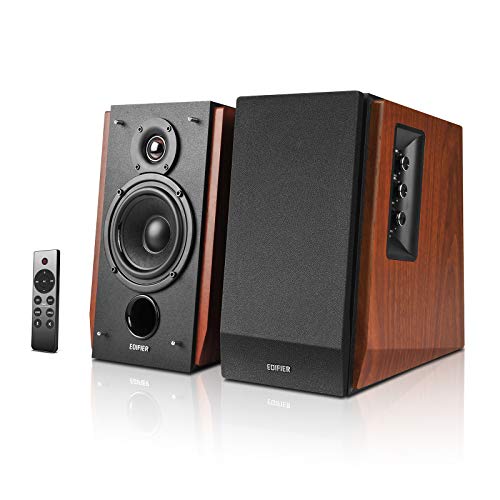
- Subwoofer line out with crossover and auto detection
- Bluetooth 5.0 with aptX HD
- Dual RCA inputs and adjustable EQ
Best For: Compact desktop listening with optional subwoofer expansion
Best Dedicated Studio Bass Extension

- 10-inch woofer reaches down to 28 Hz
- Adjustable crossover, phase, and volume
- Footswitch subwoofer bypass
Best For: Studio monitoring systems needing substantial low-end extension
Best Small-Desk Monitor Pair

- Compact pair for desks and small studios
- Tone knob and location switch
- RCA and TRS connectivity with cables included
Best For: Small-room nearfield listening where compact size matters
Best Flexible Wireless Subwoofer

- 8-inch woofer reaches down to 30 Hz
- Adjustable highpass and lowpass filters
- TRS, RCA, aux, and Bluetooth 5.0 inputs
Best For: Flexible studio, gaming, and home-audio bass expansion
Deep-Bass Expansion
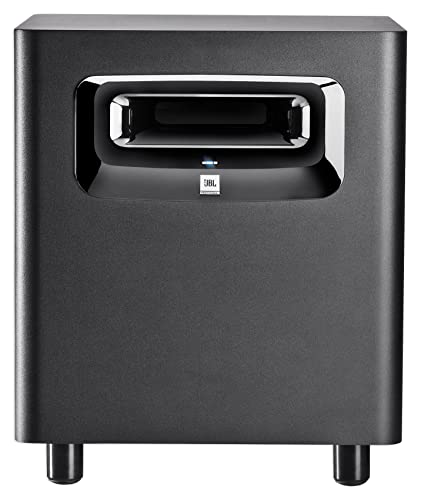
- 10-inch driver reaches into the 20 Hz region
- Balanced XLR and TRS connectivity
- Selectable XLF bass tuning
Best For: Adding powerful low-frequency extension to a studio monitor system
Compact Desktop Pair
PreSonus Eris 3.5 Powered Studio Monitors

- Stereo pair with 50 watts of amplification
- TRS, RCA, auxiliary, and headphone connections
- High- and low-frequency acoustic controls
Best For: Compact desktop monitoring and everyday multimedia audio
Controlled Studio Bass

- 8-inch bass-reflex powered subwoofer
- 22–150 Hz stated frequency response
- Adjustable crossover controls and phase switch
Best For: Adding adjustable low-frequency reinforcement to recording setups
Best Compact Monitors

- 50W Class AB amplification
- TRS, RCA, and auxiliary inputs
- Compatible with Eris Sub 8BT
Best For: Compact desks and expandable near-field setups
Best Dedicated Bass Upgrade
Mackie CR8SBT 8-inch Subwoofer

- 8-inch woofer for added low end
- TRS and RCA monitor connections
- Remote, crossover, and Bluetooth control
Best For: CR Series users building a 2.1 desktop system
Best Complete 2.1 Bundle

- Monitors, subwoofer, and RCA cable included
- Adjustable monitor tone control
- 40Hz–180Hz subwoofer crossover
Best For: Simple desktop music, gaming, and multimedia systems
Best Compact Bluetooth Pick – Edifier R1700BTs
The Edifier R1700BTs is a practical choice for shoppers seeking studio monitors with subwoofer output in a compact bookshelf-speaker format. Its built-in subwoofer line out, Bluetooth 5.0 with aptX HD, dual RCA inputs, and adjustable side-panel EQ make it flexible for desktop listening, home studios, and multimedia setups.
Best For: Desktop listeners and small-room users who want wireless connectivity plus an easy path to adding a subwoofer.
Pros:
- Dedicated subwoofer output includes built-in crossover and auto detection.
- Bluetooth 5.0 supports Qualcomm aptX HD for compatible devices.
- Dual RCA inputs can connect two wired sources simultaneously.
- Remote control and side-panel EQ provide convenient adjustment.
Cons:
- The 4-inch woofer is better suited to compact spaces than large rooms.
- It uses wired subwoofer connectivity rather than wireless subwoofer pairing.
Choose the R1700BTs when convenience and connectivity matter as much as monitoring flexibility. It offers a straightforward upgrade path for adding bass without requiring a separate monitor controller.
Best Dedicated Studio Bass Extension – ADAM Audio T10S
The ADAM Audio T10S is a dedicated active subwoofer for listeners building a fuller monitoring system around studio monitors with subwoofer output. Its 10-inch downward-facing woofer, adjustable crossover, phase rotation, and dedicated volume control help integrate low-end extension into different studio rooms and setups.
Best For: Studio users who want a dedicated 10-inch subwoofer, especially owners of ADAM Audio T5V or T7V monitors.
Pros:
- 10-inch active subwoofer extends response down to 28 Hz.
- Adjustable crossover, phase rotation, and volume support system calibration.
- Downward-facing woofer offers more placement flexibility.
- Footswitch bypass makes it easy to compare mixes with and without bass extension.
Cons:
- It is a separate floor-standing component rather than an all-in-one monitor pair.
- The larger 27-pound cabinet may be excessive for very small desks or rooms.
The T10S makes sense when accurate low-frequency monitoring is the main priority. Its tuning controls and bypass connection are particularly useful for checking how mixes translate with and without the subwoofer engaged.
Best Small-Desk Monitor Pair – Mackie CR3.5
The Mackie CR3.5 is a compact monitor pair for desks and small studios. While the supplied specifications do not list a subwoofer output, its 3.5-inch woofers, tone knob, location switch, balanced TRS connectivity, and included isolation pads make it a practical starting point for nearfield listening.
Best For: Small desks, home studios, and multimedia setups where compact size and simple tone adjustment are priorities.
Pros:
- Sold as a pair with isolation pads and connection cables included.
- Tone knob allows quick voicing adjustments from the desk.
- Location switch helps compensate for placement against a wall.
- Supports RCA and TRS connections for common audio sources.
Cons:
- The supplied notes do not identify a dedicated subwoofer output.
- 3.5-inch woofers may provide less low-end authority than larger monitors.
The CR3.5 is best considered a compact monitor solution rather than a direct match for shoppers specifically requiring studio monitors with subwoofer output. Select it for convenience and desk-friendly placement, but verify expansion needs before buying.
Best Flexible Wireless Subwoofer – PreSonus Eris Sub 8BT
The PreSonus Eris Sub 8BT is a flexible 8-inch powered subwoofer for pairing with studio monitors that offer a subwoofer output or suitable monitor-chain connection. It combines Bluetooth 5.0 with balanced TRS and unbalanced RCA inputs, while adjustable highpass and lowpass filters help blend its bass with the main monitors.
Best For: Music production, gaming, home audio, and multimedia users who want adjustable wired connections plus Bluetooth input.
Pros:
- 8-inch woofer delivers low-frequency response down to 30 Hz.
- Highpass and lowpass filter controls support cleaner monitor integration.
- Offers balanced TRS, RCA, front-panel aux, and Bluetooth 5.0 connectivity.
- Includes room-tuning controls and a front headphone output with amplifier.
Cons:
- It is a separate subwoofer, so compatible main monitors are required.
- Bluetooth is an input feature and does not replace a wired monitor-subwoofer connection.
- Its 8-inch cabinet may require more floor space than a compact desktop setup allows.
The Eris Sub 8BT stands out for connection flexibility and integration controls. It is a strong option when you want to extend a monitor system while retaining the ability to tune crossover behavior and switch between professional and consumer sources.
Deep-Bass Expansion – JBL Professional LSR310S
If you want studio monitors with subwoofer output, the JBL Professional LSR310S is a dedicated low-frequency upgrade for an existing monitor system. Its 10-inch driver, balanced inputs and outputs, selectable sensitivity, and deep bass response make it suitable for extending a stereo setup or handling an LFE channel.
Best For: Producers and engineers who need powerful, adjustable low-frequency extension for studio monitoring or surround sound.
Pros:
- 10-inch driver reaches into the 20 Hz region for deep bass.
- Balanced XLR and 1/4-inch TRS inputs plus XLR outputs support studio connections.
- XLF mode provides an emphasized dance-club-style bass tuning.
- Selectable -10 dBV/+4 dBu sensitivity improves compatibility with different signal sources.
Cons:
- This is a subwoofer, not a complete pair of main studio monitors.
- Its floor-standing design and 10-inch driver may be more than compact rooms require.
The LSR310S is a strong choice when bass extension and output are the priority. Its professional connections and tuning options make it easier to integrate into a variety of monitoring systems.
Compact Desktop Pair – PreSonus Eris 3.5 Powered Studio Monitors
For a compact desktop setup, the PreSonus Eris 3.5 offers a stereo pair of powered monitors with multiple wired inputs and a front headphone output. These are a practical starting point for studio monitoring, gaming, streaming, or everyday listening, though the supplied specifications do not identify a dedicated subwoofer output.
Best For: Desktop users who want compact studio monitors for music production, gaming, streaming, and general multimedia.
Pros:
- Sold as a complete stereo pair with 50 watts of built-in amplification.
- 3.5-inch woven-composite woofers and 1-inch silk-dome tweeters provide a balanced near-field design.
- Balanced TRS, RCA, and front-panel auxiliary inputs connect to varied equipment.
- High- and low-frequency controls help tailor the sound to the room.
Cons:
- The compact 3.5-inch drivers provide less low-frequency reach than a dedicated subwoofer system.
- The supplied notes do not list a dedicated subwoofer output.
The Eris 3.5 is best viewed as a convenient, compact monitor pair rather than a bass-expansion solution. Its flexible inputs, tuning controls, and headphone jack make it especially useful on a crowded desk.
Controlled Studio Bass – Yamaha HS8S Studio Subwoofer
The Yamaha HS8S is a dedicated 8-inch powered subwoofer for extending the low end of a studio monitoring system. Its 150-watt amplifier, 22–150 Hz frequency response, adjustable crossover controls, and phase switch provide the basic tools for integrating deeper bass into recording or live-music setups.
Best For: Recording and live-music environments that need adjustable low-frequency reinforcement alongside compatible studio monitors.
Pros:
- 8-inch bass-reflex design covers a stated 22–150 Hz range.
- 150-watt amplifier provides substantial low-frequency power.
- Low-cut switch and adjustable low- and high-cut controls support system integration.
- Phase switch helps align the subwoofer with the main monitors.
Cons:
- It is a standalone subwoofer, so main monitors must be purchased separately.
- The 33.6-pound floor-standing cabinet requires dedicated space.
- The supplied notes specify XLR connectivity but do not detail additional input/output formats.
The HS8S is a focused option for users who want more control over crossover and phase settings than a basic subwoofer provides. Its size and power suit larger or more demanding monitoring arrangements better than small desktop systems.
Best Compact Monitors – PreSonus Eris E4.5
The PreSonus Eris E4.5 is a compact pair for buyers seeking studio monitors with subwoofer output potential. Its balanced TRS and RCA inputs, room-tuning controls, and compatibility with the Eris Sub 8BT make it a flexible starting point for music production, desktop listening, or multimedia reference.
Best For: Compact desks, entry-level production, and listeners who may add an Eris subwoofer later.
Pros:
- 50 watts of Class AB amplification delivers 25 watts per side.
- Balanced TRS, RCA, and front-panel auxiliary inputs support varied sources.
- High- and low-frequency controls help tailor the sound to your room.
- Front headphone output and built-in amplifier make private listening convenient.
Cons:
- The 4.5-inch woofers may not provide the deepest bass on their own.
- The listed package includes one active and one passive monitor, so setup is not a pair of separately powered speakers.
The Eris E4.5 balances useful connectivity and compact size with a clear upgrade path. Choose it when you want practical near-field monitors now and the option to build a 2.1 system with the Eris Sub 8BT later.
Best Dedicated Bass Upgrade – Mackie CR8SBT 8-inch Subwoofer
The Mackie CR8SBT is a dedicated 8-inch subwoofer for adding low-end weight to compatible desktop monitor systems. It connects to CR Series monitors through TRS or RCA, includes adjustable crossover control, and adds Bluetooth for direct wireless playback.
Best For: CR Series monitor owners who want stronger bass and convenient desktop-level control.
Pros:
- 8-inch driver adds bass that smaller desktop monitors cannot reproduce as fully.
- TRS and RCA connections support flexible integration with CR Series monitors.
- Adjustable crossover helps blend the subwoofer with the main speakers.
- Included desktop remote provides volume and subwoofer-bypass control.
Cons:
- At 32.4 pounds, it is a substantial addition to a desktop or studio setup.
- It is a subwoofer rather than a complete monitor pair, so main speakers are required.
The CR8SBT is the straightforward choice when your existing monitors need more impact below their normal range. Its remote, crossover adjustment, and Bluetooth input make it especially practical for a flexible 2.1 desktop system.
Best Complete 2.1 Bundle – Mackie CR3.5 with CR8SBT
This Audiosavings bundle combines a pair of Mackie CR3.5 powered monitors, an 8-inch CR8SBT subwoofer, and a 10-foot dual-RCA cable. For shoppers comparing studio monitors with subwoofer output, it offers a ready-made 2.1 setup with tone controls, Bluetooth, and a desktop remote.
Best For: Buyers who want monitors, subwoofer, remote, and connecting cable in one package.
Pros:
- Includes CR3.5 monitors, CR8SBT subwoofer, and a dual-RCA cable.
- CR3.5 tone controls support flat or boosted listening preferences.
- Subwoofer crossover adjusts from 40Hz to 180Hz for system blending.
- Desktop remote allows convenient control of system output and subwoofer level.
Cons:
- The 3.5-inch monitor drivers are compact and depend on the subwoofer for deeper bass.
- The bundle is listed as a tabletop setup, while the subwoofer itself is relatively large and heavy.
As a packaged system, this bundle reduces the guesswork of matching speakers and bass extension. It suits desktop entertainment, gaming, and casual production where convenient controls and a fuller 2.1 presentation matter more than a larger monitor format.
How We Picked the Best Studio Monitors with Subwoofer Output
We focused on products that support practical home-studio and desktop setups, prioritizing clear near-field monitoring, useful low-frequency expansion, and straightforward connections. The selection includes powered monitor pairs, standalone subwoofers, and bundled systems so you can compare a complete upgrade with a flexible build-it-yourself approach.
We also considered driver size, output options, wireless features, adjustment controls, and compatibility with common consumer and professional audio equipment. A subwoofer output is especially useful because it lets you add bass extension later instead of replacing the main speakers.
Quick Comparison
| Best For | Recommended Type | What to Look For |
|---|---|---|
| Small desks and casual production | 3.5-inch to 4.5-inch powered monitors | Compact cabinets, front controls, and a dedicated sub output |
| More powerful low end | 8-inch to 10-inch subwoofer | Adjustable crossover, phase control, and suitable room placement |
| Wireless or flexible listening | Bluetooth-enabled monitors or subwoofers | Bluetooth plus reliable wired inputs for monitoring |
| Simple all-in-one upgrade | Monitor-and-subwoofer bundle | Matched outputs, included cables, and balanced system performance |
Key Buying Factors for Studio Monitors with Subwoofer Output
Subwoofer Connectivity
Check whether the monitors offer a dedicated subwoofer line output, pass-through connection, or only standard analog inputs. A true sub output simplifies integration and helps maintain a cleaner signal path. If you are buying a separate subwoofer, confirm that its inputs and outputs match your audio interface, mixer, or monitor pair.
Driver Size and Room Dimensions
Smaller monitors are often easier to place on a desk and can sound more controlled in compact rooms. Larger monitors and subwoofers provide greater output and deeper bass, but they can expose room modes and become excessive in untreated spaces. Measure your room and listening distance before prioritizing power.
Controls and Crossover Adjustment
Volume, bass, treble, crossover, and phase controls make it easier to integrate a subwoofer without muddying the mix. Look for accessible controls and a crossover range that suits your main monitors. Start with conservative bass levels, then adjust while listening from your normal working position.
Professional Accuracy Versus Convenience
Bluetooth is convenient for streaming and everyday listening, but wired connections are generally preferable for production and critical monitoring. If accuracy matters most, prioritize balanced inputs, predictable frequency response, and room placement over extra wireless features.
Who Should Buy Which Studio Monitors with Subwoofer Output?
Choose compact 3.5-inch or 4.5-inch monitors if you work at a desk, have limited space, or want clear near-field sound at moderate levels. Add a small, adjustable subwoofer when you need deeper bass for electronic music, film editing, or gaming.
Choose a larger dedicated subwoofer with capable monitor pairs if your room can accommodate more output and you need reliable low-frequency detail. A matched bundle is the easiest route for buyers who want fewer compatibility decisions, while separate monitors and subwoofers offer more flexibility for future upgrades.
Before buying, confirm input types, available subwoofer outputs, electrical requirements, cabinet dimensions, and return policies. Position the monitors symmetrically, keep tweeters near ear height, and calibrate the subwoofer gradually for balanced—not merely louder—bass.