
Choosing studio monitors with digital input makes it easier to connect computers, TVs, interfaces, and other modern sources without relying on analog adapters. The right pair should deliver clean, balanced sound while fitting your desk, room, workflow, and budget.
We’ve assembled 10 options ranging from compact desktop monitors to more powerful near-field speakers, with attention to connectivity, amplification, size, and everyday usability.
Best 10 Studio Monitors with Digital Input Picks for 2026
Versatile High-Resolution Pick

- 3-way design with 110W RMS output
- 24-bit/96kHz wired and LDAC wireless audio
- XLR, TRS, RCA, AUX, and Bluetooth inputs
Best For: Flexible home studios and desktop listening
Compact Yamaha Monitoring

- 4.5-inch woofer and 1-inch dome tweeter
- XLR/TRS, RCA, and stereo mini inputs
- Room control and high-trim adjustments
Best For: Small production and video-editing workstations
Home Audio Connectivity Pick

- 3-way powered bookshelf speaker design
- HDMI ARC, optical, USB, RCA, and Bluetooth
- 70W RMS output with subwoofer output
Best For: Hybrid computer, TV, and home-theater setups
Best USB-C Desktop Monitor
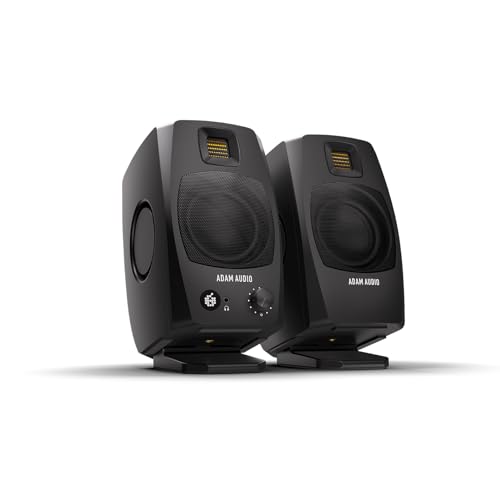
- Direct USB-C connection for computers and mobile devices
- 3.5-inch woofers with dual passive radiators
- 80W amplification and 45Hz low-frequency extension
Best For: Compact desktop production and computer audio
Balanced Starter Pick

- Balanced TRS, RCA, and auxiliary inputs
- 50W Class AB amplification
- Room-tuning controls and headphone output
Best For: Compact home studios and flexible wired listening
App-Tuned Hi-Res Option

- Balanced TRS, RCA, AUX, and Bluetooth
- Hi-Res 52Hz–40kHz response
- App EQ and three listening modes
Best For: Hybrid home studios and flexible near-field listening
Best Digital-Input Match
Ortizan C7 Powered Studio Monitors

- Built-in 24-bit DAC with USB input
- Balanced TRS, RCA, AUX, and Bluetooth
- Front headphone output for monitoring
Best For: Desktop production setups needing USB and analog connectivity
Best Budget Monitor
Edifier MR4 4-Inch Active Studio Monitors
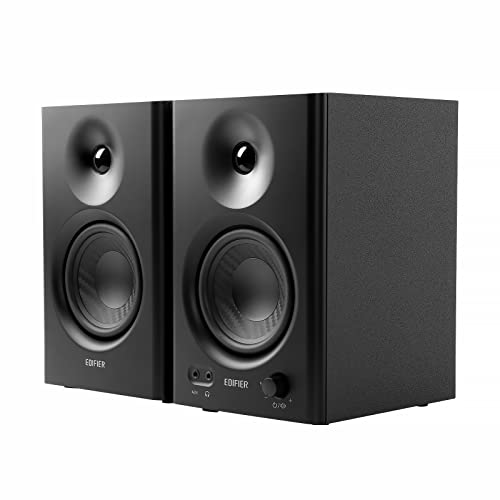
- Near-flat tuning for entry-level production
- Balanced TRS, RCA, and AUX inputs
- Separate high/low controls and headphone output
Best For: Budget desktop music production with analog sources
Best Modern Studio Monitor
Edifier MR4.5 80W Bi-Amped Monitors

- 24-bit/96kHz DSP with 80W RMS output
- XLR, TRS, RCA, AUX, and Bluetooth 6.0
- Room compensation and nine-band EQ
Best For: Flexible high-resolution near-field monitoring
Best Digital-Input Value
Edifier R1280DB Optical Bookshelf Monitors
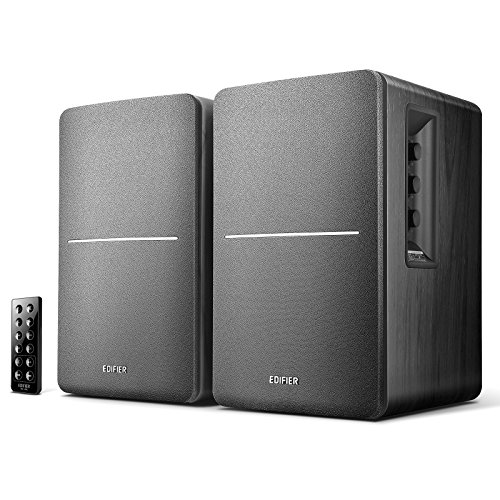
- Optical and coaxial digital inputs
- Bluetooth and dual RCA connectivity
- Remote plus side-panel bass and treble controls
Best For: Computer or TV listening with straightforward digital connections
Versatile High-Resolution Pick – Edifier MR5
The Edifier MR5 is a strong option for shoppers seeking studio monitors with digital input and broad connectivity. Its 3-way design, 110W RMS amplification, room-tuning controls, and Bluetooth LDAC support make it suitable for both near-field work and general listening.
Best For: Home studios, desktop setups, and listeners who want flexible wired and wireless connections.
Pros:
- 3-way system with a 5-inch woofer, dedicated midrange driver, and silk-dome tweeter.
- Supports 24-bit/96kHz wired and LDAC wireless audio.
- Offers XLR, TRS, RCA, AUX, Bluetooth, and front headphone connectivity.
- Includes physical high/low adjustment and app-based room compensation.
Cons:
- Its bookshelf-style design may be larger than compact desktop monitors.
- It is not water resistant.
The MR5 stands out when connectivity and adjustment flexibility matter as much as monitoring capability. It is especially practical for users moving between studio equipment, computers, instruments, and everyday entertainment.
Compact Yamaha Monitoring – Yamaha HS4
The Yamaha HS4 is a compact pair for shoppers comparing studio monitors with digital input alternatives alongside conventional analog connections. Its 4.5-inch woofer, 1-inch tweeter, room controls, and small footprint suit music production and workstation listening.
Best For: Small home studios, music production desks, and video-editing workstations.
Pros:
- Compact 2-way design with a 4.5-inch woofer and 1-inch dome tweeter.
- Provides XLR/TRS combo, RCA, and stereo mini inputs.
- Includes room control and high-trim response controls.
- Comes with speaker cable, stereo mini-to-RCA cable, and anti-slip pads.
Cons:
- The listed 26W output is lower than larger monitors in this roundup.
- Connectivity is analog rather than USB or Bluetooth.
The HS4 is a sensible choice when desk space and straightforward studio connections are priorities. Buyers specifically needing built-in digital input should plan to use an external interface or converter.
Home Audio Connectivity Pick – ULTIMEA BS-3
The ULTIMEA BS-3 blends bookshelf-speaker convenience with several digital inputs, making it a versatile choice among studio monitors with digital input. Its 3-way drivers, HDMI ARC, optical, USB, Bluetooth, and subwoofer output support music, television, computer, and home-theater setups.
Best For: Hybrid desktop, TV, music, and home-theater systems needing flexible source compatibility.
Pros:
- 3-way design separates bass, midrange, and treble for balanced playback.
- Includes HDMI ARC, optical, USB, RCA, and Bluetooth connectivity.
- 70W RMS output and BassMX technology support room-filling sound.
- App-based EQ presets and a dedicated subwoofer output add flexibility.
Cons:
- Its feature set is oriented toward general home audio as well as monitoring.
- The listed frequency response begins at 50Hz, so deeper bass may benefit from a subwoofer.
The BS-3 is best viewed as a flexible powered speaker system rather than a narrowly focused production monitor. Its digital connections and HDMI ARC make it appealing for users who want one pair to handle several entertainment and computer sources.
Best USB-C Desktop Monitor – ADAM Audio D3V
The ADAM Audio D3V is a compact desktop option for shoppers seeking studio monitors with digital input. USB-C connectivity works directly with computers and mobile devices, while balanced 1/4-inch inputs, D-ART tweeters, DSP switches, and angled stands support practical near-field monitoring.
Best For: Desktop producers, songwriters, and listeners who want direct USB-C computer connectivity.
Pros:
- USB-C connection supports direct use with computers and mobile devices.
- Uses 3.5-inch aluminum woofers, passive radiators, and D-ART tweeters.
- Extends down to 45Hz and includes 80W amplification.
- Features balanced 1/4-inch inputs, DSP placement controls, headphone output, and angled stands.
Cons:
- The 3.5-inch woofer size is better suited to desktop listening than large-room monitoring.
- Its supplied connectivity is more limited than models offering HDMI, optical, or Bluetooth.
The D3V is the clearest fit for a modern computer-based setup where USB-C convenience is central. Its compact form, direct monitoring controls, and included stands make it easy to position on or around a desk.
Balanced Starter Pick – PreSonus Eris E4.5
If you want studio monitors with digital input alternatives for a compact desk, the PreSonus Eris E4.5 offers a practical mix of balanced TRS, RCA, and front-panel auxiliary connectivity. Its 4.5-inch woven-composite woofer, silk-dome tweeter, room-tuning controls, and 50-watt Class AB amplification suit both production and everyday listening.
Best For: Home studios, multimedia reference, gaming, and listeners who need flexible wired connections in a compact pair.
Pros:
- Includes balanced 1/4-inch TRS, RCA, and front-panel 1/8-inch auxiliary inputs.
- 50 watts of Class AB power provide substantial output for near-field use.
- High- and low-frequency controls help adapt the sound to your room and placement.
- Front headphone output and built-in amplifier make private monitoring convenient.
Cons:
- It does not provide a native USB digital input.
- Bluetooth is listed in the specifications, but the supplied notes emphasize wired connectivity.
- The compact 4.5-inch design may not deliver the deepest bass without the optional subwoofer.
The Eris E4.5 is a sensible choice when analog flexibility and room adjustment matter more than direct USB connectivity. Consider it for a straightforward desktop setup rather than a strictly digital studio-monitor system.
App-Tuned Hi-Res Option – Edifier MR3
The Edifier MR3 is worth considering if you want studio monitors with digital input-friendly connectivity and wireless convenience. It combines balanced TRS, RCA, AUX, and Bluetooth multipoint with Hi-Res certification, selectable listening modes, and app-based EQ adjustment.
Best For: Home studios, video editing, guitar practice, and users who want one monitor pair for production and everyday listening.
Pros:
- Offers balanced TRS, RCA, AUX, and Bluetooth connectivity.
- Hi-Res Audio certification supports a stated 52Hz–40kHz response.
- Music, Monitor, and Custom modes provide useful listening flexibility.
- EDIFIER ConneX app enables detailed EQ personalization.
Cons:
- The supplied notes do not confirm a USB digital input.
- With 18 watts RMS per speaker, it is aimed more at near-field use than large rooms.
- Bluetooth and app controls may be unnecessary for buyers seeking a strictly traditional studio setup.
The MR3 stands out for its combination of monitoring features and convenient consumer connectivity. It is a strong fit when adjustable sound and Bluetooth matter, but buyers needing confirmed USB audio should verify the connection panel before purchase.
Best Digital-Input Match – Ortizan C7 Powered Studio Monitors
Among these studio monitors with digital input, the Ortizan C7 is the clearest match for a computer-based setup because its built-in 24-bit DAC accepts digital audio via USB. It also adds balanced TRS, RCA, AUX, Bluetooth 5.3, and a front headphone output for a broad range of sources.
Best For: Compact music-production systems, desktop USB playback, content creation, gaming, and users who need both digital and analog inputs.
Pros:
- Built-in 24-bit DAC supports direct digital audio through USB.
- Provides 6.35mm TRS balanced input alongside RCA, AUX, and Bluetooth.
- 3.5-inch carbon-fiber woofer and 0.75-inch silk-dome tweeter are paired with a two-way crossover.
- Front headphone output supports convenient headphone monitoring.
Cons:
- The smaller 3.5-inch woofer may offer less low-end reach than larger monitors.
- The supplied information does not state a power rating or frequency-response range.
- Some listed specifications describe gaming and surround use, so dedicated studio users should confirm their preferred monitoring configuration.
The C7 is the most directly aligned option here for buyers who specifically need USB digital input. Its balanced TRS connection and stated flat-response tuning further support a compact production setup, while Bluetooth and analog inputs broaden its everyday usefulness.
Best Budget Monitor – Edifier MR4 4-Inch Active Studio Monitors
If you want studio monitors with digital input, note that the Edifier MR4 focuses on analog connectivity rather than optical or coaxial inputs. Its 1-inch silk-dome tweeter, 4-inch composite woofer, and near-flat tuning make it a practical choice for entry-level music production, recording, and desktop listening.
Best For: Budget-conscious creators who need compact, wired monitors for a computer, mixer, tablet, or other analog source.
Pros:
- Near-flat tuning is designed for music production and recording.
- Offers balanced 1/4-inch TRS, RCA, and AUX inputs.
- Includes separate high- and low-frequency controls plus monitor and music modes.
- Front headphone output is convenient for desktop use.
Cons:
- No optical or coaxial digital input is listed.
- 42 watts of maximum output may be limiting for larger spaces.
- Bluetooth connectivity is not listed among the supplied inputs.
The MR4 is a straightforward analog studio-monitor setup with useful desktop controls and flexible wired connections. Choose it when accurate near-field sound matters more than built-in digital connectivity.
Best Modern Studio Monitor – Edifier MR4.5 80W Bi-Amped Monitors
For shoppers seeking studio monitors with digital input, the Edifier MR4.5 combines a 24-bit/96kHz DSP audio path with a broad selection of wired and wireless connections. Its 80W RMS bi-amped design, 4.5-inch mid-bass drivers, and room-adjustment controls suit detailed near-field monitoring and high-resolution listening.
Best For: Creators who want higher-resolution playback, substantial tuning flexibility, and Bluetooth alongside balanced studio connections.
Pros:
- 24-bit/96kHz DSP and a flat 50Hz–40kHz response target detailed playback.
- Includes balanced XLR, balanced TRS, RCA, AUX, and a front headphone jack.
- Bluetooth 6.0 with LDAC and multipoint pairing supports wireless sources.
- Room compensation, nine-band EQ, and adjustable low-cut controls aid placement.
Cons:
- The supplied notes do not specifically identify an optical or coaxial input.
- Advanced calibration features may be more than casual listeners need.
- Its larger 4.5-inch drivers require more desktop or near-field space than smaller monitors.
The MR4.5 is the most feature-rich option here for users who value DSP, room correction, and multiple professional inputs. It is a strong fit for a flexible desktop monitoring system, though buyers needing TV-style optical input should verify the connection requirements.
Best Digital-Input Value – Edifier R1280DB Optical Bookshelf Monitors
The Edifier R1280DB is a practical pick for shoppers specifically seeking studio monitors with digital input. Optical and coaxial connections support lossless links to compatible TVs and computers, while Bluetooth, dual RCA inputs, side-panel EQ controls, and a remote make the 42W RMS speakers versatile for both desktop audio and home entertainment.
Best For: Users who need optical or coaxial connectivity with simple controls for computer, television, and general indoor listening.
Pros:
- Optical and coaxial inputs provide direct digital connections.
- Bluetooth adds wireless playback from phones, tablets, and computers.
- Side-panel bass and treble controls allow quick tonal adjustment.
- Remote control makes volume and input changes convenient.
Cons:
- Its 55Hz frequency-response specification indicates less low-end extension than some dedicated monitors.
- The supplied notes describe it primarily for indoor audio entertainment rather than professional production.
- It lacks the balanced TRS or XLR inputs listed on more studio-focused models.
The R1280DB is the clearest choice when digital connectivity is a priority, especially for a computer or TV setup. Its bookshelf-oriented design and remote make it easy to use, although serious mixing work may call for balanced studio inputs and more production-focused tuning.
How We Picked the Best Studio Monitors with Digital Input
We focused on powered speaker systems that offer a practical digital connection, such as optical, USB, or wireless Bluetooth, alongside dependable stereo performance. We also considered driver size, amplifier output, cabinet design, controls, and whether each model suits desktop listening, music production, gaming, or general home audio.
Because “studio monitor” can describe products with very different goals, this list includes both more neutral near-field speakers and flexible bookshelf-style models. Product specifications and intended use were weighed together rather than relying on wattage alone.
Quick Comparison
| What to Compare | Why It Matters |
|---|---|
| Digital connection | Determines how easily the speakers connect to a computer, TV, streamer, or other source. |
| Driver size and power | Affects bass extension, maximum volume, and suitability for larger rooms. |
| Sound profile | Neutral monitors help with editing and mixing, while warmer speakers may be better for casual listening. |
| Size and placement | Compact cabinets work well on desks; larger models need more space and careful positioning. |
| Wireless features | Bluetooth adds convenience but may not replace a wired connection for critical monitoring. |
Key Buying Factors for Studio Monitors with Digital Input
Choose the Right Input
Optical input is useful for TVs and many desktop setups, while USB can provide a direct computer connection when available. Bluetooth is convenient for phones and casual playback, but wired digital connections are generally preferable when consistency and low latency matter.
Match the Speaker to Your Room
Four-inch monitors are often easier to place on a desk and can sound controlled at close range. Larger drivers and higher output may produce fuller bass, but they can overwhelm a small room if placed too close to walls or corners. Leave space around rear ports and use stands or isolation pads when possible.
Consider Your Main Job
For mixing, prioritize a balanced response, clear midrange, and predictable stereo imaging. For gaming, films, and everyday listening, connectivity, bass impact, and easy controls may matter more than strict neutrality. A subwoofer output or suitable low-frequency adjustment can also be valuable.
Who Should Buy Which Studio Monitors with Digital Input?
- Desktop producers: Look for compact near-field monitors with a neutral presentation, dependable stereo imaging, and a direct digital connection.
- Hybrid work and entertainment setups: Choose a versatile pair with optical or USB connectivity plus Bluetooth for switching between devices.
- Small-room listeners: Favor smaller cabinets and moderate power, especially if the speakers will sit close to your listening position.
- Listeners who want stronger bass and volume: Consider larger drivers or higher-output models, but plan your placement carefully.
- Budget buyers: Prioritize the inputs and sound characteristics you will actually use instead of paying for unused features.
Before buying, confirm the included cables, input types, speaker dimensions, power requirements, and whether the pair includes all necessary accessories. Proper placement and listening position can make as much difference as the model itself.