
Choosing studio monitors with flat response can make mixes easier to judge by presenting vocals, instruments, and low-end detail with less deliberate coloration. The right pair should suit your room, listening distance, output needs, and budget.
We’ve gathered 10 strong options, from compact desktop monitors to larger three-way designs, so you can find an accurate monitoring setup for a bedroom studio, project room, or professional workspace.
Best 10 Studio Monitors with Flat Response Picks for 2026
Wide-Sweet-Spot Reference

- Wide sweet spot with precise imaging
- Dual 41-watt Class-D amplification
- Boundary EQ and HF Trim controls
Best For: Music production, podcasting, and cinematic sound design
Purist Mixing Monitor

- Emphasizes sonic purity
- Bi-amplified 70-watt system
- XLR and TRS connectivity
Best For: Music production and near-field studio monitoring
Flexible Home-Studio Monitor
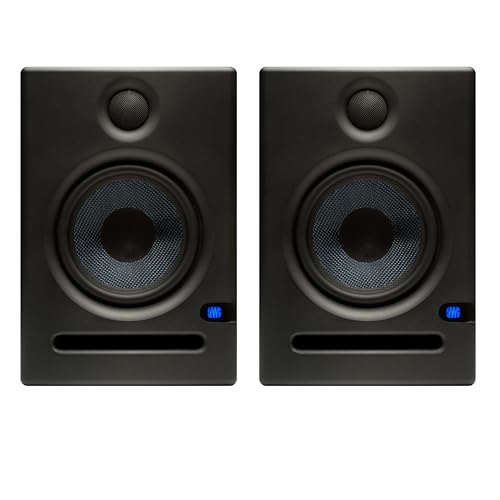
- 5.25-inch woven composite woofer
- 80-watt Class AB bi-amplification
- Acoustic tuning with XLR, TRS, and RCA
Best For: Home studios needing flexible connections and room adjustment
Low-Noise Flat-Response Pick

- DSP-based flat frequency response
- 80 watts and 115dB maximum SPL
- Boundary EQ for flexible placement
Best For: Producers needing a larger, low-noise single monitor
Wide-Sweet-Spot Pick

- Wide EBM waveguide for broad listening
- 6.55-inch woofer for deeper lows
- Extensive acoustic tuning controls
Best For: Home-studio mixing with flexible room adjustment
Compact Pair Pick

- Stereo pair for desktop monitoring
- 4.5-inch woofer and 1-inch tweeter
- Room and high-trim controls
Best For: Compact music and video workstations
Neutral High-Output Pick
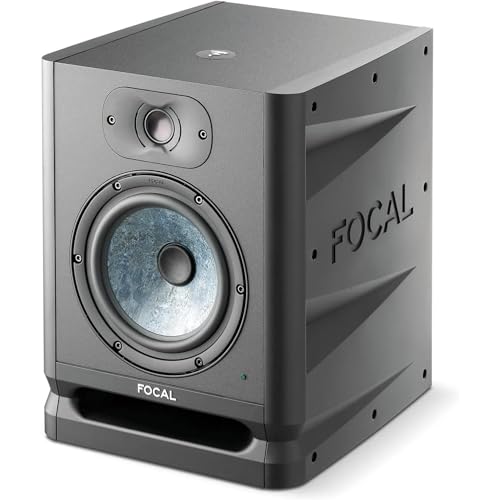
- Neutral 6.5-inch Slatefiber monitoring
- 85W RMS bi-amplified output
- TRS, XLR, and RCA inputs
Best For: Production setups needing neutral sound and headroom
Compact Studio Value

- 50W Class AB power in a compact pair
- Balanced TRS, RCA, and auxiliary inputs
- High- and low-frequency room tuning
Best For: Small home studios and desktop monitoring
Connected Desktop Monitor

- Stated 52Hz–40kHz flat response
- Balanced TRS, RCA, AUX, and Bluetooth
- Monitor mode plus app-based EQ control
Best For: Compact creator desks with varied sources
Full-Range Reference

- Three-way coaxial design for precise imaging
- 140W tri-amplified output with low distortion
- 8-inch woofer and boundary compensation EQ
Best For: Professional production and full-range monitoring
Wide-Sweet-Spot Reference – JBL 305P MkII Pair
The JBL 305P MkII pair is a practical choice for producers and podcasters looking for studio monitors with flat response characteristics and a broad listening area. Its Image Control Waveguide is designed for precise imaging, while Boundary EQ and HF Trim help adapt the speakers to different rooms.
Best For: Music production, podcasting, and cinematic sound design in small or treated rooms.
Pros:
- Image Control Waveguide provides precise imaging and a wide sweet spot.
- Dual 41-watt Class-D amplifiers and 5-inch woofers provide useful headroom and bass extension.
- Boundary EQ and HF Trim allow basic room-focused adjustments.
- Balanced XLR and 1/4-inch TRS inputs support common studio connections.
Cons:
- The 5-inch woofers may offer less low-end authority than larger monitors.
- The package is designed for wired, tabletop use rather than wireless playback.
With useful placement controls, clear imaging, and a pair-based package, the 305P MkII is a well-rounded monitoring option for compact production setups.
Purist Mixing Monitor – Yamaha HS5 Pair
The Yamaha HS5 pair is aimed at listeners who want studio monitors with flat response characteristics and an emphasis on sonic purity. Its bi-amplified 5-inch design covers a stated 54Hz to 30kHz range and accepts balanced or unbalanced signals through XLR and TRS inputs.
Best For: Music production and near-field studio monitoring where an uncolored presentation is the priority.
Pros:
- Designed to emphasize the original sound without coloring or alteration.
- Bi-amplified system combines 45 watts for low frequencies with 25 watts for highs.
- 5-inch woofer and 1-inch dome tweeter suit near-field monitoring.
- XLR and TRS inputs accept balanced or unbalanced signals.
Cons:
- The 5-inch configuration may not provide the deepest bass for bass-heavy work.
- The supplied information does not list room-tuning controls.
The HS5 pair is a straightforward fit for mixing environments where an honest, focused presentation matters more than extra features or pronounced low-end emphasis.
Flexible Home-Studio Monitor – PreSonus Eris E5 Pair
The PreSonus Eris E5 pair offers a flexible route to studio monitors with flat response characteristics, combining a woven composite woofer with a silk-dome tweeter. Acoustic tuning controls let you contour the presentation for your mixing environment, and the monitors provide XLR, TRS, and RCA connectivity.
Best For: Home studios and professional near-field monitoring setups that need connection flexibility and room adjustment.
Pros:
- 5.25-inch woofer is designed for solid low-end with minimal bass distortion.
- Silk-dome tweeter is intended to provide balanced highs without harshness.
- 80-watt Class AB bi-amplification offers useful volume and headroom.
- Acoustic tuning and XLR, TRS, and RCA inputs add setup flexibility.
Cons:
- The supplied information does not specify a frequency-response range.
- These are wired monitors with no wireless communication technology.
The Eris E5 pair stands out for its combination of tuning controls, multiple input options, and protection features, making it adaptable to varied home-studio layouts.
Low-Noise Flat-Response Pick – Kali Audio LP-6 V2
The Kali Audio LP-6 V2 is a single 6.5-inch monitor built specifically for listeners seeking studio monitors with flat response characteristics. Its updated DSP system is designed for an unaltered presentation, while the boundary EQ helps accommodate placement on a desk, against a wall, or on a stand.
Best For: Producers who want a larger single monitor with low noise, strong output, and placement flexibility.
Pros:
- Updated DSP is designed for flat frequency response without boosts or suppressions.
- 80-watt bi-amplification and 115dB maximum SPL provide substantial output capability.
- Front port and noise-reduction improvements are intended to minimize turbulence and hiss.
- Boundary EQ supports placement on stands, desks, or near walls.
Cons:
- This listing is for a single monitor, not a stereo pair.
- The 6.5-inch cabinet may require more desk or stand space than smaller monitors.
- Its stated 47Hz–21kHz range may not cover the highest frequencies of some alternatives.
The LP-6 V2 is a compelling choice when output, low noise, and placement adjustment matter, but buyers building a stereo setup should budget for a second speaker.
Wide-Sweet-Spot Pick – PreSonus Eris E7 XT
PreSonus Eris E7 XT 2-Way Active Studio Monitor with EBM Waveguide (Pack of 1)
Check Price On AmazonThe PreSonus Eris E7 XT is a strong option for producers seeking studio monitors with flat response and a broad listening sweet spot. Its 6.55-inch woofer reaches into the lows, while acoustic controls help you tailor the monitor to your room.
Best For: Home-studio mixing where wide imaging and room-tuning flexibility matter.
Pros:
- 100° horizontal by 60° vertical EBM waveguide creates a wide sweet spot and solid imaging.
- 6.55-inch woven-composite woofer supports deep low-frequency reproduction.
- Level, high-pass filter, LF trim, HF trim, and acoustic-space controls support room adjustment.
- Includes Studio One Prime and Studio Magic plug-in software.
Cons:
- Sold as a single monitor, so a stereo setup requires two units.
- The larger 6.5-inch format may need more desk or stand space than compact monitors.
Choose the Eris E7 XT if you want a nearfield monitor with a generous sweet spot and multiple ways to compensate for room acoustics. Remember to budget for a second speaker if you are building a stereo pair.
Compact Pair Pick – Yamaha HS4
The Yamaha HS4 is a practical stereo pair for smaller workspaces and creators looking for studio monitors with flat response. Its 4.5-inch woofer and 1-inch dome tweeter cover 60 Hz to 22 kHz at -10 dB, with controls for room and high-frequency adjustment.
Best For: Desktop music production, video editing, and compact DAW workstations.
Pros:
- Comes as a pair for straightforward stereo monitoring.
- Compact 4.5-inch two-way design suits tabletop setups.
- Room Control and High Trim response controls help adapt the sound to the space.
- Offers XLR/TRS combo, RCA, and stereo-mini inputs.
Cons:
- The 4.5-inch woofer is less suited to users prioritizing extended low-end output.
- Output power is rated at 26 watts.
The HS4 makes sense when desk space, simple stereo setup, and connectivity are more important than maximum bass extension or output. Its included cables and anti-slip pad add convenience for a desktop installation.
Neutral High-Output Pick – Focal Alpha 65 Evo
The Focal Alpha 65 Evo is a professional nearfield option for buyers comparing studio monitors with flat response and strong output. Its 6.5-inch Slatefiber woofer, 1-inch aluminum tweeter, and 40 Hz–22 kHz specification are designed for neutral monitoring, while adjustable shelving helps accommodate different rooms.
Best For: Mixing and production setups that need neutral tonal balance, flexible inputs, and substantial headroom.
Pros:
- 6.5-inch Slatefiber woofer and aluminum tweeter are designed for consistent tonal balance.
- 55W LF and 30W HF Class D amplification delivers up to 104 dB SPL peak at 1 meter.
- TRS, XLR, and RCA inputs support up to three audio sources.
- LF/HF shelving and sensitivity controls allow room-tuned performance.
Cons:
- Sold individually, so stereo monitoring requires two monitors.
- Its larger cabinet may be less convenient for very small desks.
The Alpha 65 Evo is the most output-focused choice here, pairing neutral monitoring features with flexible connectivity and room controls. It is a better fit for users who can accommodate a larger nearfield monitor and need more headroom.
Compact Studio Value – PreSonus Eris E4.5
The PreSonus Eris E4.5 is a practical choice for listeners seeking studio monitors with flat response in a compact desktop-friendly format. Its 4.5-inch woven-composite woofer, silk-dome tweeter, and adjustable high- and low-frequency controls make it useful for music production, multimedia reference, and everyday listening.
Best For: Small home studios, desktop setups, and buyers who want flexible inputs with room-tuning controls.
Pros:
- 50W of Class AB amplification provides substantial output for a compact pair.
- Balanced TRS, RCA, and front-panel auxiliary connections support varied equipment.
- High- and low-frequency controls help adapt the sound to your room and placement.
- Front headphone output and built-in amplifier make private monitoring convenient.
Cons:
- The 4.5-inch woofer offers less low-end reach than larger studio monitors.
- Bluetooth is listed in the product details, but the supplied connectivity description emphasizes wired inputs.
The Eris E4.5 balances compact dimensions, useful connectivity, and adjustable voicing. It is a sensible entry-level monitoring option, particularly when desk space and headphone convenience matter more than maximum bass extension.
Connected Desktop Monitor – Edifier MR3
The Edifier MR3 combines a stated flat response from 52Hz to 40kHz with modern connectivity, making it a versatile option among studio monitors with flat response. Its 3.5-inch mid-low drivers, 1-inch tweeters, and selectable Monitor mode suit compact production, video editing, and general listening setups.
Best For: Desktop creators who want monitoring modes, app-based EQ adjustment, and Bluetooth alongside wired connections.
Pros:
- Hi-Res Audio certification and a stated 52Hz–40kHz flat response support detailed monitoring.
- Balanced TRS, RCA, AUX, headphone, and Bluetooth connectivity provide broad compatibility.
- Monitor, Music, and Custom modes offer convenient voicing choices.
- EDIFIER ConneX app support enables deeper EQ customization.
Cons:
- Its 3.5-inch mid-low drivers are better suited to compact setups than deep, high-output monitoring.
- The extensive listening features may be more than needed for a strictly wired production system.
MR3 is a flexible desktop speaker system with a monitoring-oriented mode and unusually broad connection options for its size. Choose it when easy switching between production, entertainment, and wireless listening is part of the brief.
Full-Range Reference – Kali Audio IN-8 V2
The Kali Audio IN-8 V2 is designed for serious reference work, pairing an 8-inch woofer with a 4-inch midrange and 1-inch tweeter in a three-way coaxial layout. For buyers comparing studio monitors with flat response, its point-source design, low-distortion output, and boundary compensation offer a strong full-range monitoring platform.
Best For: Professional home studios and production workstations that need extended bass, high headroom, and placement flexibility.
Pros:
- Three-way coaxial architecture supports precise imaging and phase coherence.
- 140W tri-amplified power provides high headroom and independently powered drivers.
- 8-inch woofer and low-noise port deliver extended low-frequency response.
- XLR, TRS, and RCA inputs plus boundary EQ support varied setups and room placement.
Cons:
- Its larger cabinet and 25.9-pound weight require substantially more space than compact monitors.
- Sold as a single monitor, so a stereo setup requires two units.
- Its output and bass capability may be excessive for small desks or casual listening.
The IN-8 V2 is the most capable full-range option in this selection. Its size, power, and single-speaker packaging make it a more considered investment, but the coaxial three-way design and room-placement controls are well suited to demanding production work.
How We Picked These Studio Monitors with Flat Response
We focused on active nearfield monitors designed for music production, recording, mixing, and critical listening. The selection considers frequency balance, driver and amplifier design, connectivity, cabinet size, adjustability, listening distance, and overall value. Because no monitor is perfectly flat in every room, we also considered practical room-positioning controls and whether each model fits a realistic home or project-studio setup.
The list includes compact pairs for desks, conventional two-way monitors for nearfield work, and larger models for listeners who need deeper bass, greater headroom, or wider coverage. Product specifications can vary by market, so verify the current manufacturer details before buying.
Quick Comparison
| Best For | Recommended Type | What to Prioritize |
|---|---|---|
| Small desk or bedroom studio | 4.5- to 5-inch two-way monitor | Compact dimensions, low-volume clarity, boundary controls |
| General home production | 5- to 6.5-inch two-way monitor | Balanced mids, useful bass extension, flexible inputs |
| Electronic music and larger rooms | 6.5- to 8-inch monitor | Headroom, low-frequency reach, room calibration options |
| Detailed critical listening | Three-way or coaxial monitor | Driver integration, imaging, transient accuracy |
Key Buying Factors for Studio Monitors with Flat Response
Room Size and Listening Distance
Five-inch monitors are often a sensible starting point for small rooms and desktop setups. Larger woofers can produce more bass and volume, but they may excite room modes more strongly. Choose a monitor you can place symmetrically at ear height, with the tweeters aimed toward your listening position.
Frequency Balance and Room Controls
Look for a neutral presentation rather than exaggerated bass or treble. Rear-panel high- and low-frequency trim controls are valuable when monitors sit near walls, corners, or a desk. Acoustic treatment and careful placement usually affect tonal accuracy more than a modest specification difference.
Power, Headroom, and Bass Extension
More amplifier power can provide cleaner peaks and improved dynamics, but maximum loudness should not be the main selection criterion. Check the published frequency range and consider whether you need a subwoofer for deep bass work. A monitor that reaches lower is not automatically more accurate in an untreated room.
Connections and Convenience
Balanced XLR or TRS inputs are preferable for studio interfaces because they help reduce hum and interference. RCA inputs can be useful for consumer equipment, while Bluetooth is convenient for casual playback but should not replace a wired monitoring connection during mixing.
Two-Way Versus Three-Way Design
Two-way monitors combine a woofer and tweeter and offer a straightforward, space-efficient solution. Three-way or coaxial designs can improve midrange separation and imaging, but they generally cost more and benefit from greater listening distance and better room setup.
Who Should Buy Which Studio Monitors with Flat Response?
- Choose a compact 4.5- or 5-inch pair for a small desk, bedroom studio, podcast workspace, or nearfield listening position.
- Choose a 5- to 6.5-inch model if you want the most versatile balance of size, bass response, output, and price for general music production.
- Choose a larger 6.5- or 8-inch monitor when your room allows more listening distance and you need stronger low-frequency extension or higher headroom.
- Choose a three-way or coaxial monitor for demanding mixing, improved driver integration, and more detailed monitoring when your budget and room support it.
- Choose Bluetooth-enabled speakers only when convenient wireless playback matters; for accurate work, connect your audio interface directly with balanced cables whenever possible.
Whichever model you select, use matched left and right monitors, place them symmetrically, form an equilateral triangle with your listening position, and allow time to learn their tonal character before making critical mix decisions.