
A reliable wireless adapter can give an older desktop or laptop a major connectivity upgrade without running an Ethernet cable across the room. The best models combine modern WiFi standards, strong antennas, and a fast USB or PCIe interface.
We’ve selected 10 WiFi adapters with gigabit speeds, covering compact USB dongles, antenna-equipped desktop adapters, and PCIe cards for demanding home networks.
Best 10 Wifi Adapters with Gigabit Speeds Picks for 2026
Top 6E Range Pick
ALFA Network AXE3000 Wi-Fi 6E Adapter

- Tri-band Wi-Fi 6E with 6GHz support
- Up to 3000Mbps combined throughput
- Detachable 5dBi high-gain antennas
Best For: Windows and Linux users seeking flexible Wi-Fi 6E coverage
Best Wi-Fi 7 Upgrade
D-Link AE65U BE6500 USB Adapter

- Wi-Fi 7 tri-band performance up to 6500Mbps combined
- High-gain antennas with included USB cradle
- Windows 11 24H2 required for full 6GHz features
Best For: Windows users upgrading to a compatible Wi-Fi 7 network
Best Internal Desktop Card
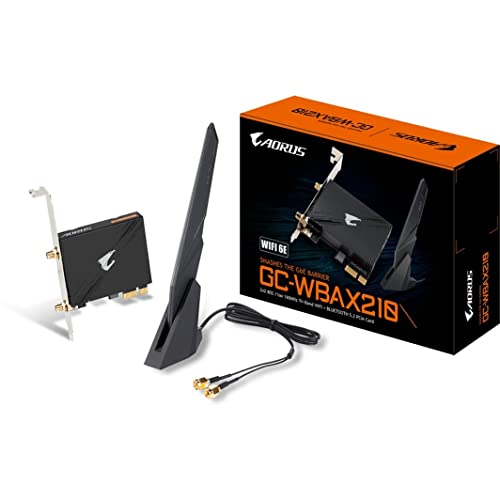
- Internal desktop expansion-card design
- Intel AX210 tri-band Wi-Fi 6E module
- Wireless speeds up to 2400Mbps
Best For: Desktop PC upgrades needing an internal Wi-Fi 6E solution
Best High-Speed Windows Dongle
UGREEN AXE5400 Wi-Fi 6E Adapter
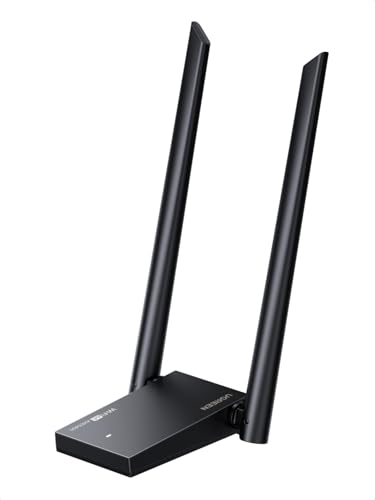
- Tri-band AXE5400 performance with 6GHz
- Dual high-gain external antennas
- Supports WPA3, OFDMA, and MU-MIMO
Best For: Windows users seeking a fast USB adapter for demanding wireless tasks
Best PCIe Upgrade
TP-Link Archer TX3000E Wi-Fi 6 Card

- Wi-Fi 6 speeds up to 2.4Gbps
- Magnetized antenna base and high-gain antennas
- Bluetooth 5.3 included
Best For: Windows desktop PCs with an open PCIe slot
Best Compact USB Value

- Wi-Fi 6 speeds up to 1.8Gbps
- USB 3.0 with high-gain antenna
- Compact Windows 10/11 design
Best For: Windows users wanting a small plug-in Wi-Fi upgrade
Best for Older Windows PCs
NETGEAR Nighthawk A7500 Wi-Fi 6 Adapter

- AX1800 speeds up to 1.8Gbps
- Flexible antenna for signal placement
- Compatible with Wi-Fi 6 and Wi-Fi 5 routers
Best For: Windows PCs and notebooks needing an external Wi-Fi upgrade
Best 6E Performance
AX5400 Tri-Band USB WiFi Adapter

- AX5400 tri-band speeds with 6GHz support
- Dual high-gain antennas for extended range
- USB 3.0, WPA3, OFDMA, and MU-MIMO
Best For: Windows 11 gaming, VR, and high-resolution streaming
Best Mainstream Pick
TP-Link Archer TX20U Plus AX1800 Adapter

- Dual-band WiFi 6 speeds up to 1800Mbps
- One-meter USB 3.0 cable and adjustable antenna
- WPA3, MU-MIMO, OFDMA, and two-year warranty
Best For: Windows desktops and laptops needing a reliable WiFi 6 upgrade
Best WiFi 7 Upgrade
MSI BE6500 Tri-Band USB Adapter

- WiFi 7 tri-band connectivity up to 2880Mbps
- Multi-Link Operation for faster, steadier links
- Beamforming, high-gain antennas, WPA3, and cradle
Best For: Compatible Windows or Linux systems ready for WiFi 7
Top 6E Range Pick – ALFA Network AXE3000 Wi-Fi 6E Adapter
If you need wifi adapters with gigabit speeds for streaming, gaming, or large file transfers, the ALFA Network AWUS036AXML combines tri-band Wi-Fi 6E with a USB 3.0 connection. Its 6GHz support can help reduce congestion on compatible networks, while the detachable high-gain antennas offer placement flexibility.
Best For: Users who want a Linux- and Windows-compatible Wi-Fi 6E adapter with external antennas and up to 3Gbps combined throughput.
Pros:
- Tri-band 2.4GHz, 5GHz, and 6GHz Wi-Fi 6E support
- Up to 3000Mbps combined throughput
- Two detachable 5dBi high-gain antennas
- Compatible with Windows and Linux systems
Cons:
- Full 6GHz benefits require a compatible router and device setup
- USB adapter with external antennas may take more desk space than a compact dongle
The ALFA Network is a strong choice when range flexibility and operating-system compatibility matter. Its advertised combined speed and Wi-Fi 6E band make it well suited to demanding wireless tasks, provided your network supports those capabilities.
Best Wi-Fi 7 Upgrade – D-Link AE65U BE6500 USB Adapter
For shoppers comparing wifi adapters with gigabit speeds, the D-Link AE65U is a forward-looking USB 3.0 option for Windows PCs. It supports Wi-Fi 7 features and tri-band operation, with high-gain antennas and a cradle that can help optimize placement.
Best For: Windows 10 and 11 desktop or laptop users with a compatible Wi-Fi 7 router who want high advertised tri-band performance.
Pros:
- Wi-Fi 7 tri-band performance rated up to 6500Mbps combined
- Supports 6GHz operation, WPA3, OFDMA, MU-MIMO, and Multi-RU
- Includes adjustable high-gain antennas, cradle, and extension cable
- USB 3.0 connectivity and Windows 10/11 support
Cons:
- 6GHz and full Wi-Fi 7 features require Windows 11 version 24H2 or later
- Windows 10 use is limited to the 2.4GHz and 5GHz bands
- Requires a compatible 6GHz Wi-Fi network for the newest features
The AE65U makes the most sense for buyers upgrading toward Wi-Fi 7 rather than simply adding basic wireless connectivity. Check your Windows version and router capabilities first, since the headline features depend on both.
Best Internal Desktop Card – GIGABYTE GC-WBAX210 Wi-Fi 6E
GIGABYTE WiFi 6E GC-WBAX210 (2x2 802.11ax/ Tri-Band WiFi/Bluetooth 5.2/ PCIe Expansion Card)
Check Price On AmazonIf you prefer an internal solution over USB wifi adapters with gigabit speeds, the GIGABYTE GC-WBAX210 is a PCIe expansion card for desktop PCs. Its Intel AX210 module supports dual-stream Wi-Fi 6E across the 2.4GHz, 5GHz, and 6GHz bands, with advertised wireless speeds up to 2400Mbps.
Best For: Desktop PC builders who want an internal tri-band Wi-Fi 6E card and Bluetooth 5.2 support.
Pros:
- Internal PCIe expansion-card design for desktop systems
- Intel Wi-Fi 6E AX210 module with dedicated 6GHz spectrum
- Supports 2.4GHz, 5GHz, and 6GHz dual-stream wireless
- Advertised wireless connection speed up to 2400Mbps
Cons:
- Designed for desktops rather than laptops or portable devices
- Installation requires an available compatible expansion slot
- 6GHz performance requires a compatible network
The GC-WBAX210 is a sensible choice for a desktop upgrade where a clean internal installation is preferred. It offers modern Wi-Fi 6E connectivity without occupying an external USB port, but it is less flexible than a portable adapter.
Best High-Speed Windows Dongle – UGREEN AXE5400 Wi-Fi 6E Adapter
The UGREEN AXE5400 is a practical contender among wifi adapters with gigabit speeds, offering tri-band Wi-Fi 6E through USB 3.0. It pairs advertised speeds up to 5400Mbps across the bands with dual high-gain antennas, WPA3 security, and traffic-management features for busy home networks.
Best For: Windows 10 and 11 desktop or laptop users who want a high-speed Wi-Fi 6E USB adapter for gaming, streaming, or demanding work.
Pros:
- Tri-band AXE5400 performance with 6GHz support
- Dual high-gain external antennas for coverage and reception
- Supports WPA3, OFDMA, and MU-MIMO
- Includes Windows drivers for setup on Windows 10/11
Cons:
- Only compatible with Windows 10/11 according to the supplied specifications
- Full 6GHz performance requires a compatible Wi-Fi 6E network
- External antennas make it less compact than a small travel dongle
The UGREEN adapter stands out for buyers focused on high advertised throughput and stronger antenna performance. It is a good fit for Windows systems, but shoppers using Linux or another operating system should look elsewhere.
Best PCIe Upgrade – TP-Link Archer TX3000E Wi-Fi 6 Card
For desktop users comparing wifi adapters with gigabit speeds, the TP-Link Archer TX3000E is a strong PCIe option. Its Wi-Fi 6 dual-band connection is rated up to 2.4Gbps, with OFDMA and MU-MIMO aimed at reducing congestion and latency. The included magnetized antenna base also gives you flexibility when positioning the antennas.
Best For: Windows 10 or 11 desktop PCs that need a high-speed Wi-Fi and Bluetooth upgrade.
Pros:
- Wi-Fi 6 speeds up to 2.4Gbps across the 5GHz and 2.4GHz bands.
- OFDMA and MU-MIMO support can help with busy networks and low-latency use.
- Includes a magnetized antenna base, high-gain antennas, Bluetooth 5.3, and a low-profile bracket.
Cons:
- Requires an available PCIe slot and driver installation.
- Bluetooth functionality requires the included USB cable to connect to an internal F_USB header.
- Compatible operating systems are limited to 64-bit Windows 10 and Windows 11.
This is the most capable choice here for a desktop build that can accommodate an internal card. Its rated throughput, flexible antenna placement, and Bluetooth support make it a practical all-around upgrade, provided your PC has the required connections.
Best Compact USB Value – Nineplus AX1800 Wi-Fi Adapter
The Nineplus AX1800 is a compact USB choice for shoppers seeking wifi adapters with gigabit speeds without opening a desktop case. It supports Wi-Fi 6 dual-band rates up to 1.8Gbps, uses USB 3.0, and includes a high-gain antenna for reception. Windows 11 and 10 systems are supported.
Best For: Windows desktops and laptops that need a small, external Wi-Fi 6 adapter for everyday browsing, streaming, and gaming.
Pros:
- Rated up to 1,201Mbps on 5GHz and 574Mbps on 2.4GHz.
- USB 3.0 supports the adapter’s faster wireless connections.
- Compact design and a high-gain antenna make it convenient for travel or crowded USB setups.
- Supports WPA3, WPA2, WPA, and WEP security technologies.
Cons:
- Supports Windows 10 and 11 only; Windows 7 and Mac systems are not supported.
- It is a Wi-Fi receiver, not a cellular data plan or standalone internet connection.
- Rated speeds are below those of the TP-Link PCIe card.
This Nineplus adapter keeps installation simple and the hardware footprint small. It is a sensible budget-friendly fit for compatible Windows systems, especially when you want Wi-Fi 6 performance through USB rather than an internal expansion card.
Best for Older Windows PCs – NETGEAR Nighthawk A7500 Wi-Fi 6 Adapter
The NETGEAR Nighthawk A7500 is designed to bring Wi-Fi 6 performance to older Windows PCs and notebooks through USB 3.0. Among wifi adapters with gigabit speeds, it offers AX1800 dual-band throughput up to 1.8Gbps and works with Wi-Fi 6 or Wi-Fi 5 routers and mesh systems.
Best For: Windows 10 or 11 desktops and notebooks that need a straightforward external upgrade for streaming, video calls, gaming, or work.
Pros:
- AX1800 wireless performance rated up to 1.8Gbps.
- Works with Wi-Fi 6 and Wi-Fi 5 routers or mesh systems.
- Flexible antenna helps you seek a stronger signal and improved coverage.
- USB installation avoids the need for an internal network-card replacement or ISP plan.
Cons:
- Requires Microsoft Windows 10 or 11 and is not listed as compatible with Mac.
- Its larger external design may be less discreet than a nano-style adapter.
- Actual speeds depend on the router, network conditions, and other factors.
The A7500 is a convenient upgrade for a Windows computer that lacks modern Wi-Fi hardware. Its flexible antenna and broad router compatibility make it particularly useful when signal placement matters more than having the smallest possible adapter.
Best 6E Performance – AX5400 Tri-Band USB WiFi Adapter
If you need wifi adapters with gigabit speeds for demanding desktop workloads, this PLERY model offers a high-capacity AX5400 connection across three bands. Its 6GHz support is especially useful for compatible Windows 11 systems paired with a WiFi 6E or WiFi 7 router.
Best For: Competitive gaming, 8K streaming, VR, and users with compatible Windows 11 equipment.
Pros:
- Tri-band AX5400 speeds rated up to 5400Mbps.
- 6GHz band can help reduce congestion and latency.
- Dual adjustable high-gain antennas support longer-range reception.
- USB 3.0, WPA3, OFDMA, and MU-MIMO are included.
Cons:
- 6GHz access requires Windows 11 and a compatible WiFi 6E/7 router.
- Windows 10 is limited to 5GHz and 2.4GHz connections.
- Actual performance depends on the router and network conditions.
This is the most feature-rich option here for users who can take advantage of 6GHz. Check compatibility before buying, particularly if you use Windows 10 or Linux.
Best Mainstream Pick – TP-Link Archer TX20U Plus AX1800 Adapter
The TP-Link Archer TX20U Plus is a practical choice among wifi adapters with gigabit speeds, delivering dual-band WiFi 6 performance up to 1800Mbps. Its adjustable antenna, one-meter USB 3.0 cable, and desktop-oriented design make positioning easier.
Best For: Windows 10 or 11 users who want a reputable dual-band upgrade for gaming, streaming, and downloads.
Pros:
- WiFi 6 speeds up to 1201Mbps on 5GHz and 574Mbps on 2.4GHz.
- Adjustable high-gain antenna and one-meter cable aid placement.
- Supports WPA3, MU-MIMO, and OFDMA.
- Includes a two-year manufacturer warranty.
Cons:
- Compatible with Windows 10 and 11, but not Linux or Mac.
- Does not provide 6GHz connectivity.
- Maximum speeds require a suitable WiFi 6-or-newer router.
For Windows desktop users who do not need 6GHz, this adapter balances useful WiFi 6 features with flexible placement. Its operating-system limitation is the main point to verify before purchase.
Best WiFi 7 Upgrade – MSI BE6500 Tri-Band USB Adapter
The MSI BE6500 is aimed at shoppers seeking wifi adapters with gigabit speeds and newer WiFi 7 features. It supports tri-band wireless networking, Multi-Link Operation, beamforming, and high-gain antennas, with a cradle included for flexible desktop placement.
Best For: Windows or supported Linux users upgrading to WiFi 7 for lower latency and more stable multi-link connectivity.
Pros:
- WiFi 7 support with rated speeds up to 2880Mbps on 6GHz and 5GHz.
- Multi-Link Operation can combine links for faster, steadier performance.
- Tri-band support includes 6GHz, 5GHz, and 2.4GHz.
- High-gain antennas, beamforming, WPA3, and a cradle are included.
Cons:
- Full WiFi 7 benefits require compatible networking equipment.
- Rated wireless speeds are theoretical and vary with conditions.
- Only a one-year manufacturer warranty is listed.
This is the forward-looking option for a compatible WiFi 7 setup, particularly where lower latency and MLO matter. Its value is greatest when your router and operating system support the listed features.
How We Picked the Best Wifi Adapters with Gigabit Speeds
We focused on adapters that advertise gigabit-class wireless performance and support current standards, including WiFi 6, WiFi 6E, and WiFi 7. We also considered connection type, advertised throughput, band support, antenna design, Bluetooth availability, installation requirements, and practical compatibility with desktop PCs and laptops.
Advertised speeds are theoretical maximums. Actual performance depends on your router, internet plan, signal strength, interference, channel width, operating system, and the number of connected devices.
Quick Comparison
- Best flexibility: USB adapters are easy to move between computers and usually require minimal installation.
- Best desktop performance: PCIe cards often provide larger antennas, better reception, and a more permanent connection.
- Best future readiness: WiFi 6E and WiFi 7 models can use newer spectrum and features, but your router must support them.
- Best value: Dual-band WiFi 6 adapters are often sufficient for streaming, gaming, video calls, and everyday browsing.
Key Buying Factors for Wifi Adapters with Gigabit Speeds
WiFi Standard and Bands
WiFi 6 improves efficiency on crowded networks, while WiFi 6E adds access to the 6GHz band for compatible routers and devices. WiFi 7 can offer higher throughput and improved handling of multiple connections, but it generally costs more and delivers its greatest benefits in newer network setups.
USB or PCIe Connection
USB models are the simplest choice for laptops and desktops, especially when portability matters. Prefer USB 3.0 or faster for high-speed adapters. PCIe cards require an open internal slot but can offer better antenna placement and a cleaner permanent installation.
Antennas and Placement
External or high-gain antennas can improve reception when a desktop is under a desk or far from the router. A USB extension cradle can also help position a dongle away from metal cases and other sources of interference.
Compatibility and Drivers
Check Windows support, available PCIe slots, USB requirements, and whether Bluetooth functionality needs a separate internal USB cable. Confirm driver availability before buying, particularly for Linux, older Windows versions, or newly released WiFi 7 hardware.
Who Should Buy Which Wifi Adapters with Gigabit Speeds?
Choose a USB WiFi 6 adapter if you want an affordable, straightforward upgrade for browsing, streaming, online meetings, or gaming. Choose USB WiFi 6E or WiFi 7 if you already own a compatible router and want access to newer bands or higher capacity.
Choose a PCIe adapter for a stationary desktop where reception, antenna placement, and long-term stability matter most. For maximum real-world results, match the adapter to your router’s standard, place antennas in an open position, and use a wired Ethernet connection whenever consistently lowest latency is essential.