
Low-light photography is easier when you have the right light source. The best camera flashes for low light can freeze motion, add flattering fill, and help you keep ISO noise under control.
This roundup includes traditional speedlights, compact flashes, and rechargeable LED lights, so you can match your setup to still photography, video, travel, or everyday shooting.
Best 10 Camera Flashes for Low Light Picks for 2026
Best Bi-Color Camera Light
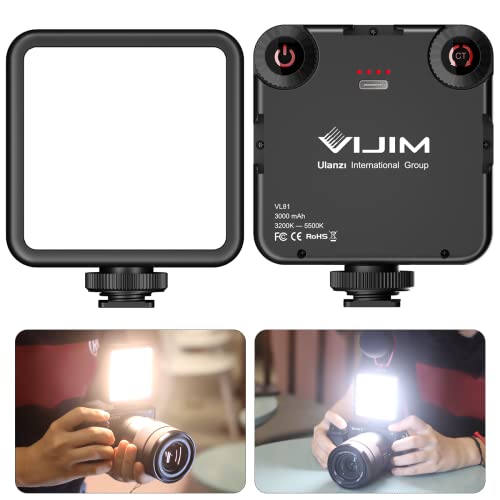
- 81 LEDs with CRI95 output
- Adjustable 3200K–5600K color temperature
- 3000mAh battery and built-in softbox
Best For: Vlogging, mobile content, and close-up photography
Best Traditional Speedlight

- GN33 output for indoor and event photography
- Eight manual power levels from 1/128 to 1/1
- S1/S2 optical slave modes and included accessories
Best For: Manual portraits, events, and basic off-camera lighting
Best Compact Video Light

- CRI95 output with 2700K–6500K adjustment
- 0–100% brightness control and 120-degree beam
- Three cold shoes plus a 1/4-inch thread
Best For: Vlogging, livestreaming, portraits, and tabletop content
Best Pocket Manual Flash

- Lightweight 150g body with vintage-style controls
- Manual output from 1/128 to 1/1
- Rechargeable battery supports up to 650 full-power flashes
Best For: Portable manual flash photography and street shooting
Best Pocket LED Fill Light

- 5500K daylight output with CRI 95+
- Five brightness levels and rechargeable 2000mAh battery
- Three cold shoes plus 1/4-inch mounting thread
Best For: Portable fill lighting for vlogs, portraits, and product video
Best Compact Manual Flash
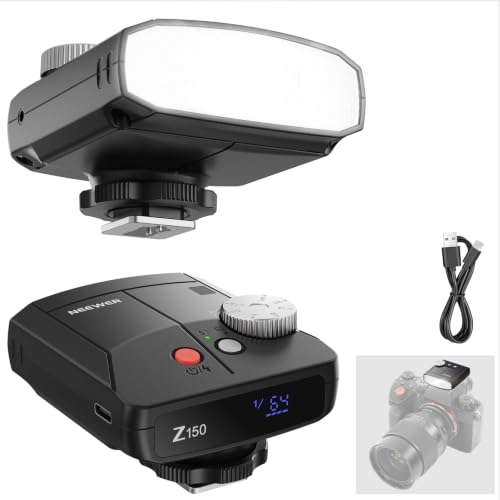
- 20Ws output with GN15 rating
- Manual power from 1/64 to full
- S1 and S2 optical slave modes
Best For: Manual flash photography with compatible cameras
Best RGB Camera Fill Light
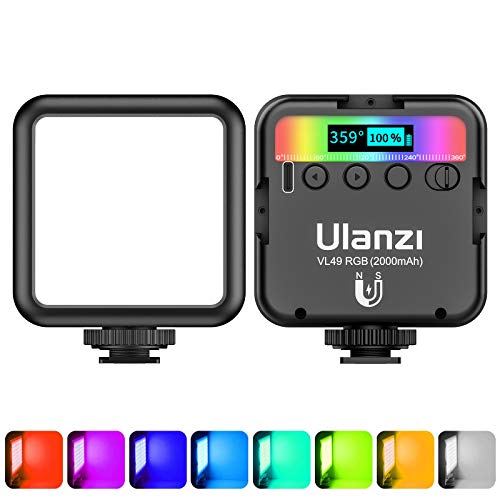
- 2500K–9000K color temperature range
- 360-degree hue and 0–100% brightness control
- Magnetic back, three cold shoes, and 1/4-inch thread
Best For: Portable creative lighting for video, portraits, and streaming
Best Manual Value
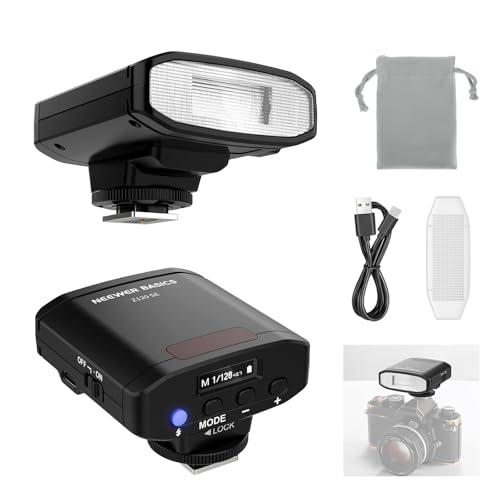
- GN12 manual flash with 5600K output and diffuser
- Built-in 2000mAh battery supports up to 500 full-power flashes
- No TTL, HSS, or automatic exposure; needs a standard center-contact hot shoe
Best For: Manual portraits, fill light, and portable creator setups
Best Multi-Use Pick

- Combines GN16 flash, focus assist, and continuous video light
- 90-degree tilt and diffuser support direct or bounce lighting
- USB-C rechargeable battery delivers up to 550 full-power flashes
Best For: Hybrid shooters, night scenes, portraits, and vlogging
Best Ultra-Compact Light

- Weighs just 36g for travel-friendly lighting
- GN8 flash with four manual brightness levels
- Adds a 5600K continuous light mode, but charger and cable are not included
Best For: Travel, close-ups, macro shots, and lightweight camera kits
Best Bi-Color Camera Light – ULANZI VL-81 LED Video Light
For creators comparing camera flashes for low light, the ULANZI VL-81 is a compact continuous-light alternative for video, vlogging, and close-up photography. Its 81 LEDs, softbox, adjustable 3200K–5600K color temperature, and CRI95 rating provide flexible, natural-looking illumination.
Best For: Vloggers, smartphone and action-camera users, and photographers who prefer adjustable continuous light over a traditional flash.
Pros:
- Bi-color 3200K–5600K output with CRI95 color rendering.
- Built-in 3000mAh battery provides up to 150 minutes at maximum brightness or 480 minutes at minimum brightness.
- Softbox helps diffuse the light, while three cold-shoe mounts support multiple lights or accessories.
- Compact 120g design works with cameras, phones, GoPros, and gimbal setups.
Cons:
- It is a continuous LED light rather than a still-photo speedlight.
- Not water resistant.
The VL-81 is a practical choice when you need portable, adjustable illumination for both video and photography. The rechargeable battery and softbox add convenience for mobile shooting, while the multiple mounts make it easy to expand a setup.
Best Traditional Speedlight – PHOTOOLEX FK300 Manual Flash
For photographers specifically seeking camera flashes for low light, the PHOTOOLEX FK300 offers a conventional hot-shoe design with GN33 output. Its manual controls, S1/S2 optical slave modes, and eight power levels make it useful for indoor portraits, events, and simple off-camera lighting.
Best For: Photographers who want a straightforward manual flash with broad camera compatibility and basic wireless optical triggering.
Pros:
- GN33 output provides useful reach for indoor portraits, events, and studio work.
- Manual power adjusts across eight levels from 1/128 to 1/1.
- S1 and S2 optical modes support off-camera and multi-light setups.
- Includes a pouch, flash stand, 12 color filters, and a 24-month warranty.
Cons:
- No TTL or automatic exposure control; settings must be adjusted manually.
- Maximum sync speed is 1/250 second.
- Not water resistant.
The FK300 is a versatile value-oriented speedlight for users comfortable with manual exposure. Its universal single-contact hot shoe and optical slave modes broaden its usefulness, although photographers wanting TTL convenience should look elsewhere.
Best Compact Video Light – SmallRig P96 Mini LED Light
The SmallRig P96 is a useful alternative to camera flashes for low light when you need continuous illumination for video, portraits, or live content. It combines 96 light beads, CRI95 output, 0–100% dimming, and a broad 2700K–6500K color-temperature range in a portable 103g body.
Best For: Content creators, vloggers, and photographers needing adjustable light for cameras, tripods, livestreams, or tabletop setups.
Pros:
- CRI95 lighting and a 120-degree illumination angle support natural-looking results.
- 2700K–6500K color adjustment and 0–100% brightness control suit varied environments.
- Three cold-shoe mounts allow lights to be linked for greater brightness.
- Includes a 1/4-inch threaded connection for tripods, stands, and compatible camera adapters.
Cons:
- Maximum battery runtime is about 105 minutes.
- Not water resistant.
- Requires a charger under 20W; high-power PD chargers may prevent normal charging.
The P96 is a flexible, small-format panel for creators who value color control and continuous output. Its mounting options are especially useful for expanding a compact lighting rig, but the charging limitations require some attention when traveling.
Best Pocket Manual Flash – NEEWER Z160 SE Speedlight
The NEEWER Z160 SE is a small manual speedlight for photographers comparing camera flashes for low light on standard single-contact hot-shoe cameras. It delivers 20Ws of power, GN15 output, 1/1–1/128 adjustment, and S1/S2 optical slave modes, while its built-in battery supports up to 650 full-power flashes.
Best For: Street photographers and manual-flash users who prioritize a lightweight, rechargeable unit for everyday shooting.
Pros:
- Compact 150g design helps reduce hand fatigue and fits easily in a carrying bag.
- Power adjusts from 1/128 to 1/1 for controlled manual exposure.
- Built-in 1200mAh battery supports up to 650 full-power flashes and charges in about 1.5 hours.
- S1/S2 optical slave modes enable simple wireless triggering.
Cons:
- No TTL, HSS, automatic exposure, or camera-menu control.
- GN15 output is more modest than larger speedlights.
- Compatibility has specific exclusions, and Fujifilm and some mirrorless cameras require mechanical-shutter operation.
The Z160 SE is appealing when portability and battery convenience matter more than automation or maximum power. Its single-contact design keeps operation simple, but buyers should carefully verify hot-shoe and camera compatibility before ordering.
Best Pocket LED Fill Light – Ulanzi VL49
For creators comparing camera flashes for low light, the Ulanzi VL49 is a compact continuous LED option rather than a traditional flash. Its 5500K daylight output, five brightness levels, and CRI 95+ rendering make it useful for adding natural-looking fill light to portraits, product shots, vlogs, and live streams.
Best For: Portable on-camera or smartphone fill lighting for vlogging, streaming, portraits, and product video.
Pros:
- Pocket-sized design weighs about 130g and includes a rechargeable 2000mAh battery.
- Five brightness settings provide up to 120 minutes at maximum output or up to 300 minutes at minimum output.
- Three cold-shoe mounts and a 1/4-inch screw hole support multi-light rigs, tripods, and stabilizers.
- 5500K output and CRI 95+ LEDs produce natural-looking illumination.
Cons:
- It is a continuous LED light, not a conventional camera flash.
- Color temperature is listed as 5500K, so it offers less color flexibility than the RGB version.
- It is not water resistant.
The VL49 is a practical choice when you need lightweight, adjustable illumination that stays on for video or close-up photography. Choose it over a flash when portability and continuous lighting matter more than flash-freezing motion.
Best Compact Manual Flash – NEEWER Z150 Mini Flash
Among camera flashes for low light, the NEEWER Z150 is the most traditional flash in this group. It delivers 20Ws of output with a GN15 rating, manual power control from 1/64 to full power, and optical slave modes for photographers who want a small, straightforward unit.
Best For: Photographers who want a lightweight manual flash for compatible cameras and simple off-camera setups.
Pros:
- Compact 103g design is easy to carry for everyday shooting.
- Manual output ranges from 1/64 to 1/1, allowing control over fill-light intensity.
- S1 and S2 optical slave modes support basic wireless triggering, with S2 designed to ignore preflashes.
- 20Ws output, GN15, and 6000K color temperature provide useful low-light fill.
Cons:
- No TTL, HSS, automatic exposure, or camera-menu control.
- Maximum shutter speed is listed as 1/200 second.
- Requires a standard center-contact hot shoe and may need mechanical-shutter mode on some mirrorless cameras.
The Z150 makes sense if you are comfortable setting flash power yourself and have a confirmed compatible hot shoe. It offers more direct flash output than an LED panel, but its manual-only operation demands closer attention to exposure and compatibility.
Best RGB Camera Fill Light – Ulanzi VL49 RGB
For camera flashes for low light that also need creative color, the Ulanzi VL49 RGB provides continuous illumination with adjustable hue, brightness, and color temperature. Its 60 LEDs, CRI 95+ rating, and 2500K–9000K range make it suitable for both natural fill and stylized content.
Best For: Vloggers, streamers, and photographers who need portable white light plus RGB effects.
Pros:
- Hue adjusts from 0–359 degrees, brightness from 0–100%, and color temperature from 2500K to 9000K.
- CRI 95+ LEDs and up to 800 lux at 0.5m support natural-looking illumination.
- Built-in 2000mAh battery runs up to two hours at maximum brightness or up to 10 hours at minimum brightness.
- Magnetic back, three cold shoes, and a 1/4-inch screw support flexible mounting.
Cons:
- It is a continuous LED panel, not a traditional flash.
- Maximum-brightness battery life is limited to about two hours.
- It is not water resistant.
The VL49 RGB is the versatile pick for creators who want one small light for low-light fill, warm or cool color matching, and accent effects. Its continuous output is especially convenient for video, though it will not provide the brief high-power burst of a dedicated flash.
Best Manual Value – NEEWER Basics Z120 SE
For photographers seeking camera flashes for low light without automatic exposure features, the NEEWER Basics Z120 SE is a compact manual option. Its GN12 output, diffuser, built-in battery, and adjustable power make it useful for portraits, fill light, and everyday shooting—provided your camera has a standard single-contact hot shoe.
Best For: Manual flash users, portraits, travel, and creator lighting setups.
Pros:
- Compact 128g design with built-in 2000mAh battery and up to 500 full-power flashes.
- Manual output adjusts from 1/128 to 1/1, with S1 and S2 optical slave modes.
- GN12 output, 5600K color temperature, and included diffuser provide softer fill light.
Cons:
- No TTL, HSS, automatic flash exposure, or camera-menu control.
- Requires mechanical shutter operation on Fujifilm and other compatible mirrorless cameras.
- Recommended for lenses 88mm or shorter; longer focal lengths may underexpose the lower frame.
The Z120 SE is a straightforward choice when you want rechargeable, adjustable flash power at a small size. Its limitations are significant for automated workflows, but they are clear trade-offs for a simple manual unit.
Best Multi-Use Pick – ULANZI F16R 3-in-1 Flash
The ULANZI F16R combines a GN16 flash with focus-assist and continuous-light functions, making it a versatile option among camera flashes for low light. Its adjustable color temperature, tilting head, rechargeable battery, and diffuser suit photographers who also shoot video or need help focusing in dim scenes.
Best For: Night street photography, backlit portraits, vlogging, and hybrid photo-video use.
Pros:
- Three functions in one unit: flash, focus-assist light, and continuous video light.
- GN16 output, seven power levels, up to 550 flashes per charge, and USB-C charging.
- 90-degree tilt, diffuser, and 2500K–6500K bi-color lighting with CRI 96.
Cons:
- Requires a standard center-contact hot shoe and is not compatible with certain listed Canon cameras.
- Flash is unavailable while the unit is recycling.
- Only a one-month warranty is listed in the supplied details.
The F16R stands out when one compact light needs to cover both stills and video. Its GN16 output and tilt range add flexibility, while the single-pin design means compatibility should be checked before ordering.
Best Ultra-Compact Light – ULANZI SL02 Mini Flash
For a minimal travel setup, the ULANZI SL02 is one of the lightest camera flashes for low light. This 36g mini unit offers four manual brightness levels, a GN8 flash, and a separate continuous-light mode, making it suitable for close-ups, compact cameras, and simple on-the-go lighting.
Best For: Travel photographers, macro and close-up work, and lightweight compact-camera kits.
Pros:
- Extremely light 36g design for portable shooting.
- Four selectable flash levels from 1/1 to 1/8, plus GN8 output at ISO 100.
- Continuous video light offers 5600K illumination, CRI 95, and up to 1 hour 25 minutes of operation.
Cons:
- Compatibility is limited to certain single-contact hot-shoe cameras, with many listed exclusions.
- Charger and cable are not included.
- Recommended shutter speed is no faster than 1/250s.
The SL02 prioritizes size and simplicity over power and automation. It can be a practical backup or travel light, but carefully verify the camera model and plan for a separate Type-C charging cable.
How We Picked These Camera Flashes for Low Light
We selected products across several practical categories rather than treating every light as a direct substitute. The lineup includes manual speedlights for still photography, small on-camera flashes for portability, and continuous LED lights for video or situations where you need to preview the lighting effect.
Our comparison focuses on usable output, power control, color flexibility, battery capacity, recycling behavior, mounting options, compatibility, and overall convenience. Because a high guide number does not tell the whole story, we also considered whether each model is easy to position, recharge, and use on a compact camera setup.
Quick Comparison
| Type | Best For | What to Look For |
|---|---|---|
| Manual speedlight | Portraits, events, and bounce flash | Guide number, power range, wireless slave modes |
| Mini camera flash | Travel and casual photography | Compact size, recycle time, camera compatibility |
| Continuous LED light | Video, close-ups, and previewable fill | Brightness, color temperature, battery life |
| Hybrid flash/light | Mixed photo and video use | Modes, mounting flexibility, operating simplicity |
Key Buying Factors for Camera Flashes for Low Light
Flash Output and Coverage
Guide number and watt-second ratings provide a useful starting point, but real performance depends on distance, modifier use, ISO, and lens aperture. Higher output gives you more flexibility for bouncing light or lighting subjects farther away.
Manual Control and Compatibility
Check whether the flash supports your camera’s hot shoe and whether it offers automatic TTL metering. The products in this selection are largely manual or broadly compatible, which can be excellent value but requires you to set power and exposure yourself.
Recycle Time and Battery Life
Fast recycling matters for moving subjects, while a larger rechargeable battery is useful for events and extended sessions. LED lights should be evaluated by continuous runtime as well as brightness, since maximum output can drain batteries quickly.
Color and Light Quality
Daylight-balanced flash is convenient for stills, while bi-color or RGB LEDs offer more creative control. A high CRI rating is particularly useful for video, products, and skin tones under continuous lighting.
Size, Mounting, and Positioning
Compact lights suit small cameras and travel kits, but they may have less reach. Multiple cold shoes, a 1/4-inch thread, or wireless slave modes can make it easier to add accessories or position the light off-camera.
Who Should Buy Which Camera Flashes for Low Light?
Choose a traditional manual speedlight if you photograph portraits, parties, or indoor events and want stronger output for bounce lighting. Choose a mini flash if portability and simple on-camera fill matter more than maximum range.
Choose a continuous LED for video, tabletop photography, close-ups, or any situation where seeing the lighting effect before recording is important. A bi-color model is the most flexible for mixed ambient lighting, while an RGB light suits creative accents and content creation.
Choose a hybrid model if you switch between stills and video and want one compact tool for both. Before buying, confirm your camera’s hot-shoe design, decide whether manual operation is acceptable, and compare the manufacturer’s stated output with the working distance you actually need.