
The best voice recorders with external microphone input give you more control than basic dictaphones, letting you connect lavalier, XLR, USB, or other compatible microphones for cleaner, more flexible recordings.
This roundup covers compact recorders for lectures and interviews, multitrack podcasting tools, filmmaker-friendly lavalier systems, and advanced 32-bit float models. The right choice depends on microphone compatibility, input type, recording quality, battery life, and how much control you need in the field.
Best 10 Voice Recorders with External Microphone Input Picks for 2026
Best Pro-Grade Pick

- Two XLR/TRS inputs for external microphones and instruments
- 32-bit float, 4-track recording for demanding projects
- USB-C connectivity with SD-card backup recording
Best For: Musicians, podcasters, filmmakers, and multi-source recording
Best Simple Voice Recorder
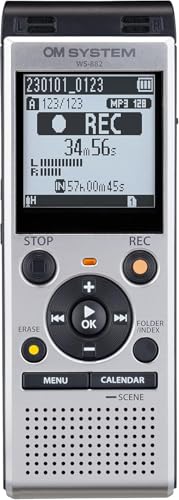
- Stereo microphones capture sound from a 90-degree angle
- Automatic level adjustment handles varying speech volume
- Simple Mode and direct USB transfer support easy use
Best For: Lectures, meetings, and uncomplicated built-in recording
Best Compact XLR Recorder

- Two locking XLR/TRS inputs for external microphones
- 32-bit/96kHz recording with waveform display
- 3.5mm stereo input and headphone output
Best For: Portable filmmaking, podcasting, interviews, and music recording
Best Budget Note-Taking Recorder

- Voice activation helps reduce silent recording sections
- 8 GB storage with up to 128 hours at the listed setting
- Rechargeable battery supports up to 20 hours of recording
Best For: Lectures, meetings, and simple built-in microphone recording
Best for Podcast Teams

- Four XLR inputs for multi-person recording
- AI tools help reduce mixing work
- Four headphone outputs with separate controls
Best For: Podcasts, panel discussions, and remote-guest recordings
Best Simple Pocket Recorder

- One-button recording and easy playback
- Noise reduction plus voice activation
- Up to 30 hours of continuous recording
Best For: Lectures, meetings, and everyday dictation
Best for Field Recording

- 32-bit float recording handles level changes
- Detachable XY capsule supports modular setups
- Includes 64GB card and four AA batteries
Best For: Field interviews, research, and mobile production
Best for Two-Person Podcasts

- Two USB microphone inputs
- Mix-Minus for remote guests
- AI noise reduction and SD recording
Best For: Two-person podcasts and portable interviews
Best for High-Capacity Dictation
EVIDA 128GB Digital Voice Recorder

- 128GB storage capacity
- Voice activation and password protection
- Supports MP3 and high-quality WAV recording
Best For: Lectures, meetings, and long-duration personal recording
Best Wearable Recorder

- Included lavalier microphone
- 32-bit float recording
- Up to 15 hours on two AAA batteries
Best For: Wearable audio for video, interviews, and events
Best Pro-Grade Pick – Zoom H4 Essential
The Zoom H4 Essential is a strong choice among voice recorders with external microphone input when you need flexible, higher-end recording for music, podcasts, interviews, video, or live performances. Its two XLR/TRS inputs, built-in stereo microphones, and 32-bit float recording support a broad range of projects.
Best For: Musicians, podcasters, filmmakers, and creators recording multiple sources or loud and quiet audio.
Pros:
- Two XLR/TRS inputs connect external microphones, instruments, mixers, or soundboards.
- 32-bit float recording helps produce clip-free audio across changing volume levels.
- Can record to an SD card while connecting to a phone, tablet, or computer through USB-C.
- Spoken menu guidance can make operation more accessible.
Cons:
- Requires two AA batteries.
- Its broader feature set may be more than casual note-taking requires.
Choose the H4 Essential if external connectivity and recording flexibility matter more than a minimal, pocket-style design. It is especially capable for projects that may involve several audio sources.
Best Simple Voice Recorder – OM System WS-882
The OM System WS-882 is a straightforward option for everyday voice recording, with stereo microphones, automatic level adjustment, and a direct USB connection. However, its supplied specifications list a built-in microphone rather than an external microphone input, so it is better suited to users who prioritize simplicity over microphone expansion.
Best For: Lectures, meetings, interviews, and users who want easy built-in stereo recording.
Pros:
- 90-degree stereo microphone system captures speech from different directions.
- Intelligent Auto Mode adjusts recording levels for different volume levels.
- Simple Mode uses larger text and limits menus to essential functions.
- Built-in USB port connects directly to a computer.
Cons:
- Supplied details do not list an external microphone input.
- Uses two AAA batteries.
- Its listed 4 GB memory is less than some higher-capacity recorders.
The WS-882 makes sense when easy operation and clear built-in stereo capture are the priorities. For recording with a lavalier, shotgun, or other external microphone, consider a model with explicitly listed XLR or 3.5mm mic input.
Best Compact XLR Recorder – Zoom H1 XLR
The Zoom H1 XLR is a compact pick among voice recorders with external microphone input, offering two locking XLR/TRS inputs in a small recorder. It also adds a 3.5mm stereo input and headphone output, making it useful for interviews, podcasts, filmmaking, and other mobile setups.
Best For: Filmmakers, musicians, podcasters, and creators who need portable two-channel external-mic recording.
Pros:
- Two locking XLR/TRS inputs support microphones, instruments, and other sources.
- 32-bit/96kHz recording provides detailed audio capture.
- 3.5mm stereo input and headphone output add connection and monitoring flexibility.
- SDXC support reaches up to 1 TB for extended sessions.
Cons:
- Requires two AA batteries.
- The compact 0.96-inch display may provide less viewing space than larger recorders.
The H1 XLR is a practical choice when you want professional-style external connections without moving to a larger recorder. Its combination of XLR inputs, 3.5mm connectivity, and waveform display suits mobile production work.
Best Budget Note-Taking Recorder – HoTiyan 8GB Recorder
The HoTiyan 8GB Digital Voice Recorder is designed for convenient lectures, meetings, and interviews, with voice activation, a built-in stereo microphone, and a rechargeable battery. The supplied notes do not identify an external microphone input, so it is not a direct match for shoppers specifically seeking voice recorders with external microphone input.
Best For: Students and meeting users who want long recording capacity, voice activation, and simple file transfer.
Pros:
- Voice-activated recording can reduce silent sections and conserve storage.
- 8 GB storage supports up to 128 hours at the listed high-quality recording setting.
- Rechargeable battery supports up to 20 hours of continuous recording.
- Includes MP3/WAV recording, playback-speed adjustment, A-B repeat, and password protection.
Cons:
- Supplied details do not list an external microphone input.
- Transfers files through Micro USB rather than USB-C.
- Its built-in microphone is the listed microphone form factor.
This recorder is best viewed as a low-cost, self-contained note-taking device rather than an expandable field recorder. Choose it for lectures and meetings where the built-in microphone and voice activation meet your needs.
Best for Podcast Teams – Four-Input Podcast Recorder
For buyers comparing voice recorders with external microphone input, the Zoom PodTrak P4next is built for multi-person podcasting and interview setups. Its four XLR inputs support multitrack recording, while up to +70dB of gain accommodates demanding microphones.
Best For: Podcast teams, panel discussions, and creators recording several people in one room or adding a remote guest.
Pros:
- Four XLR microphone inputs support up to four people plus a call-in guest.
- AI noise reduction, Tone Enhancement, and compression help simplify mixing.
- Four headphone outputs provide separate volume controls for monitoring.
- Can send audio directly to a phone for video recording without syncing.
Cons:
- Its podcast-focused design is more specialized than a basic voice recorder.
- Requires two AA batteries for portable operation.
The P4next is a strong choice when multiple external microphones, individual headphone monitoring, and streamlined podcast production matter more than pocket-sized simplicity.
Best Simple Pocket Recorder – 16GB Lecture Voice Recorder
If you need a straightforward device for lectures, meetings, or interviews, this compact recorder offers one-button operation and a built-in microphone. It is not a voice recorder with external microphone input, but its noise-reduction features, voice activation, and 16GB storage suit basic standalone recording.
Best For: Students, note-takers, and users who want simple lecture or meeting recordings with long battery life.
Pros:
- Simple REC, STOP, and PLAY controls make recording easy to start.
- DSP noise reduction and a sensitive microphone are designed for clearer speech.
- Voice-activated recording can save recording time and power.
- Offers 16GB of storage and up to 30 hours of continuous recording.
Cons:
- Uses a built-in microphone rather than an external microphone input.
- Mono recording is less suited to stereo or multi-microphone work.
- The listed playback time is about seven hours.
This Sunlan model is a practical budget-style dictaphone for everyday speech capture, but shoppers specifically requiring an external microphone connection should consider a different product.
Best for Field Recording – H5studio 32-Bit Float Bundle
For shoppers seeking voice recorders with external microphone input, the Zoom H5studio offers a flexible handheld platform with a detachable XY microphone capsule and multiple connection options. Its 32-bit float recording is designed to handle sudden level changes while preserving clear audio.
Best For: Field interviews, research capture, training sessions, and creators who need a rugged recorder that can adapt to different recording environments.
Pros:
- 32-bit float recording helps manage sudden loud sound spikes.
- Detachable XY microphone capsule can be swapped with compatible modules.
- Bundle includes a 64GB microSDHC card and four AA batteries.
- Supports SD recording, live input monitoring, and computer audio transfer.
Cons:
- The listed specifications indicate no headphone jack.
- The bundle’s larger feature set may be more than casual dictation requires.
The H5studio is the more adaptable option here for mobile audio work, especially when flexible microphone configurations and 32-bit float recording are valuable.
Best for Two-Person Podcasts – Zoom PodTrak P2
For creators seeking voice recorders with external microphone input, the Zoom PodTrak P2 is built around two-person podcasting. It accepts two USB microphones, provides two headphone outputs, and can record individual tracks to an SD card while streaming.
Best For: Two-person podcasts, interviews with remote guests, and portable podcast recording.
Pros:
- Two USB mic inputs and two headphone outputs simplify co-host recording.
- Mix-Minus helps reduce echo and feedback with phone or computer call-ins.
- AI noise reduction, tone shaping, compression, and de-essing reduce post-production work.
- Battery, USB bus, and AC power options support flexible recording locations.
Cons:
- Its feature set is focused on podcast production rather than simple dictation.
- Battery life is listed at up to four hours when using four AA batteries.
The P2 is the strongest fit here when you need multiple external microphone inputs and podcast-specific routing. It is less appropriate if you want a pocket recorder for straightforward lectures or notes.
Best for High-Capacity Dictation – EVIDA 128GB Digital Voice Recorder
The EVIDA recorder is a compact choice for lectures, meetings, and conversations, with voice activation, multiple recording formats, and 128GB of storage. However, its supplied specifications list a built-in microphone rather than an external microphone input, so verify compatibility if that feature is essential.
Best For: Students, teachers, business users, and anyone needing long-duration voice recording with organized file storage.
Pros:
- 128GB capacity supports extensive storage, with up to 54 hours of continuous recording listed.
- Voice activation can reduce silent sections and whispering snippets.
- Supports MP3 recording at 128kbps or 192kbps and WAV recording at 1536kbps.
- Password protection, bookmarks, A-B repeat, and four folders add useful organization features.
Cons:
- The listed microphone is built in, not an external microphone input.
- No headphone jack is listed in the supplied specifications.
- It is less focused on multi-microphone or podcast workflows than the Zoom recorders.
This model makes sense for high-capacity personal recording and playback, but it is not the safest match for shoppers specifically requiring voice recorders with external microphone input. Consider it only if the built-in microphone meets your needs.
Best Wearable Recorder – Zoom F2 Lavalier Recorder
The Zoom F2 is a body-pack recorder with an included lavalier microphone, making it a practical option among voice recorders with external microphone input for interviews, filmmaking, weddings, and on-camera work. Its 32-bit float recording is designed to capture changing volume levels without manual gain adjustment.
Best For: Filmmakers, wedding videographers, journalists, and content creators who need discreet wearable audio.
Pros:
- Included lavalier microphone has a screw-lock connector, windscreen, and lapel clip.
- 32-bit float recording helps prevent clipping across changing volume levels.
- Supports microSD, microSDHC, and microSDXC cards up to 512GB.
- Runs for up to 15 hours on two AAA batteries and includes a REC Hold switch.
Cons:
- It is a single-person lavalier setup rather than a two-microphone podcast recorder.
- The included microphone is designed for wearable use, not room-wide recording.
- Its body-pack format is more specialized than a basic handheld voice recorder.
Choose the F2 when consistent speech capture and discreet placement matter more than multiple inputs. The included lavalier and 32-bit float workflow make it particularly well suited to video and field production.
How We Picked the Best Voice Recorders with External Microphone Input
We focused on recorders that offer a practical way to use an external microphone, rather than relying only on a built-in mic. The selection spans 3.5mm, XLR, USB, lavalier, and multi-input designs to suit different workflows. We also considered recording resolution, ease of use, portability, storage, power options, monitoring, and features such as low-cut filtering, voice activation, noise reduction, and 32-bit float recording.
Because these products serve different users, the list includes both simple digital voice recorders and more advanced field, podcast, and filmmaking equipment. A compact lecture recorder may be the best fit for one buyer, while a creator recording multiple guests may need several independent inputs.
Quick Comparison
| Best For | Look For | Recommended Type |
|---|---|---|
| Lectures and meetings | Simple controls, voice activation, long battery life | Compact digital voice recorder |
| Interviews and content | External mic compatibility and headphone monitoring | Portable handheld recorder |
| Music and filmmaking | XLR inputs, clean preamps, high-resolution recording | Advanced field recorder |
| Podcasts | Multiple inputs, separate tracks, USB connectivity | Podcast production recorder |
| Lav mic recording | Small body, locking connector, low handling noise | Bodypack recorder |
Key Buying Factors for Voice Recorders with External Microphone Input
Input Type and Microphone Compatibility
Check the connector before buying. A 3.5mm input suits many lavalier and consumer microphones, while XLR inputs support professional dynamic and condenser microphones. USB inputs can be convenient for podcast microphones, but USB compatibility and power requirements vary. Some recorders also require plug-in power or phantom power, so confirm that the recorder can supply what your microphone needs.
Recording Quality and Headroom
For speech, standard WAV or high-quality MP3 may be sufficient. Music and video work benefit from WAV recording, higher sample rates, and better preamps. 32-bit float models provide extra protection against sudden peaks, although they still require sensible microphone placement and do not eliminate background noise.
Monitoring, Controls, and Portability
Headphone monitoring helps you catch cable problems, distortion, and unwanted noise before recording. Physical level controls are useful in fast-moving situations. Consider size, weight, battery or USB power, included storage, wind protection, and whether the recorder is comfortable to carry or mount.
Storage and Workflow
Built-in memory is convenient for casual use, while microSD support makes longer or higher-quality recordings easier to manage. Direct USB transfer, rechargeable batteries, automatic recording, and clear file naming can save time after a session.
Who Should Buy Which Voice Recorders with External Microphone Input?
Choose a basic digital voice recorder if you mainly capture lectures, meetings, reminders, or interviews and want straightforward operation. Pick a handheld recorder with a 3.5mm or XLR input if you need to connect a better microphone while recording on location. Filmmakers and solo creators should consider a compact lavalier recorder for discreet dialogue capture. Musicians and serious field recordists will benefit from quality preamps, headphone monitoring, and higher-resolution or 32-bit float recording.
For podcasting, prioritize dedicated multi-input models with separate channel control, USB connectivity, and built-in noise-reduction features. Before ordering, verify the connector, power requirements, included accessories, and whether the recorder supports the file format and storage capacity you use. The best option is the one that matches your microphone and recording environment without adding controls you will not use.