
When it comes to coding, having the right monitor can make a world of difference in your productivity and comfort. You want a display that not only offers sharp visuals but also incorporates features that protect your eyes during those long hours of programming. In this guide, you’ll discover ten top monitors that can elevate your coding experience. Each option has unique strengths, so let’s explore what might suit your needs best.
Philips 221V8LB 22 inch Full HD Monitor

If you’re a programmer looking for a reliable monitor that won’t strain your eyes during long coding sessions, the Philips 221V8LB 22 inch Full HD Monitor is an excellent choice. With its 1920 x 1080 resolution and 100Hz refresh rate, you’ll enjoy crisp visuals and smooth performance. The VA panel guarantees vibrant colors and deep contrasts, enhancing your coding experience. Plus, LowBlue Mode and Flicker-Free Technology protect your eyes from fatigue. Connectivity is a breeze with HDMI and VGA ports, and you can even mount it for ideal positioning. Backed by a four-year warranty, this monitor is a smart investment.
Best For: Those seeking a reliable monitor for programming or extended screen time with eye care features and vibrant visuals.
Pros:
- Adaptive-Sync Technology ensures smooth action and eliminates stutter during fast-paced activities.
- LowBlue Mode and Flicker-Free Technology help reduce eye strain for comfortable long usage.
- VA panel offers deeper blacks and brighter whites, enhancing overall image quality.
Cons:
- Limited to HDMI and VGA ports, which may not accommodate newer connectivity options like DisplayPort.
- 21.5 inches may feel small for users accustomed to larger displays.
- Some users may find the 100Hz refresh rate less appealing compared to higher-end models with 144Hz or more.
Acer KB242Y 23.8 Inch Full HD Monitor

The Acer KB242Y 23.8 Inch Full HD Monitor stands out as an excellent choice for programmers, thanks to its IPS panel technology, which guarantees accurate color performance from all viewing angles. With a resolution of 1920 x 1080 and a brightness of 250 nits, it provides vibrant visuals for your coding tasks. The zero-frame design maximizes screen visibility, while the 120Hz refresh rate and 1ms response time assure smooth operation during intense sessions. Featuring both HDMI and VGA ports, it’s easy to connect to your devices. Rated 4.6 out of 5 stars, this monitor combines quality and performance perfectly.
Best For: The Acer KB242Y 23.8 Inch Full HD Monitor is best for programmers and gamers seeking vibrant visuals and smooth performance.
Pros:
- Excellent color accuracy with 99% sRGB coverage for precise visuals.
- High refresh rate of up to 120Hz and 1ms response time for smooth gaming and video playback.
- Zero-frame design enhances screen visibility and maximizes workspace.
Cons:
- Limited connectivity options with only HDMI and VGA ports.
- Brightness of 250 nits may not be sufficient for brightly lit environments.
- Weighs 7.7 pounds, which might be cumbersome for frequent relocation.
Acer 27 Inch FHD IPS Monitor (KB272)

For programmers seeking an immersive and efficient coding experience, the Acer 27 Inch FHD IPS Monitor (KB272) stands out with its impressive 120Hz refresh rate and 1ms response time. The 1920 x 1080 Full HD resolution and 99% sRGB color coverage guarantee vibrant visuals and accurate color performance, essential for long coding sessions. Its frameless design maximizes screen space, while Adaptive-Sync technology provides a smooth, tear-free experience during video playback. With HDMI and VGA connectivity options, this monitor fits seamlessly into your setup. Rated 4.6 out of 5 stars, it’s a reliable choice for any programmer looking to enhance productivity.
Best For: Programmers seeking an immersive and efficient coding experience with vibrant visuals and smooth performance.
Pros:
- High 120Hz refresh rate and 1ms response time for smooth and responsive performance.
- 99% sRGB color coverage ensures accurate and vibrant color reproduction.
- Frameless design maximizes screen space, enhancing productivity.
Cons:
- Brightness of 250 nits may not be sufficient for well-lit environments.
- Limited connectivity options with only HDMI and VGA ports.
- The weight of 10.98 pounds may make it less portable compared to lighter monitors.
LG 24U411A-B 24-inch Full HD IPS Computer Monitor
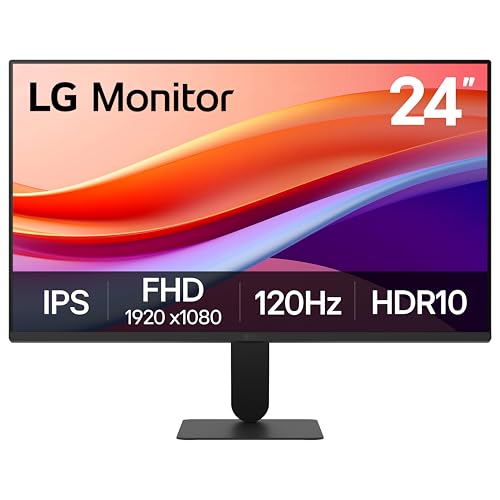
Designed with programmers in mind, the LG 24U411A-B 24-inch Full HD IPS monitor delivers exceptional visual performance through its sharp 1920 x 1080 resolution and vibrant colors. With ultra-slim bezels and a sleek stand, it fits perfectly in dual setups. Enjoy smoother scrolling thanks to the 120Hz refresh rate and 1ms Motion Blur Reduction, minimizing distractions. Features like Reader Mode and Flicker Safe reduce eye strain, making long coding sessions comfortable. Plus, the Dynamic Action Sync enhances responsiveness, while Black Stabilizer improves visibility in dark scenes. Rated 4.4 stars, this monitor combines functionality and style for any programmer.
Best For: Programmers and gamers seeking a high-performance monitor that combines visual clarity and comfort for extended use.
Pros:
- Sharp Full HD resolution (1920 x 1080) delivers vibrant visuals from any angle.
- 120Hz refresh rate and 1ms Motion Blur Reduction ensure smooth scrolling and reduced distractions during gaming or coding.
- User-friendly features like Reader Mode and Flicker Safe help minimize eye strain during long sessions.
Cons:
- Limited adjustability options, as it only offers tilt from -5° to 20°.
- Some users may find the ultra-slim bezels less durable in comparison to thicker bezels.
- The monitor’s weight (7.1 pounds) may be cumbersome for frequent transport.
Sceptre 22-Inch Gaming Monitor (E225W-FW144 Series)

With a maximum refresh rate of up to 144Hz, the Sceptre 22-Inch Gaming Monitor (E225W-FW144 Series) stands out as an excellent choice for programmers who appreciate smooth visuals during code compilation and debugging. This 22-inch monitor boasts a Full HD resolution of 1920 x 1080 pixels, enhancing your coding experience. It features built-in speakers, reducing desk clutter while providing quality audio. The blue-light shift technology helps minimize eye strain, promoting healthier viewing habits. With its nearly bezel-free design, you can easily set up dual monitors for an efficient workspace. Rated 4.6 out of 5 stars, it’s a solid investment for any programmer.
Best For: Programmers and gamers seeking a high-refresh-rate monitor for smooth visuals and efficient multitasking.
Pros:
- Built-in speakers reduce desk clutter while providing quality audio.
- Blue-light shift technology minimizes eye strain, promoting healthier viewing habits.
- Nearly bezel-free design allows for an immersive dual monitor setup.
Cons:
- Limited screen size may not be sufficient for those needing larger display areas.
- Average weight may make it less portable compared to lighter models.
- Some users may prefer additional connectivity options beyond HDMI and DisplayPort.
ASUS BE24EQK 24” Business Monitor with Built-in Webcam
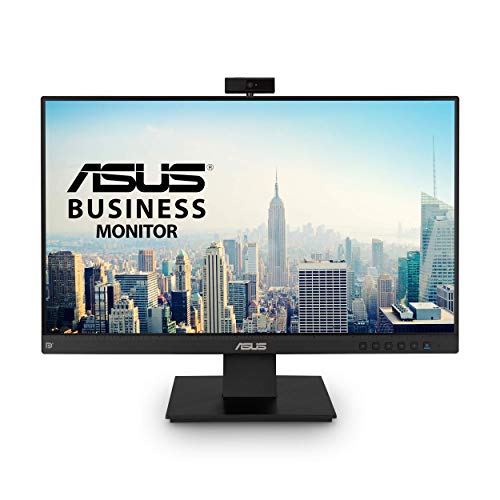
The ASUS BE24EQK 24” Business Monitor stands out for programmers who value seamless video conferencing and collaboration. With its 24-inch frameless IPS panel and Full HD resolution, you’ll enjoy vibrant visuals and a wide viewing angle. The integrated 2MP adjustable webcam and microphone array enhance your online meetings, while ASUS Eye Care Technology minimizes eye fatigue during long coding sessions. Weighing just 1 pound and measuring compactly, it fits perfectly in any workspace. Plus, you’ll receive a month of complimentary Adobe Creative Cloud access. With a solid 4.2-star rating, this monitor is a reliable choice for your programming needs.
Best For: The ASUS BE24EQK 24” Business Monitor is best for professionals and programmers who require high-quality visuals and integrated video conferencing features for remote collaboration.
Pros:
- Vibrant Visuals: Full HD resolution with 72% NTSC color reproduction for excellent image quality.
- Integrated Features: Built-in 2MP webcam, microphone array, and stereo speakers for seamless online meetings.
- Eye Care Technology: ASUS Eye Care Technology reduces eye strain, making it suitable for long hours of use.
Cons:
- Limited USB Ports: Only one USB port may limit connectivity options for multiple devices.
- Weight Consideration: While lightweight, its design may not be as robust for heavy usage environments.
- Average Brightness: A brightness rating of 300 cd/㎡ may not be sufficient for brightly lit rooms.
Acer KB220Q H2bi 21.5″ Full HD Zero-Frame Monitor

For programmers seeking a reliable and vibrant display, the Acer KB220Q H2bi 21.5″ Full HD Zero-Frame Monitor stands out with its impressive Full HD resolution of 1920 x 1080. Its 16:9 aspect ratio and sRGB 99% coverage guarantee crisp, true-to-life colors, making coding and content enjoyable. With a refresh rate of up to 100Hz and a rapid 1ms response time, you’ll experience ultra-smooth motion without ghosting. The ZeroFrame design maximizes your screen real estate, allowing for multiple monitors. Plus, HDMI and VGA ports provide versatile connectivity for your setup, making it perfect for home office or gaming use.
Best For: Programmers and gamers looking for a reliable, vibrant display that enhances productivity and entertainment experiences.
Pros:
- High resolution with Full HD 1920 x 1080 for crisp and detailed visuals.
- Fast refresh rate of up to 100Hz and 1ms response time for smooth motion in games and videos.
- ZeroFrame design allows for a near bezel-less experience, making it ideal for multi-monitor setups.
Cons:
- Limited to HDMI and VGA connectivity options, which may not suit all setups.
- Size may be considered small for users who prefer larger screens for multitasking.
- Lack of built-in speakers might be inconvenient for some users who want an all-in-one solution.
Samsung 34″ ViewFinity S50GC Series Ultra-WQHD Monitor

Engineered for programmers seeking clarity and versatility, the Samsung 34″ ViewFinity S50GC Series Ultra-WQHD Monitor boasts an impressive 34-inch display with a 21:9 aspect ratio. With a typical brightness of 300 cd/㎡ and a static contrast ratio of 3000:1, it delivers vibrant visuals. Eye Care Technology, including an ambient light sensor and Eye Saver Mode, guarantees comfort during long coding sessions. The 100Hz refresh rate and AMD Radeon FreeSync enhance gaming performance, while multiple connectivity options and multitasking features like Picture-by-Picture make it a powerhouse for productivity. Its borderless design helps you stay focused on your work.
Best For: The Samsung 34″ ViewFinity S50GC Series Ultra-WQHD Monitor is best for programmers and gamers seeking a high-quality display with advanced multitasking capabilities.
Pros:
- Exceptional visual clarity with Ultra-WQHD resolution and vibrant color reproduction.
- Eye Care Technology features reduce eye strain and enhance comfort during prolonged use.
- Versatile multitasking options with Picture-by-Picture and Picture-in-Picture functionality.
Cons:
- Limited to a 100Hz refresh rate, which may not satisfy competitive gamers who require higher rates.
- The size may not fit smaller workspaces comfortably.
- Higher price point compared to standard monitors with lower specifications.
Amazon Basics 27″ IPS Monitor (FHD 1080P)

With its vibrant Full HD resolution of 1920×1080, the Amazon Basics 27″ IPS Monitor stands out as an excellent choice for programmers seeking clarity and detail in their coding environment. Its 27-inch flat panel displays colors beautifully, thanks to AOC technology. You’ll appreciate the built-in speakers and the adjustable stand, which tilts from -5 to 20 degrees for ideal viewing comfort. Connectivity options include HDMI, DisplayPort, and VGA, plus four USB 3.0 ports for your peripherals. Energy Star certified, it’s efficient too. With a solid 4.6-star rating, this monitor is a dependable addition to any programmer’s setup.
Best For: Programmers seeking a reliable and high-resolution monitor for enhanced coding clarity and detail.
Pros:
- Excellent Full HD resolution of 1920×1080 for sharp visuals.
- Built-in speakers and adjustable stand for added convenience.
- Multiple connectivity options, including HDMI, DisplayPort, and VGA, with four USB 3.0 ports.
Cons:
- Limited tilt range may not suit everyone’s ergonomic preferences.
- Heavier weight (9.94 pounds) could be a drawback for portability.
- Some users may prefer additional advanced features not included in this model.
Sceptre 24-inch 1080p LED Monitor (E248W-19203R)

The Sceptre 24-inch 1080p LED Monitor (E248W-19203R) stands out with its impressive 99% sRGB color gamut, making it an excellent choice for programmers who value vibrant and accurate colors in their coding environment. With a refresh rate of up to 100Hz and fast response time, you’ll experience smooth visuals during intense coding sessions or gaming. The monitor offers versatile connectivity with two HDMI ports and a VGA port. Built-in speakers enhance your audio experience, while the eye care technology helps reduce strain during long hours of work. Its space-saving design fits perfectly in any workspace setup.
Best For: The Sceptre 24-inch 1080p LED Monitor is best for programmers and gamers seeking vibrant colors and smooth visuals in a compact design.
Pros:
- 99% sRGB color gamut for vibrant and accurate color representation.
- Refresh rate up to 100Hz and fast response time for smooth gaming and coding experiences.
- Built-in speakers and eye care technology enhance usability and comfort during extended use.
Cons:
- Limited to two HDMI ports and one VGA port, which may not accommodate multiple devices simultaneously.
- Built-in speakers may not provide the best audio quality compared to external speakers.
- The space-saving design may limit adjustability for height and tilt.
Factors to Consider When Choosing a Computer Monitor for Programmers
When you’re choosing a monitor for programming, several key factors come into play. You’ll want to take into account screen size, resolution, and the type of panel that best suits your needs. Additionally, don’t forget to assess the refresh rate and available connectivity options to guarantee a smooth workflow.
Screen Size Considerations
Choosing the right screen size can greatly enhance your programming experience, as a larger display allows for better multitasking and viewing multiple code files without constant scrolling. A monitor of at least 24 inches is recommended to provide ample space, while a 27-inch screen can considerably boost your productivity by facilitating effective split-screen usage for coding and documentation. Opt for a widescreen monitor with a 16:9 aspect ratio, which comfortably accommodates side-by-side application layouts. Additionally, consider monitors with adjustable stand heights to maintain ergonomic viewing angles; this is especially essential for larger screens, as improper positioning can lead to neck strain. With the right size, you’ll find coding more enjoyable and efficient.
Resolution and Clarity
Screen size can make a significant difference in your coding experience, but resolution and clarity are equally important. A Full HD resolution of 1920 x 1080 pixels is the minimum standard, giving you clear text without straining your eyes. If you want to boost productivity, consider higher resolutions like Quad HD (2560 x 1440) or Ultra HD (3840 x 2160); they offer more screen real estate for multitasking. Pay attention to pixel density, as a higher PPI guarantees sharper images and text, reducing eye fatigue during long sessions. Additionally, focus on color accuracy and contrast ratio; these factors enhance readability by distinguishing code syntax. Finally, an ideal viewing angle of 178 degrees keeps clarity consistent from various positions.
Panel Type Options
While selecting a monitor for programming, understanding the different panel types can greatly impact your workflow. You’ll primarily encounter three options: IPS, VA, and TN. IPS panels are the go-to choice for programmers, thanks to their superior color accuracy and wide viewing angles, which are essential for long coding sessions. VA panels excel in contrast, providing deeper blacks that enhance visual clarity, particularly with dark themes often used in programming. On the other hand, TN panels offer the fastest response times, but they compromise on color accuracy and viewing angles, making them less ideal for visually demanding tasks. Ultimately, choose a panel type that aligns with your coding needs to enhance your overall experience.
Refresh Rate Importance
When it comes to programming, understanding refresh rates can make a considerable difference in your overall experience. A refresh rate of at least 60Hz is generally recommended to reduce eye strain during long coding sessions. If you multitask or use graphics-intensive applications, consider monitors with refresh rates of 100Hz or higher for smoother visuals. Refresh rates of 120Hz or more considerably reduce motion blur, making it easier to read text and view details in your code. Additionally, monitors equipped with adaptive-sync technology can sync the refresh rate with your graphics card, eliminating screen tearing. For those who balance programming and gaming, a refresh rate above 120Hz enhances interaction and reduces input lag, making your experience seamless and efficient.
Connectivity Choices Available
Choosing the right connectivity options is essential for programmers who want a seamless workflow. Look for monitors with multiple HDMI ports, as they make it easy to connect various devices like laptops and gaming consoles, boosting your productivity. Don’t overlook USB ports; they enable quick access for peripherals and external storage, which is invaluable when transferring data frequently. Additionally, consider VESA mount compatibility for flexible mounting options that enhance your workspace organization and ergonomics. If you’re concerned about desk clutter, monitors with built-in speakers can minimize the need for external audio devices, streamlining your setup. By prioritizing connectivity, you’ll create a more efficient and organized coding environment.
Eye Care Features
Eye care features are essential for programmers who spend long hours in front of their screens. Look for monitors with LowBlue Mode to reduce harmful blue light emissions, helping to alleviate eye strain during those marathon coding sessions. Flicker-Free technology is vital as it minimizes eye fatigue by preventing imperceptible flickering that can cause discomfort over time. Adjustable brightness settings that adapt to ambient light can enhance visual comfort by cutting down on glare. Features like Reader Mode, which lowers blue light levels, are particularly beneficial for extended reading of code or documentation. Finally, a wide viewing angle of 178 degrees allows for comfortable viewing, reducing the need to strain your eyes when glancing from different positions.
Ergonomic Design Benefits
An ergonomic monitor design can make a world of difference in your comfort and productivity as a programmer. By reducing neck and back strain, you can work for longer periods without discomfort. Look for features like adjustable height, tilt, and swivel capabilities to customize your viewing angle, which promotes better posture and minimizes eye fatigue. A larger screen size provides more screen real estate for multitasking, cutting down on constant window switching. Monitors with flicker-free technology and low blue light emissions help reduce eye strain, making long coding sessions more manageable. Additionally, a curved screen can enhance immersion and reduce glare, improving your focus and concentration during those intense coding marathons.
Price and Warranty Options
When selecting a computer monitor, it’s crucial to take into account both price and warranty options that fit your needs. Monitors can vary greatly in cost based on features, so determine a budget that works for you. Make sure the warranty covers a reasonable period—some brands even offer a 4-year advance replacement warranty for extra peace of mind. Check for return policies that allow full refunds within about 30 days if the monitor doesn’t meet your expectations. Customer ratings and reviews can provide insight into reliability and performance, with higher ratings often indicating better user satisfaction. Finally, be aware of any specific conditions tied to warranties or return policies, as these can impact your decision if you encounter defects.