
The best smart home hubs with Zigbee make it easier to connect sensors, lights, switches, and other devices without relying on a separate bridge for every brand. The right hub can also improve response times, local control, and compatibility with voice assistants or Matter accessories.
These 10 options range from focused lighting bridges and affordable gateways to advanced controllers built for complex automations. Use the guide below to compare ecosystems, connectivity, software, and long-term flexibility before you buy.
Best 10 Smart Home Hubs with Zigbee Picks for 2026
Best All-Around Hub
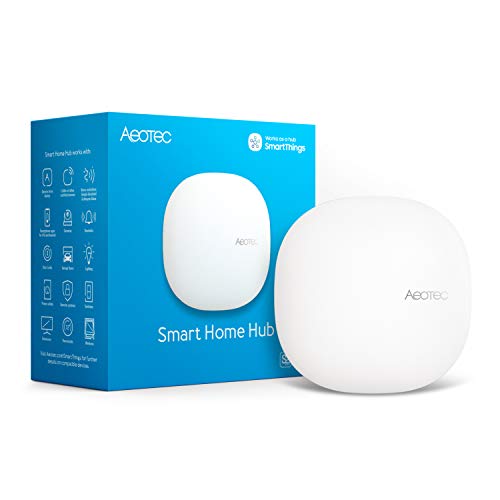
- Supports Zigbee, Z-Wave Plus, Matter, and Wi-Fi
- Works with Alexa and Google Home
- Wi-Fi or Ethernet connectivity
Best For: Mixed-protocol SmartThings households
Best for Aqara Devices

- Zigbee 3.0 supports up to 128 Aqara devices
- Works with HomeKit, Alexa, Google Assistant, and IFTTT
- Includes alarm speaker and RGB light
Best For: Aqara-focused automation systems
Best for Local Automation

- Local processing keeps automations running during internet outages
- Supports Zigbee, Z-Wave, Matter, and Bluetooth
- No recurring subscription required
Best For: DIY users wanting advanced local control
Best for Hue Lighting
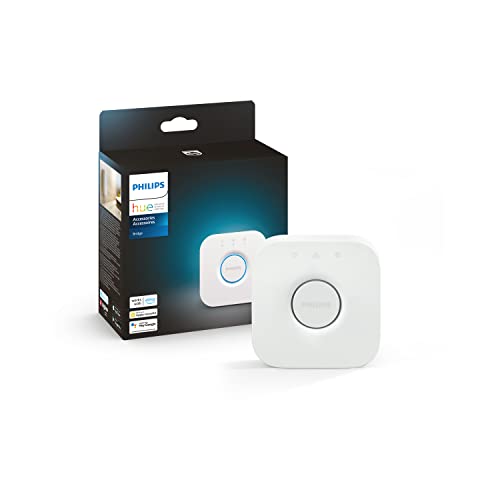
- Stable Zigbee connection for Hue lighting
- Supports up to 50 lights and accessories
- Works with Alexa, HomeKit, Google Assistant, and Matter
Best For: Expanding and automating Philips Hue systems
Advanced Automation Pick

- Supports Aqara Zigbee, Thread, Matter, Wi-Fi, and IR
- Runs many automations locally with encrypted storage
- Offers PoE and support for up to 127 Aqara Zigbee devices
Best For: Aqara-focused homes seeking advanced local automation and Matter integration
Simple Zigbee Gateway

- Supports up to 128 SONOFF Zigbee sub-devices
- Keeps local scenes and timing running during outages
- Adds security modes and Wi-Fi-to-Zigbee device communication
Best For: SONOFF-centered homes wanting an affordable, straightforward Zigbee gateway
Compact Matter Hub

- Combines Aqara Zigbee, Thread, Matter, Wi-Fi, PoE, and IR
- Runs Zigbee and Matter automations locally
- Adds a built-in speaker for alarms and custom audio
Best For: Smaller Aqara setups needing Matter, Thread, IR, and local automation
Best Matter-Ready Bridge
SONOFF Bridge Max Smart Home Hub
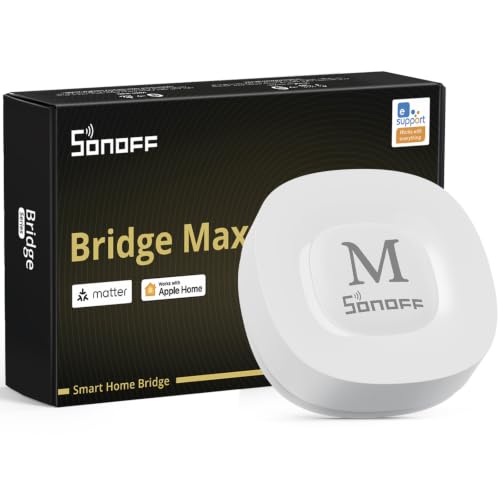
- Bridges Zigbee and BTHome devices to Matter platforms
- Local web console with no cloud required
- Supports Home Assistant, Ethernet, and Wi-Fi
Best For: Cross-platform Zigbee and Home Assistant setups
Best Tuya Multi-Protocol Hub

- Supports Zigbee 3.0 and Bluetooth Mesh
- Controls compatible devices through Tuya or Smart Life
- Supports up to 128 Tuya devices
Best For: Tuya households using Zigbee and Bluetooth Mesh
Best Simple Tuya Gateway

- Supports Zigbee, Bluetooth Mesh, and Wi-Fi control
- Works with Smart Life and Tuya apps
- Wireless setup with Alexa and Google Assistant support
Best For: Simple Tuya-based wireless device control
Best All-Around Hub – Aeotec Smart Home Hub
For shoppers comparing smart home hubs with Zigbee, the Aeotec Smart Home Hub is a versatile choice that also supports Z-Wave, Matter, Wi-Fi, Alexa, and Google Home. It connects through Wi-Fi or Ethernet and uses the SmartThings app for setup, device management, and automation.
Best For: Homes that use a mix of Zigbee, Z-Wave, Matter, and SmartThings-compatible devices.
Pros:
- Supports Zigbee, Z-Wave Plus, Matter, and Wi-Fi in one hub.
- Works with Alexa and Google Home voice assistants.
- Offers wired Ethernet or Wi-Fi setup.
- Many automations can run locally for improved speed and reliability.
Cons:
- Designed for use in North America.
- Z-Wave Plus support is specified for the V3 model.
The Aeotec hub stands out when broad protocol support matters more than a single-brand ecosystem. Its SmartThings foundation makes it a practical central controller for mixed-device households.
Best for Aqara Devices – Aqara Hub M1S Gen 2
The Aqara Hub M1S Gen 2 is a focused option among smart home hubs with Zigbee, using Zigbee 3.0 to connect Aqara sensors and automation devices. It adds an alarm speaker, RGB light, illumination sensor, and compatibility with Apple HomeKit, Google Assistant, Alexa, and IFTTT.
Best For: Aqara-centered homes needing a bridge for sensors, alarms, and automation scenes.
Pros:
- Uses Zigbee 3.0 and can link up to 128 Aqara devices with repeaters.
- Supports Apple HomeKit, Google Assistant, Alexa, and IFTTT.
- Built-in speaker can serve as an alarm or doorbell.
- RGB light and illumination sensor support additional automations.
Cons:
- Supports Aqara Zigbee devices rather than third-party Zigbee devices.
- Requires a secure 2.4 GHz Wi-Fi network; Wi-Fi 6 is not supported.
- Needs to be on the same LAN as the router and connected devices for specified integrations.
This hub makes the most sense when Aqara is your primary device brand. Its built-in lighting and alarm functions add useful features, but its ecosystem limitations make it less suitable as a universal Zigbee controller.
Best for Local Automation – Hubitat Elevation C-8 Pro
The Hubitat Elevation C-8 Pro is a strong pick for shoppers seeking smart home hubs with Zigbee and local processing. It supports Zigbee 3.0, Z-Wave 800 Series Long Range, Matter, and Bluetooth, while running automations directly on the hub instead of relying on remote servers.
Best For: DIY users who prioritize local control, privacy, advanced rules, and broad device compatibility.
Pros:
- Runs automations locally for fast response and continued operation during internet outages.
- Supports Zigbee 3.0, Z-Wave 800 Series Long Range, Matter, and Bluetooth.
- Works with Alexa, Google Home, and Apple HomeKit.
- Requires no recurring subscription for full platform functionality.
Cons:
- Advanced features and Rule Machine may appeal more to experienced DIY users.
- Setup guidance relies partly on documentation and the online community.
The C-8 Pro is especially compelling for households that want responsive, privacy-minded automation without a subscription. Its broad protocol support and external antennas also suit larger or device-dense homes.
Best for Hue Lighting – Philips Hue Bridge
The Philips Hue Bridge is a specialized choice among smart home hubs with Zigbee, built primarily for Philips Hue lighting and accessories. Its Zigbee connection reduces strain on Wi-Fi, supports control when Wi-Fi is down, and enables automations, remote access, voice assistants, and Matter connectivity.
Best For: Philips Hue users who want full lighting features and whole-home Hue expansion.
Pros:
- Uses Zigbee for a stable connection that does not strain Wi-Fi.
- Supports up to 50 Hue lights and accessories.
- Enables out-of-home control and automations through the Hue app.
- Works with Alexa, Apple HomeKit, Google Assistant, and Matter.
Cons:
- Designed primarily for Philips Hue lights and accessories rather than general-purpose device control.
- Hue entertainment synchronization requires an HDMI Sync Box.
If your smart home revolves around Hue lighting, this bridge unlocks the system’s broadest control and automation features. It is less appropriate for shoppers seeking one hub for unrelated Zigbee device categories.
Advanced Automation Pick – Aqara Hub M3
The Aqara Hub M3 is a strong choice for smart home hubs with Zigbee when you want local automation, Matter integration, and support for multiple connectivity standards. It supports Aqara Zigbee and Thread devices, works with ecosystems including Home Assistant, and adds a learning IR blaster for traditional appliances.
Best For: Aqara-focused homes that need advanced local automation, Matter bridging, and flexible wired or wireless networking.
Pros:
- Supports up to 127 Aqara Zigbee devices and 127 Thread devices, with repeaters needed for Thread expansion.
- Runs many automations locally and can migrate Zigbee devices from older Aqara hubs.
- Includes Matter bridging, a 360-degree learning IR blaster, dual-band Wi-Fi, PoE, and encrypted local storage.
Cons:
- The stated Zigbee capacity applies to Aqara Zigbee devices, not third-party Zigbee devices.
- A 2A USB power adapter is not included.
- Some cloud-based notifications still require an internet connection.
The M3 is the most capable option here for an expanding Aqara installation. Its local processing, Matter features, and PoE support make it particularly suitable for dependable, advanced setups, though buyers should confirm device compatibility before mixing in third-party Zigbee products.
Simple Zigbee Gateway – SONOFF Zigbee Bridge Pro
The SONOFF Zigbee Bridge Pro is a compact option among smart home hubs with Zigbee, designed to connect SONOFF Zigbee devices with Wi-Fi-enabled control. It supports up to 128 sub-devices and can keep local scenes and timing functions running when the network is disconnected.
Best For: SONOFF users building a straightforward Zigbee system with local scenes, security modes, and app-based device management.
Pros:
- Supports up to 128 connected sub-devices, up from the earlier 32-device capacity.
- Allows local timing and scene linkage between Zigbee devices during network outages.
- Provides home, away, and sleep security modes and connects Zigbee devices with Wi-Fi devices.
Cons:
- The notes specifically identify compatibility with SONOFF Zigbee devices rather than broad third-party support.
- It uses a USB cable for power and does not offer the broader connectivity features listed for the Aqara hubs.
The Bridge Pro is a practical pick if your system is centered on SONOFF products. Its generous device limit and local scene support are useful, but shoppers wanting Matter, Thread, IR control, or broader ecosystem features may need a more advanced hub.
Compact Matter Hub – Aqara Smart Hub M200
The Aqara Smart Hub M200 is a versatile choice among smart home hubs with Zigbee, combining Aqara Zigbee support with Matter Controller, Thread Border Router, IR, Wi-Fi, and PoE features. It also supports local automation and includes a built-in speaker for alarms, doorbells, and custom audio messages.
Best For: Smaller Aqara installations that want Matter and Thread support, local automations, IR appliance control, and built-in audio alerts.
Pros:
- Supports up to 40 Aqara Zigbee devices and 40 Thread devices.
- Acts as a Matter Controller, Thread Border Router, and Matter Bridge for integrations with major smart-home ecosystems.
- Offers local Zigbee and Matter automation, a learning IR blaster, dual-band Wi-Fi, PoE, and a built-in speaker.
Cons:
- The listed device capacity is lower than the Aqara Hub M3’s capacity.
- A 2A USB power adapter is not included.
- Some cloud push notifications still require a cloud connection.
The M200 balances modern ecosystem support with a smaller footprint and lower stated device capacity than the M3. It is a good fit for a compact Aqara setup where Matter bridging, local response, IR control, and audible alerts matter more than maximum device expansion.
Best Matter-Ready Bridge – SONOFF Bridge Max Smart Home Hub
The SONOFF Bridge Max is a flexible choice among smart home hubs with Zigbee, especially if you want to connect Zigbee or BTHome devices to Matter-compatible platforms. It supports Wi-Fi and Ethernet, offers local management through a web console, and can integrate with Home Assistant.
Best For: Users building a cross-platform smart home with Zigbee devices, Matter platforms, or Home Assistant.
Pros:
- Bridges Zigbee, BTHome, and eWeLink devices to Alexa, Google Home, and Apple Home.
- Local web console supports management without requiring cloud services.
- Works with Home Assistant through MQTT and supports Ethernet or Wi-Fi.
- Can pair with Zigbee sensors for local alarms and mobile notifications.
Cons:
- It is a Matter Bridge, not a Matter Controller, so it cannot add Matter devices directly.
- Some advanced integrations may require configuration through MQTT or the local interface.
Bridge Max stands out for its local-control approach and broad ecosystem bridging. It is a strong fit when you want Zigbee support without committing to a single voice-assistant platform.
Best Tuya Multi-Protocol Hub – Smart Multi-Mode Gateway
This multi-mode gateway is a practical option for shoppers seeking smart home hubs with Zigbee that also support Bluetooth Mesh. It connects compatible Tuya devices through the Smart Life or Tuya app and enables remote control, automation, and Alexa or Google Home voice commands.
Best For: Tuya or Smart Life households combining Zigbee and Bluetooth Mesh devices.
Pros:
- Combines Zigbee 3.0 and Bluetooth Mesh communication in one gateway.
- Supports app-based remote control, device grouping, and automation.
- Works with Alexa and Google Home for voice control.
- Supports up to 128 compatible Tuya smart home devices.
Cons:
- Supports Tuya or Smart Life devices only.
- Its compatibility is limited to devices using the supported Tuya ecosystem.
This gateway makes sense when your devices already use Tuya or Smart Life. Its multi-protocol design can reduce the need for separate Zigbee and Bluetooth hubs, but it is not intended for open-ended device compatibility.
Best Simple Tuya Gateway – ZigBee WiFi and Bluetooth Hub
This compact gateway is designed for Tuya-based setups that need smart home hubs with Zigbee, Bluetooth Mesh, and Wi-Fi control. It connects through the Smart Life or Tuya app, supports remote and group control, and works with Alexa and Google Assistant.
Best For: Tuya users who want a straightforward wireless gateway for compatible Zigbee, Bluetooth, and Wi-Fi devices.
Pros:
- Supports Zigbee and Bluetooth Mesh while coordinating Wi-Fi control.
- Uses the Smart Life or Tuya app for setup, device management, and automation.
- Supports Alexa and Google Assistant voice control.
- Wireless setup does not require an Ethernet cable.
Cons:
- Compatible only with products using the Tuya protocol.
- Requires a 2.4 GHz Wi-Fi network.
- Not compatible with non-Tuya bulbs, door locks, or blinds.
The main appeal is simple installation and broad protocol support within the Tuya ecosystem. Confirm that your existing devices work with Tuya Smart or Smart Life before choosing this hub.
How We Picked the Best Smart Home Hubs with Zigbee
We focused on hubs that support Zigbee devices while offering a clear reason to consider them, such as broad protocol support, strong automation tools, brand-specific compatibility, Matter integration, or an accessible price. We also considered whether each hub is designed for local control, cloud-based app management, lighting, security, or general-purpose smart home use.
Compatibility claims can vary by device model and region, so check the manufacturer’s supported-device list before buying. A hub that supports Zigbee in general may not support every sensor, bulb, or switch equally well.
Quick Comparison
| Best For | What to Look For |
|---|---|
| General multi-brand setups | Broad Zigbee, Z-Wave, Matter, and voice-assistant support |
| Advanced automations | Local processing, powerful rules, and dependable device control |
| Smart lighting | Reliable bulb pairing, scenes, dimming, and remote access |
| Brand-focused systems | Deep compatibility with Aqara, SONOFF, Philips Hue, or Tuya devices |
| Budget upgrades | Simple app control and support for the devices you already own |
Key Buying Factors for Smart Home Hubs with Zigbee
Device and Protocol Compatibility
Zigbee is only one part of the compatibility picture. If you use Z-Wave locks, Matter accessories, Wi-Fi devices, Bluetooth sensors, or infrared appliances, choose a hub that supports the protocols you need. Multi-protocol models offer more flexibility, while brand-specific bridges may provide a smoother experience within one ecosystem.
Local Control and Reliability
Local automation can continue working when your internet connection is unavailable and often reduces delays. Review whether routines, schedules, and device commands run locally or depend on a manufacturer’s cloud service. Also consider network connection options, backup behavior, and how easily the hub can be restored or replaced.
Software and Automation Features
Look for clear device management, scenes, schedules, conditional rules, notifications, and remote access. Advanced users may prefer detailed rule engines and broad integrations, while beginners may value guided setup and a polished mobile app more than extensive customization.
Expansion and Ecosystem Fit
Think beyond today’s devices. Matter support, voice-assistant integration, firmware updates, and an active ecosystem can make a hub more useful over time. Confirm whether the hub requires a separate subscription, proprietary accessories, or a specific account region.
Who Should Buy Which Smart Home Hubs with Zigbee?
Choose a broad multi-protocol hub if you are combining products from several brands or want room to expand. An automation-focused controller is better for enthusiasts who need detailed rules and local processing. A dedicated Philips Hue or Aqara hub makes sense when most of your devices belong to that ecosystem and you want dependable brand-specific features.
SONOFF, Tuya, and other compact gateways are practical for smaller installations, inexpensive sensors, or app-based control. Before purchasing any of these Smart Home Hubs with Zigbee, make a list of your current devices, required integrations, and must-have automations. The best choice is the one that supports those needs reliably without adding unnecessary bridges or subscriptions.