
The best compact smart home hubs bring multiple wireless standards, voice assistants, and automation controls into a smaller footprint. They can simplify a crowded setup while improving how your lights, sensors, locks, and appliances work together.
Our roundup covers versatile Matter-ready hubs, automation-focused platforms, and brand-specific bridges so you can choose the right balance of compatibility, local control, and ease of use.
Best 10 Compact Smart Home Hubs Picks for 2026
Versatile Connectivity Pick

- Supports Matter, Zigbee, Z-Wave Plus, and SmartThings
- Works with Alexa and Google Assistant
- Offers Wi-Fi or Ethernet connectivity
Best For: Broad device compatibility and SmartThings automations
Long-Range Sensor Hub

- Compact plug-in wired design
- Listed maximum range of 2,034 feet
- Supports voice control and motion alerts
Best For: Compatible YoLink devices in larger coverage areas
Best Touchscreen Control Panel

- 8-inch customizable smart home dashboard
- Built-in Wi-Fi, Zigbee, Matter, Thread, and more
- Wall-mountable with camera and security controls
Best For: Shared Alexa-based home control and monitoring
Privacy-Focused Automation Hub

- Home Assistant comes preinstalled
- Local data storage with advanced automation
- USB-expandable for Z-Wave, Zigbee, and Thread
Best For: Privacy-conscious users building a customizable local system
Best Overall

- Local processing keeps automations running during outages
- Supports Matter, Z-Wave, Zigbee, and Bluetooth
- Works with Alexa, Google Home, and Apple HomeKit
Best For: DIY users building fast, private multi-brand automations
Best for Lutron Lighting
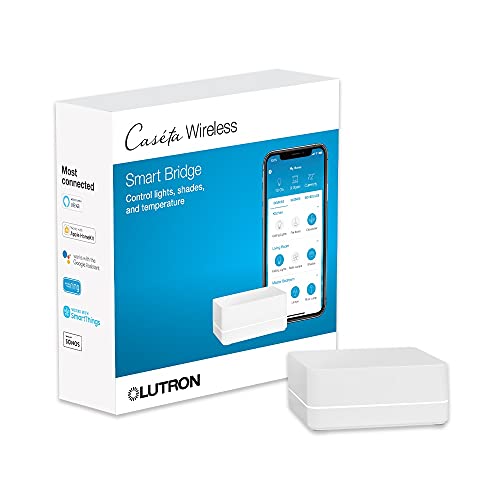
- Controls up to 75 Caseta devices
- Works with Alexa, Apple HomeKit, and Google Assistant
- Uses Clear Connect technology alongside Wi-Fi devices
Best For: Homes built around Lutron Caseta lighting
Best Advanced Features

- Bridges Aqara devices to Matter ecosystems
- Supports local automation, Zigbee, and Thread
- Includes IR control, PoE, and encrypted storage
Best For: Aqara-focused homes with advanced Matter and IR needs
Most Versatile

- Controls SwitchBot, Matter, and infrared devices
- Displays temperature and humidity at a glance
- Physical dial and four customizable scene buttons
Best For: Broad appliance control and easy everyday operation
Best for Aqara Ecosystems

- Connects up to 128 Aqara devices
- Uses Zigbee 3.0 for Aqara automation
- Includes alarm speaker, RGB light, and illumination sensor
Best For: Aqara-centered sensor and security setups
Best for Local Automation

- Processes automations locally, even during internet outages
- Supports Zigbee, Matter, Thread, and Ethernet
- Works with more than 1,000 brands without a subscription
Best For: Multi-brand homes seeking flexible, private automation
Versatile Connectivity Pick – Aeotec Smart Home Hub
For shoppers comparing compact smart home hubs, the Aeotec Smart Home Hub is a flexible choice for coordinating devices across several major protocols. It supports Matter, Zigbee, Z-Wave Plus on the V3 model, Wi-Fi, Ethernet, Alexa, and Google Home through the SmartThings app.
Best For: Homes that need broad device compatibility and customizable SmartThings automations.
Pros:
- Supports Matter, Zigbee, Z-Wave Plus, Wi-Fi, and SmartThings devices.
- Works with Amazon Alexa and Google Assistant.
- Offers both Wi-Fi and wired Ethernet setup.
- Many automations can run locally for improved speed and reliability.
Cons:
- Z-Wave Plus support is specified for the V3 model.
- Designed for use in North America.
This is a strong all-around hub when compatibility matters more than having a built-in touchscreen. Its SmartThings app and local automation support give it useful flexibility for a growing connected home.
Long-Range Sensor Hub – YoLink Smart Home Hub
The YoLink Smart Home Hub is a compact, wired hub for shoppers who want a straightforward way to connect compatible smartphone-controlled devices. Its listed maximum range of 2,034 feet makes it especially notable for larger areas or devices positioned far from the hub.
Best For: Users seeking a simple plug-in hub with extended range for compatible YoLink devices.
Pros:
- Compact 4.33-by-4.33-by-1.06-inch design.
- Plug-in setup with wired connectivity.
- Listed maximum range of up to 2,034 feet.
- Supports voice control and motion alerts.
Cons:
- The supplied details identify smartphone compatibility but do not list broad protocol support.
- This regular version does not include battery backup.
Choose this hub when range and uncomplicated installation are priorities. Buyers looking for a broad Matter, Zigbee, or Z-Wave controller should verify compatibility with their intended devices before purchasing.
Best Touchscreen Control Panel – Amazon Echo Hub
Among compact smart home hubs, the Amazon Echo Hub stands out as a wall-mountable 8-inch control panel rather than a hub that stays hidden away. Its customizable dashboard lets households adjust devices, view cameras, launch routines, and manage compatible security equipment from one screen.
Best For: Families that want a visible touchscreen for Alexa-based device and security control.
Pros:
- Customizable dashboard with adjustable sections and device controls.
- Built-in hub supports Wi-Fi, Bluetooth, Zigbee, Matter, Sidewalk, and Thread devices.
- Can display cameras, start routines, and manage compatible security systems.
- Supports wall mounting and optional tabletop use.
Cons:
- Wall cable pass-throughs, power-over-Ethernet adapter, and tabletop stand are sold separately.
- Some Ring camera features require Alexa+ and a compatible Ring subscription sold separately.
This is a practical choice when at-a-glance control is more useful than a discreet hub. Its broad built-in connectivity and customizable screen make it particularly appealing for shared household use.
Privacy-Focused Automation Hub – Home Assistant Green
Home Assistant Green | Smart Home hub with Advanced Automation | Official Home Assistant Hardware
Check Price On AmazonHome Assistant Green is a compact, fanless hub for users who want advanced automation with their home data kept locally. Home Assistant comes preinstalled, and the unit includes Ethernet, 32GB of storage, 4GB of RAM, and USB ports for adding Z-Wave, Zigbee, or Thread adapters.
Best For: Privacy-conscious users who want powerful local automation and room to expand.
Pros:
- Home Assistant is preinstalled for simpler setup.
- Small, silent, fanless design uses only a couple of watts.
- Keeps home data on the device and supports viewing, sharing, and exporting it.
- USB expansion enables Z-Wave, Zigbee, and Thread connectivity.
Cons:
- Ethernet is the listed network connection; Wi-Fi is not specified.
- Z-Wave, Zigbee, and Thread connectivity requires compatible USB devices.
Home Assistant Green is a compelling foundation for a highly customizable smart home, especially if local control and privacy are priorities. Its expandability also lets buyers add wireless standards as their system evolves.
Best Overall – Hubitat Elevation C-8 Pro
For shoppers comparing compact smart home hubs, the Hubitat Elevation C-8 Pro stands out for local processing, broad protocol support, and a small footprint. It supports Matter, Z-Wave, Zigbee, and Bluetooth while keeping automations running on the hub, even during an internet outage.
Best For: DIY users who want fast, private, highly customizable automations across multiple device brands.
Pros:
- Local automation processing delivers fast response and continued operation during internet outages.
- Supports Matter 1.5, Z-Wave 800 Series Long Range, Zigbee 3.0, and Bluetooth.
- Works with Alexa, Google Home, and Apple HomeKit, with no subscription required.
- Compact design measures 3.23 x 2.95 x 0.67 inches and weighs 2.56 ounces.
Cons:
- Advanced Rule Machine automations may have a learning curve for beginners.
- Its extensive customization options may be more than simple setups require.
The C-8 Pro is the strongest all-around choice when local reliability and multi-brand flexibility matter more than plug-and-play simplicity. Its active community and ongoing updates add useful long-term value.
Best for Lutron Lighting – Lutron Caseta Smart Hub
The Lutron Caseta Smart Hub is a practical option among compact smart home hubs if your priority is dependable Caseta lighting control. It plugs into an outlet, connects to your router, and uses Lutron Clear Connect technology rather than competing with Wi-Fi-connected devices.
Best For: Homes centered on Lutron Caseta dimmers and switches with voice-assistant integration.
Pros:
- Supports up to 75 Caseta devices for gradual expansion.
- Works with Alexa, Apple HomeKit, Google Assistant, Ring, Serena shades, and Sonos.
- Simple setup through the Lutron app after connecting it to a router.
- Clear Connect technology avoids interference with Wi-Fi-connected devices.
Cons:
- Caseta dimmers, switches, and other coordinating accessories are sold separately.
- Its primary strength is Lutron Caseta control rather than broad multi-protocol device support.
Choose the Caseta Smart Hub when reliable Lutron lighting control is the centerpiece of your setup. It is easy to install and integrates with several major smart-home platforms, but it is less suited to shoppers seeking a universal hub for many device protocols.
Best Advanced Features – Aqara Smart Home Hub M3
The Aqara Smart Home Hub M3 combines Zigbee and Thread support, Matter bridging, local automation, and a built-in 360-degree IR blaster in a compact enclosure. Wired Ethernet through PoE, dual-band Wi-Fi, and encrypted local storage make it a flexible choice for advanced smart-home installations.
Best For: Aqara users who want local automations, Matter integration, Thread support, and control of compatible infrared appliances.
Pros:
- Supports Aqara Zigbee and Thread devices and can bridge Aqara devices to Matter ecosystems.
- Edge Hub design prioritizes local automations and supports migration from older Aqara hubs.
- Built-in 360-degree IR blaster can control compatible appliances and provide feedback.
- Offers PoE, dual-band Wi-Fi, USB-C power options, and 8GB encrypted local storage.
Cons:
- Its Zigbee support is for Aqara Zigbee devices rather than third-party Zigbee devices.
- Some cloud-based notifications still require an internet connection.
- A 2A USB power adapter is not included.
The M3 is a feature-rich pick for Aqara-focused homes that need Matter and Thread capabilities without giving up local control. Its broader feature set is appealing for advanced setups, though compatibility details and power requirements deserve attention before buying.
Most Versatile – SwitchBot Hub 3
For shoppers comparing compact smart home hubs, the SwitchBot Hub 3 stands out as a broad-control command center with an IPS display, physical dial, infrared support, and Matter bridging. It can manage SwitchBot products, more than 100,000 infrared appliances, and compatible Matter devices, though setup requires a 2.4GHz Wi-Fi connection.
Best For: Homes that want appliance control, room-status monitoring, and straightforward physical controls in one hub.
Pros:
- Controls SwitchBot devices, Matter products, and many infrared appliances.
- Built-in temperature and humidity sensing with a useful status display.
- Physical dial and scene buttons are accessible for guests, children, and seniors.
- Works with Alexa, Google Assistant, Apple Home, and the SwitchBot app.
Cons:
- Requires 2.4GHz Wi-Fi; 5GHz networks are not supported for setup.
- Does not support RF devices such as some ceiling fans and garage door openers.
- Some referenced accessories, including the Lock and CO₂ Meter Pro, are sold separately.
The Hub 3 is a strong choice when you want a compact hub that combines automation, appliance control, and at-a-glance environmental information. Its main limitation is that compatibility depends on the device protocol and the SwitchBot ecosystem.
Best for Aqara Ecosystems – Aqara Hub M1S Gen 2
The Aqara Hub M1S Gen 2 is a compact smart home hub built primarily around Aqara’s Zigbee device ecosystem. It supports automations, schedules, alarms, and integrations with Apple HomeKit, Alexa, Google Assistant, and IFTTT, but it requires 2.4GHz Wi-Fi and does not officially support third-party Zigbee devices.
Best For: Aqara users building a sensor- and automation-focused home with up to 128 linked Aqara devices.
Pros:
- Uses Zigbee 3.0 for stable and energy-efficient Aqara device connections.
- Can link up to 128 Aqara devices when the required repeaters are used.
- Built-in speaker supports alarms, doorbells, and personalized ringtones.
- RGB light and illumination sensor add lighting and automation options.
Cons:
- Supports only 2.4GHz Wi-Fi and does not support Wi-Fi 6.
- Designed for Aqara Zigbee devices rather than third-party Zigbee products.
- Placement is limited by the recommended proximity to the router and shared LAN requirements.
The M1S Gen 2 makes the most sense for buyers already committed to Aqara sensors and accessories. Its built-in alarm and lighting features add value, while protocol and network restrictions make it less flexible as a general-purpose hub.
Best for Local Automation – Homey Pro mini
The Homey Pro mini is a compact smart home hub for shoppers who prioritize local automation and broad brand support. It includes Zigbee, Matter, Thread, and Ethernet, processes data locally so automations can continue when the internet is down, and works with more than 1,000 brands.
Best For: Users who want flexible multi-brand routines, local processing, and no required subscription.
Pros:
- Supports Zigbee, Matter, Thread, and Ethernet out of the box.
- Local data processing can improve privacy and reliability during internet outages.
- Works with more than 1,000 brands through official and community Homey apps.
- Includes Homey Flow automation and voice assistant integrations without a monthly fee.
Cons:
- Z-Wave, Bluetooth, and infrared require the separately sold Homey Bridge.
- Advanced workflow customization uses the Homey desktop app.
- Cloud backup is an option, but buyers must choose between local and cloud backup approaches.
Homey Pro mini is the strongest fit here for a mixed-brand smart home that values local control. Its built-in protocol coverage is useful, but buyers needing Z-Wave, Bluetooth, or infrared should budget for the additional Bridge.
How We Picked These Compact Smart Home Hubs
We focused on hubs that offer meaningful advantages in smaller smart homes, apartments, offices, and media rooms. Selection criteria included supported protocols, device compatibility, automation capability, voice-assistant support, local or cloud operation, setup requirements, and overall ecosystem flexibility.
We also considered whether each hub solves a distinct need. Some are broad platforms for mixed-brand systems, while others are better suited to Z-Wave, Zigbee, Lutron, Aqara, SwitchBot, or Home Assistant users.
Quick Comparison
| Best For | Recommended Hub Type | What to Prioritize |
|---|---|---|
| Mixed-brand setups | Multi-protocol hub | Matter, Zigbee, Z-Wave, and strong app support |
| Advanced automation | Local-first platform | Powerful rules, reliability, and customization |
| Voice and touchscreen control | Display hub | Screen layout, voice assistant features, and device coverage |
| Lighting systems | Dedicated lighting bridge | Wireless range, scene control, and ecosystem compatibility |
| Simple sensor or appliance control | Brand-specific bridge | Easy setup and compatibility with existing devices |
Key Buying Factors for Compact Smart Home Hubs
Wireless Protocol Support
Check whether the hub supports the devices you already own. Wi-Fi alone may be enough for basic setups, but Zigbee and Z-Wave can improve reliability and reduce congestion. Matter and Thread are useful for newer cross-platform devices, although support varies by product and feature.
Local Control and Reliability
Hubs that process automations locally can respond faster and continue working during an internet outage. Cloud-dependent systems may be easier to manage remotely, but they can be more vulnerable to service interruptions or subscription changes.
Automation Depth
Basic schedules and scenes are suitable for many households. If you want presence detection, conditional routines, device variables, or complex multi-step rules, choose a platform designed for advanced automation rather than a simple bridge.
Ecosystem and Expansion
Consider the devices you may add later. A broad platform gives you more flexibility, while a dedicated hub can deliver better performance within one brand. Confirm compatibility with Alexa, Google Home, Apple Home, or Home Assistant before buying.
Size, Setup, and Network Needs
Compact does not always mean wireless. Some hubs require Ethernet, a nearby router, a cloud account, or a separate radio adapter. Check power, placement, network connection, and wireless range before committing.
Who Should Buy Which Compact Smart Home Hubs?
Choose a multi-protocol hub if you want one central controller for devices from several brands. Pick a local-first automation platform if reliability, privacy, and detailed rules matter more than the simplest setup. A display-based hub suits households that want visible controls and voice interaction in a kitchen, hallway, or living room.
Dedicated bridges are often the best choice when most of your devices come from one ecosystem, particularly lighting or security products. For a growing mixed-brand system, prioritize Matter, Thread, Zigbee, and Z-Wave support—but verify exact device compatibility rather than relying on protocol labels alone.