
Choosing the right capture card can make business livestreams look sharper, run smoother, and stay more reliable across meetings, demos, webinars, and product launches.
Below, we focus on the best options for clean video, stable audio, and workflows that fit real business use—not just gaming setups.
Best 10 Capture Cards for Business Livestreaming Picks for 2026
Best for Plug-and-Play Streaming

- Plug-and-play USB 3.0 setup
- Uncompressed 1080p at 60 FPS
- Analog audio input for live events
Best For: Businesses and organizations that want an easy HDMI capture device for live streaming and webcam-style production.
Best for 4K60 HDR Captures

- 4K60 HDR10 capture with zero-lag passthrough
- Up to 240 fps recording for smoother footage
- Works with OBS, Streamlabs, XSplit, Twitch, and YouTube
Best For: Businesses and creators streaming console content in 4K with dependable HDR passthrough and low latency.
Best for Low-Latency Monitoring
Guermok USB 3.0 HDMI Capture Card

- 1080p60 capture with 1440p30 support
- 4K60 HDMI pass-through for live monitoring
- Mic-in and audio-out ports for flexible audio
Best For: Teams and creators who need a simple capture card for livestreams, demos, and meetings.
Best for High-End Dual-PC Streaming
Elgato 4K Pro Internal Capture Card

- 4K60 HDR10 capture with 8K60 passthrough
- HDMI 2.1, VRR passthrough, and ultra-low latency
- Works with OBS, Teams, Zoom, Restream, and more
Best For: Teams and creators running advanced livestreams on a dual-PC or production-style setup.
Best for Simple USB 3.0 Setup

- Plug-and-play with no driver or external power needed
- 1080p capture with HDMI loop-out for live monitoring
- Compatible with Windows, Mac, OBS, and common HDMI devices
Best For: Teams and solo streamers who want a simple, low-latency capture card for business livestreams.
Best for High-Frame-Rate Capture

- 4K60 capture with 1440p120/1080p240 passthrough
- Near-zero latency with VRR support
- USB-C and cross-platform compatibility
Best For: Teams and creators who need smooth console capture for live demos, gameplay, or product streams.
Best for Easy Plug-and-Play
acer 1080P 60FPS HDMI to USB 3.0 Capture Card

- 1080p 60fps capture with 4K/30 input support
- USB 3.0 connection for low-lag streaming
- USB-A and Type-C compatibility with no drivers
Best For: Teams and solo creators who want a compact, plug-and-play capture card for livestreams and demos.
Best for High-FPS Passthrough
AVerMedia Live Gamer 4K 2.1 PCIe Capture Card

- HDMI 2.1 with 4K60 capture
- Up to 240Hz passthrough support
- Internal PCIe Gen 3 x4 design
Best For: Teams and creators who need smooth 4K capture with high-refresh passthrough in a dedicated streaming PC.
Best for Easy Commentary
Acer USB 3.0 HDMI Capture Card

- Plug-and-play with no drivers or external power
- Mic-in support for voice commentary and webinars
- 4K input, 1080p 60Hz output, broad device compatibility
Best For: Teams and solo creators who want simple, low-latency capture for live demos and training streams.
Best for Easy Setup
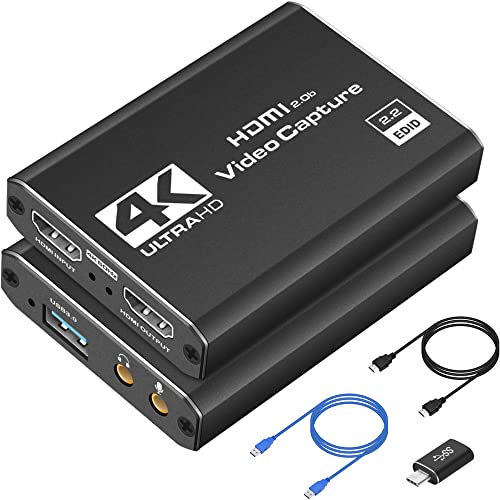
- Plug-and-play USB 3.0 installation
- 1080P 60FPS capture with HDMI loop-out
- Compatible with OBS, Streamlabs, XSplit, PC, and Mac
Best For: Teams and solo creators who need a simple capture card for live demos, webinars, and streaming from HDMI devices.
Best for Plug-and-Play Streaming – Roland UVC-01 USB Capture
For teams looking for capture cards for business livestreaming, the Roland UVC-01 is a straightforward HDMI-to-USB option that turns a compatible camera or Roland V-series switcher into a webcam-style source fast. It’s designed for simple setup, smooth 1080p output, and dependable live use on Mac or Windows.
Best For: Businesses, schools, houses of worship, and small production teams that want an easy, no-fuss capture device for live presentations and webcam-style streaming.
Pros:
- Plug-and-play USB 3.0 operation on Mac and Windows
- Uncompressed 1080p capture at 60 FPS for cleaner live video
- Dedicated analog audio input for flexible event and music setups
- Works with HDMI cameras, camcorders, and Roland V-series switchers
Cons:
- Best suited to HDMI sources; not a universal all-in-one converter
- Fewer advanced controls than more feature-heavy pro capture solutions
- Ideal for streaming workflows, but not the cheapest option in the category
If you want capture cards for business livestreaming that prioritize simplicity and stable performance over extra complexity, the UVC-01 is a strong fit. It’s especially appealing when quick setup, reliable webcam operation, and good audio flexibility matter more than advanced broadcast features.
Best for 4K60 HDR Captures – AVerMedia GC573 Live Gamer 4K
If you need capture cards for business livestreaming that can handle high-end console demos, product walkthroughs, or polished training sessions, the AVerMedia GC573 is built for exactly that kind of workload. It offers 4K60 HDR10 passthrough, low-latency capture, and broad software support, making it a strong fit for creators who want professional-looking streams without sacrificing gameplay or presentation quality.
Best For: Businesses and creators streaming console content in 4K with dependable HDR passthrough and low latency.
Pros:
- Captures 4K60 HDR10 with zero-lag passthrough for clean live production
- Supports high frame rate recording up to 240 fps for smoother content creation
- Works with OBS, Streamlabs, XSplit, Twitch, and YouTube
- Internal PCIe design is a solid choice for a dedicated streaming workstation
Cons:
- Requires a desktop with an available PCIe slot
- Overkill if you only need basic 1080p streaming
- Internal installation is less portable than external capture cards
For capture cards for business livestreaming, this model stands out when image quality and low-latency monitoring matter more than simplicity or portability. It is especially appealing for teams and solo creators producing premium console demos, webinars with gameplay, or branded live events.
Best for Low-Latency Monitoring – Guermok USB 3.0 HDMI Capture Card
If you need capture cards for business livestreaming that can handle webinars, product demos, or hybrid meetings without complicated setup, the Guermok USB 3.0 HDMI Capture Card is a practical pick. It combines 1080p60 capture, 4K HDMI pass-through, and mic/audio monitoring ports in a plug-and-play UVC design that works with common streaming and meeting apps.
Best For: Teams and creators who want a simple, low-latency capture device for live demos, presentations, and recording from HDMI sources.
Pros:
- Captures up to 1080p at 60fps, with 1440p30 support for more flexible workflows
- 4K60 HDMI pass-through helps you monitor the source on an external display with minimal delay
- Mic-in and audio-out ports make it easier to mix voice, commentary, and monitoring audio
- Plug-and-play compatibility with OBS, Zoom, Teams, VLC, and other UVC/UAC software
Cons:
- Microphone input supports standard 3.5mm TRS mics only, not every headset or USB mic
- Pass-through resolution depends on HDMI color mode, so top-end output is not always 4K60
- Requires capture software; it is not a direct-display device on its own
For capture cards for business livestreaming, this model stands out for its straightforward setup and useful audio routing rather than advanced pro features. It is a good fit when you want reliable HDMI capture, quick monitoring, and enough flexibility for meetings, training, and live selling.
Best for High-End Dual-PC Streaming – Elgato 4K Pro Internal Capture Card
If you need capture cards for business livestreaming that can handle demanding demos, webinars, and multi-platform broadcasts, the Elgato 4K Pro is built for serious production setups. It pairs HDMI 2.1 connectivity with ultra-low latency capture, making it a strong fit when you need smooth video, flexible workflow support, and reliable performance from a PC-based studio.
Best For: Teams, creators, and presenters running high-end livestreams with a dual-PC setup or advanced AV needs.
Pros:
- 4K60 HDR10 capture with 8K60 passthrough for high-quality source and output handling
- Supports OBS, Streamlabs, Zoom, Teams, Restream, and other common broadcast tools
- HDMI 2.1, VRR passthrough, and up to 1080p240 recording for flexible workflows
- Ultra-low latency helps keep live production and on-screen action tightly synced
Cons:
- Internal PCIe design means it is not a simple plug-and-play external dongle
- Premium feature set may be more than smaller businesses need
This is a strong choice for capture cards for business livestreaming when output quality, passthrough flexibility, and compatibility matter more than keeping the setup minimal. If your broadcasts need to look polished across meetings, product launches, or gaming-related streams, the 4K Pro is built for that workload.
Best for Simple USB 3.0 Setup – 4K HDMI Video Capture Card
If you need a straightforward option among capture cards for business livestreaming, this HDMI-to-USB 3.0 model is built around plug-and-play use, broad device compatibility, and low-latency capture. It’s a practical fit for live demos, webinars, camera feeds, and console-based presentations when you want reliable 1080p capture without a complicated setup.
Best For: Teams and solo creators who want an easy USB capture card for live business streams, camera input, or gameplay demos.
Pros:
- Plug-and-play design with no driver or external power required
- Captures up to 1080p for a clean, usable stream output
- Works with Windows, Mac, OBS, and many HDMI sources
- HDMI loop-out helps avoid delay during live monitoring
Cons:
- Does not support 4K120Hz or 144Hz input
- Output tops out at 2K30Hz, so it’s not a high-end pro workflow card
- Mic support is limited to 3.5mm TRS standard headset mics
For capture cards for business livestreaming, this one makes sense if your priority is quick setup and dependable HDMI ingestion rather than advanced broadcast features. It’s a good value pick for teams that need an affordable, flexible bridge from cameras or presentation devices into streaming software.
Best for High-Frame-Rate Capture – Elgato 4K S Capture Card
If you need a compact, low-latency option for capture cards for business livestreaming, the Elgato 4K S is built to handle modern consoles and high-refresh workflows without complicating your setup. It captures up to 4K60, supports 1440p120 and 1080p240 passthrough, and offers USB-C plug-and-play compatibility for Windows, macOS, and iPadOS.
Best For: Teams and creators who want smooth console capture, flexible passthrough, and simple USB-C connectivity for live demos or gameplay streams.
Pros:
- 4K60 capture with support for high-frame-rate passthrough up to 1080p240
- Near-zero latency and VRR passthrough help keep gameplay responsive
- Cross-platform support works with PS5, Xbox Series X/S, Switch 2, Mac, and iPad
- 3.5mm analog audio input can simplify commentary or chat routing
Cons:
- HDR10 capture is Windows-only
- Capture resolution tops out at 4K60, so it is not aimed at higher-end pro workflows
- Requires USB 3.0 Type-C and compatible system specs
For capture cards for business livestreaming, this model stands out when you want reliable performance, easy setup, and enough flexibility for presentations, product demos, or console-based content. It is especially appealing if your team values clean HDMI capture and low-lag passthrough over advanced studio features.
Best for Easy Plug-and-Play – acer 1080P 60FPS HDMI to USB 3.0 Capture Card
If you want a simple, no-driver option among capture cards for business livestreaming, this Acer HDMI-to-USB 3.0 model is built for quick setup and steady 1080p 60fps output. It’s a practical fit for live demos, product walkthroughs, and internal training streams when you need reliable capture without adding extra software overhead.
Best For: Teams and solo creators who want a compact, plug-and-play capture card for everyday livestreams, camera feeds, and console demos.
Pros:
- Captures up to 1080p at 60fps for smooth, professional-looking streams
- USB 3.0 connection helps keep latency low during live broadcasts
- 2-in-1 USB-A and Type-C design improves compatibility across modern devices
- Works with OBS, Twitch, YouTube, QuickTime, and more without drivers
Cons:
- One-way HDMI-to-USB capture only
- Requires a USB 3.0 port for best performance
- Not ideal if you need advanced control features or multi-input switching
For capture cards for business livestreaming, this Acer option stands out for straightforward setup, broad device support, and dependable 1080p capture. It’s a sensible choice when you value speed and simplicity over extra pro features.
Best for High-FPS Passthrough – AVerMedia Live Gamer 4K 2.1 PCIe Capture Card
If you need one of the more future-ready capture cards for business livestreaming, the AVerMedia Live Gamer 4K 2.1 is built around HDMI 2.1 support, 4K60 capture, and passthrough options that can handle high-refresh gameplay without slowing your production workflow.
Best For: Teams and creators who want a PCIe capture card for smooth 4K streaming, recording, and high-frame-rate console passthrough.
Pros:
- HDMI 2.1 support with 4K60 capture for modern consoles and pro-level streams
- Up to 240Hz passthrough support helps preserve fluid gameplay on compatible setups
- PCIe Gen 3 x4 internal design is a strong fit for dedicated streaming PCs
- Works with PS5, Xbox Series X/S, PS4 Pro, Xbox One X, and Switch
Cons:
- Internal PCIe installation makes it less portable than USB capture options
- Best features are most useful if your monitor and gaming setup support high refresh rates
For production-minded buyers, this model stands out as a capable option among capture cards for business livestreaming because it balances 4K recording, low-latency passthrough, and next-gen console support in a single internal card.
Best for Easy Commentary – Acer USB 3.0 HDMI Capture Card
If you need capture cards for business livestreaming that are simple to set up and reliable for everyday use, this Acer USB 3.0 model is a practical choice. It supports 4K input with smooth 1080p 60Hz capture, keeps latency low, and works across common streaming and recording workflows without extra drivers.
Best For: Teams, solo creators, and trainers who want a plug-and-play capture card for live demos, webinars, and commentary.
Pros:
- Plug-and-play setup with no extra drivers or external power
- Mic-in support makes live commentary and voiceovers easier
- 4K input with 1080p 60Hz output for smooth streaming and recording
- Wide compatibility with OBS, VLC, consoles, cameras, PC, Mac, and Android
Cons:
- 1080p capture output may be limiting if you need native 4K recording
- Best suited to straightforward workflows rather than advanced pro setups
For capture cards for business livestreaming, this one stands out for convenience: you get quick setup, broad device support, and onboard mic input for clean narration. It’s a solid fit when you want dependable HD capture for meetings, training sessions, and product demos without adding extra hardware complexity.
Best for Easy Setup – 4K HDMI Capture Card USB 3.0
If you need capture cards for business livestreaming that are simple to deploy, this USB 3.0 HDMI capture card is a practical pick. It offers plug-and-play setup, broad device support, and low-latency passthrough, making it a straightforward way to stream demos, webinars, interviews, or training sessions without a complicated workflow.
Best For: Teams, solo creators, and small businesses that want a quick, reliable capture card for live presentations and streaming from HDMI sources.
Pros:
- Plug-and-play USB setup with no drivers needed
- 1080P 60FPS capture with HDMI loop-out for lag-free monitoring
- Works with OBS, Streamlabs, XSplit, PC, Mac, and major consoles
- Compact and portable for travel, events, or mobile production
Cons:
- Not ideal if you need true 4K capture output
- Best suited to basic-to-midrange streaming setups rather than advanced productions
For capture cards for business livestreaming, this model stands out for ease of use more than premium features. It’s a solid fit when you want dependable recording and live output from a camera, console, or laptop without spending extra time on setup.
How We Picked the Best Capture Cards for Business Livestreaming
For Capture Cards for Business Livestreaming, we prioritized dependable video quality, low latency, broad software compatibility, and setup simplicity. We also weighed input/output options, passthrough support, and whether a model suits a single-camera presentation or a more advanced multi-source production.
Quick Comparison
USB capture cards are usually the easiest choice for smaller teams, remote presenters, and mobile setups. Internal PCIe models are better for high-performance desktop rigs, multi-camera workflows, and users who want the strongest passthrough and recording headroom. If your stream must look polished with minimal troubleshooting, matching the card to your production scale matters more than chasing the highest spec sheet number.
Key Buying Factors for Capture Cards for Business Livestreaming
Resolution and Frame Rate
For most business use, 1080p at 60fps is the practical baseline. It provides clean motion for walkthroughs, live demos, and interviews without demanding excessive bandwidth or system resources. If you present products in detail or want more future-proofing, 4K capture and higher passthrough support are worth considering.
Passthrough and Latency
Passthrough lets you monitor the source on a separate display with minimal delay. Low latency is especially important when a presenter needs to stay in sync with slides, camera framing, or live interactions.
Audio Support
Business livestreams often need microphone input, audio mixing, or clean line-in options. Make sure the card handles audio the way your workflow does, especially if you plan to run presentations, interviews, or training sessions.
Connectivity and Compatibility
Check whether you need USB-C, USB-A, or PCIe, and confirm support for your operating system and software stack. The best Capture Cards for Business Livestreaming are the ones that fit your existing computer, cameras, and platforms with the least friction.
Who Should Buy Which Capture Cards for Business Livestreaming?
Choose a USB capture card if you want portability, quick setup, or a straightforward single-camera stream. Pick an internal PCIe card if you need stronger performance, higher passthrough capability, or a dedicated desktop production machine. If your team streams product demos, webinars, or executive presentations, focus first on stability and compatibility, then on advanced features like HDR, VRR, or 4K60 capture only if your workflow truly needs them.