
Choosing the right 3d scanner for miniatures comes down to detail, stability, and how much post-processing you’re willing to do. The best options make it easier to capture tiny textures, clean edges, and hard-to-scan surfaces without endless rescans.
Below, we focus on scanners that suit hobbyists, tabletop painters, and small makers who want reliable results for miniatures, models, and other compact objects.
Best 10 3d Scanner for Miniatures Picks for 2026
Ultra-Fine Small Object Scan
Revopoint MINI 2 for Miniatures

- 0.02 mm precision for tiny detail
- Blue light improves edge and surface capture
- USB and Wi-Fi 6 for flexible use
Best For: Miniatures, small collectibles, and detailed 3D printing
Entry-Level Medium Format
3DMakerpro Fox for Easy Scanning

- 0.07 mm accuracy and 0.10 mm resolution
- AI tracking helps recover after movement
- JMStudio handles scan, edit, and optimize
Best For: Beginners scanning hobby projects and small-to-medium objects
Industrial Precision Laser
Revopoint MetroX Pro for Fine Detail

- Up to 0.01 mm precision for fine capture
- Multiple modes handle shiny, dark, and detailed surfaces
- Auto turntable supports automated scanning
Best For: Advanced precision scanning for modeling and measurement
Small-Format Blue LED
3DMakerpro Seal Lite for Detail Work

- 0.02 mm accuracy for fine textures
- Sized for small objects from 10 to 300 mm
- JMStudio adds tracking and correction tools
Best For: Indoor scanning of miniatures and other small detailed models
Precision All-Rounder
Revopoint POP3 Plus 3D Scanner
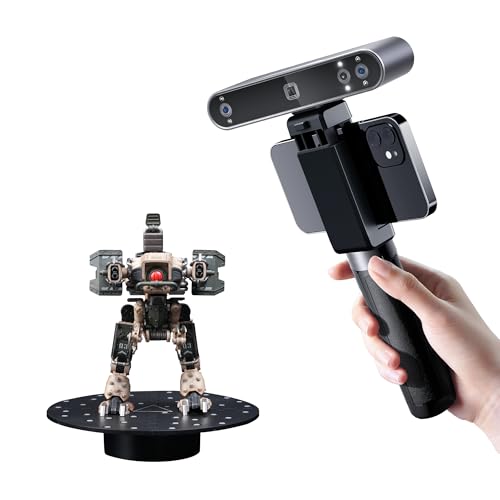
- 20-micron accuracy target for detailed scans
- Optical zoom helps capture finer surface detail
- Full-color output with portable Wi‑Fi 6 or USB-C use
Best For: Makers who want a portable, full-color scanner for miniatures and medium-sized objects
High-Speed Detail Capture
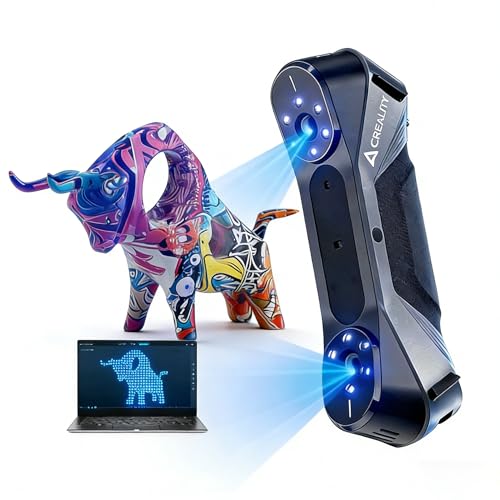
- 0.02mm max accuracy for fine-detail scans
- Up to 60fps with anti-shake performance
- Laser and structured-light modes for versatile scanning
Best For: Users who want fast, high-accuracy scanning for miniatures and mixed materials
Portable Outdoor Scanner
Revopoint INSPIRE 2 3D Scanner

- 0.05 mm accuracy and 0.03 mm precision
- Handles dark or reflective surfaces without spray
- Wi‑Fi 6, mobile support, and outdoor scanning
Best For: Users who want a lightweight scanner for miniatures and difficult surface types
Desktop Pick
Creality CR-Ferret SE for stable tabletop scanning

- Anti-shake precision for steadier scans
- Scans dark and metallic objects without spray or markers
- 24-bit full-color capture with 2MP camera
Best For: Beginners who want a portable, easy-to-use scanner with color output
Fast Value Pick
Creality CR-Scan Ferret with speed-focused capture

- Up to 30 FPS point cloud capture with ASIC chipset
- Dual-mode scanning for wide-range and high-accuracy use
- Built-in RGB camera for full-color textures
Best For: Users who want a fast handheld scanner with flexible device support
Wireless Upgrade
Creality CR-Scan Ferret Pro for flexible scanning

- WiFi6 wireless scanning with portable kit accessories
- Works with Windows, macOS, Android, and iOS
- Anti-shake tracking with 24-bit full-color capture
Best For: Hobbyists who want wireless, cross-platform scanning in a portable kit
Ultra-Fine Small Object Scan – Revopoint MINI 2 for Miniatures
If you need a 3d scanner for miniatures, the Revopoint MINI 2 is built around tiny details, fast capture, and compact objects. Its blue light system, high precision, and improved tracking make it a strong choice for model parts, figurines, and other small items that benefit from fine surface capture.
Best For: Hobbyists and makers scanning miniatures, small collectibles, and detailed parts for 3D printing.
Pros:
- Up to 0.02 mm single-frame precision for fine miniature detail
- Blue light technology helps improve precision and reduce ambient light interference
- RGB camera and 6 Flash LEDs improve texture capture and marker recognition
- Lightweight 175 g design with USB and Wi-Fi 6 connection options
Cons:
- Scanning results can vary by material and color
- Scanning spray may be needed for better results on some surfaces
- Only supports objects within its stated size range
The MINI 2 is a practical pick when your priority is detailed scanning in a small format. It’s especially appealing if you want a portable scanner that can handle tiny features while still offering easy software and multiple export formats.
Entry-Level Medium Format – 3DMakerpro Fox for Easy Scanning
The 3DMakerpro Fox is a straightforward 3d scanner for miniatures and other small-to-medium objects if you want an easier entry point. It focuses on accessible handheld scanning with solid detail, AI visual tracking, and software that handles scanning, editing, and optimization in one workflow.
Best For: Beginners and hobbyists who want an approachable scanner for printing, modeling, and measurement.
Pros:
- 0.07 mm accuracy and 0.10 mm resolution for useful detail
- Markerless AI visual tracking can relock onto the object after movement
- JMStudio combines scanning, editing, and optimizing in one process
- Designed as an accessible entry-level medium-format option
Cons:
- Not as precise as the highest-end miniature scanners
- Best suited to users comfortable with handheld workflow and software setup
Fox makes sense if you want a balanced starter scanner rather than a specialized pro tool. It should work well for hobby projects where ease of use and dependable output matter more than extreme precision.
Industrial Precision Laser – Revopoint MetroX Pro for Fine Detail
If you want a 3d scanner for miniatures with industrial-level precision, the Revopoint MetroX Pro is aimed at users who need extremely fine capture and flexible scanning modes. Its blue laser system, structured light mode, and automated turntable support more advanced workflows for detailed objects and repeatable results.
Best For: Advanced users who need high precision for modeling, measurement, and complex scanning workflows.
Pros:
- Up to 0.01 mm single-frame precision and 0.02 mm single-frame accuracy
- Multiple modes for shiny, dark, flat, and feature-rich objects
- Auto turntable scanning helps automate complex captures
- Color-accurate scans are available in Auto Turntable mode
Cons:
- Heavier and less portable than small handheld options
- Some software tools are paid separately
- Advanced feature set may be more than casual users need
MetroX Pro stands out when precision and workflow control matter most. It is better suited to serious makers or professionals than to simple plug-and-play hobby scanning.
Small-Format Blue LED – 3DMakerpro Seal Lite for Detail Work
The 3DMakerpro Seal Lite is a compact 3d scanner for miniatures and other small objects where fine surface detail matters. It uses a blue LED light source and small-format scanning range to capture dents, edges, and textures, while JMStudio adds the alignment and correction tools needed for handheld work.
Best For: Indoor scanning of small models, miniatures, and detail-focused print prep.
Pros:
- 0.02 mm accuracy with blue LED structured light
- Designed for small objects from 10 to 300 mm
- Scan-back and anti-shake features improve stability
- JMStudio includes visual tracking, error correction, and export tools
Cons:
- Mono texture only, so it does not capture full color
- Indoor use is recommended
- Requires a relatively powerful PC and some practice
Seal Lite is a good fit if your priority is detail on smaller indoor subjects rather than color or maximum convenience. It offers strong specs for the class, but it rewards patient setup and a capable computer.
Precision All-Rounder – Revopoint POP3 Plus 3D Scanner
If you want a practical 3d scanner for miniatures that can also scale beyond tabletop models, the Revopoint POP3 Plus is built for detailed capture with improved accuracy, stable scanning, and full-color output. Its 20-micron accuracy target, optical zoom, and portable design make it a flexible pick for hobbyists who also want broader 3D printing and design use.
Best For: Makers who want a portable, full-color scanner for miniatures and other medium-sized objects.
Pros:
- Up to 20 microns of accuracy, with a calibration board designed to maintain precision.
- Optical zoom at 1.5x and 2x for capturing more point-cloud detail on small subjects.
- Up to 18 fps scanning with a 9-axis IMU to help reduce shaky-frame issues.
- Full-color scanning via HD RGB camera, pixel mapping, and Flash LED lighting.
Cons:
- Revo Scan software is only compatible with x86_64 architecture.
- Best suited to medium-sized objects rather than extremely tiny parts alone.
Overall, the POP3 Plus is a strong general-purpose scanner if you want detailed miniature capture plus the flexibility to handle larger projects. It stands out for portability, color capture, and a polished software workflow.
High-Speed Detail Capture – Creality CR-Scan Raptor
The Creality CR-Scan Raptor is a serious 3d scanner for miniatures if your priority is high accuracy, fast capture, and strong detail on a range of materials. With metrological precision, multi-mode scanning, and support for black or metal objects without much dependence on powder coating, it is aimed at users who want robust results on small parts as well as larger items.
Best For: Users who want fast, high-accuracy scanning for miniatures, mixed materials, and professional workflows.
Pros:
- Maximum accuracy of 0.02mm for very fine detail capture.
- Up to 60fps scanning with anti-shake performance for smoother workflows.
- Blue 7-line laser plus infrared structured light for multi-mode scanning.
- 24-bit RGB color capture with low dependence on powder coating.
Cons:
- Requires fairly capable Windows or macOS hardware.
- More advanced than a basic plug-and-scan hobby tool.
If you need a scanner that can handle tiny features accurately and still stay fast, the Raptor brings a lot of capability to the table. It is especially appealing for users who want professional-level scan quality and flexible material handling.
Portable Outdoor Scanner – Revopoint INSPIRE 2 3D Scanner
The Revopoint INSPIRE 2 is a lightweight 3d scanner for miniatures when you want flexible capture, strong surface handling, and a mobile-friendly workflow. Its dual scanning modules, adjustable optical zoom, and no-spray approach for dark or reflective surfaces make it a versatile option for detailed objects and on-the-go scanning.
Best For: Users who want a lightweight scanner for miniatures, outdoor use, and difficult surface types.
Pros:
- Up to 0.05 mm accuracy and 0.03 mm precision for detailed models.
- 11 infrared laser lines help scan reflective or dark surfaces without spray.
- Lightweight 190g body with Wi‑Fi 6 and mobile scanning support.
- Can scan in up to 20,000 lux lighting for outdoor or semi-bright environments.
Cons:
- Revo Design is sold separately and supports Windows only.
- Best results may depend on matching the right scanning mode to the object.
The INSPIRE 2 is a good fit if you want a portable scanner that can move from tabletop work to outdoor capture. Its mix of laser and structured-light modes gives it practical flexibility for miniature scanning and beyond.
Desktop Pick – Creality CR-Ferret SE for stable tabletop scanning
If you want a 3d scanner for miniatures that prioritizes stability and ease of use, the Creality CR-Ferret SE is built around quick, one-click scanning and anti-shake precision. It is a strong fit for users who want a portable desktop-friendly scanner for modeling and 3D printing workflows, with color capture and support for dark or metallic objects.
Best For: Beginners and makers who want a compact scanner for stable, color-rich scans in a simple workflow.
Pros:
- Anti-shake technology helps reduce hand tremor interference during scanning.
- Supports black, dark, and metallic objects without spray or markers.
- 24-bit full-color capture with a built-in 2MP color camera.
- Lightweight 105g design makes it easy to carry between workspaces.
Cons:
- Best suited to users who want a simple workflow rather than advanced setup control.
- No specific small-object or miniature-focused claims are provided in the notes.
Overall, this is a practical pick if you value portability, color scanning, and stable results over specialized fine-detail features. Its beginner-friendly operation makes it easy to get started quickly.
Fast Value Pick – Creality CR-Scan Ferret with speed-focused capture
The Creality CR-Scan Ferret is a good 3d scanner for miniatures if you want a fast handheld option with strong compatibility and color capture. Its dual-mode scanning, fast processing, and support for Android or PC make it appealing for users who want flexibility and smoother tracking in a compact package.
Best For: Makers who want a fast handheld scanner for detailed color models and flexible device support.
Pros:
- High-speed processing with an ASIC chipset and up to 30 FPS point cloud capture.
- Dual-mode scanning supports both wide-range capture and high-accuracy detail work.
- Built-in RGB camera captures full-color textures for more realistic models.
- Can be powered by a 5V power bank or compatible Android devices for portability.
Cons:
- Android mobile scanning is supported, but the notes say Ferret SE does not support mobile phone scanning.
- System requirements are fairly specific, especially for computer and Android use.
This model stands out for speed, flexibility, and color realism rather than ultra-specialized miniature handling. If your priority is a responsive handheld scanner for varied scanning tasks, it offers a solid balance of performance and portability.
Wireless Upgrade – Creality CR-Scan Ferret Pro for flexible scanning
For buyers looking for a 3d scanner for miniatures with wireless convenience, the Creality CR-Scan Ferret Pro adds WiFi6 scanning, anti-shake tracking, and full-color capture in a portable kit. It is designed for beginner-friendly use across Windows, macOS, Android, and iOS, making it a versatile option if you want to scan in different places without being tied to one setup.
Best For: Beginners and hobbyists who want wireless scanning across multiple devices with a portable all-in-one kit.
Pros:
- WiFi6-powered wireless scanning for stable, flexible use.
- Supports Windows, macOS, Android, and iOS for broad compatibility.
- Anti-shake technology and 24-bit full-color scanning for detailed models.
- Includes a WiFi box, tripod, power bank, phone holder, and carrying case.
Cons:
- Notes say it is not suitable for very small or highly detailed items like jewelry or precision parts.
- Reflective, transparent, or very dark surfaces can reduce results.
The Ferret Pro is the most convenience-focused option here, especially if wireless scanning and broad device support matter more than niche object types. It is a practical choice for hobbyists who want a portable, ready-to-go scanning kit.
How We Picked the Best 3d Scanner for Miniatures
For a 3d Scanner for Miniatures, the most important factors are close-range accuracy, small-object support, texture capture, and consistent tracking. We prioritized scanners that can handle fine details without forcing you into overly complex workflows.
We also favored models that balance resolution with usability. Some buyers need full-color capture for display pieces, while others care more about pure geometry for 3D printing, scaling, or archival work.
Quick Comparison
As a simple rule: laser-based scanners often excel at crisp geometry and edge definition, while structured-light and LED-based systems can be more flexible for texture and general-purpose scanning. Handheld models tend to offer more freedom around positioning, but desktop-friendly scanners can be easier for repeatable miniature scans.
Key Buying Factors for a 3d Scanner for Miniatures
Accuracy and Minimum Detail Size
Look for strong stated accuracy and close-range performance. Miniatures often have shallow engravings, weapon details, cloth folds, or facial features that disappear if the scanner is optimized only for larger objects.
Scan Volume and Working Distance
A scanner built for medium or large objects may still work for miniatures, but only if it can focus well at short distances. Check the recommended object size range and minimum capture distance before buying.
Color and Texture Capture
If you need reference models, painted miniatures, or assets for display, full-color scanning can be valuable. If your main goal is clean geometry for printing, color matters less than stability and precision.
Tracking and Surface Handling
Shiny, dark, or repetitive surfaces can cause issues. Anti-shake tracking, marker support, and good software tools can make a major difference when scanning small figures and gaming miniatures.
Software Workflow
The best 3d Scanner for Miniatures is not just the hardware. Look for software that makes alignment, mesh cleanup, hole filling, and export easy enough for your skill level.
Who Should Buy Which 3d Scanner for Miniatures?
Buyers who want the best detail for tiny figures should lean toward high-accuracy scanners with close-range focus and strong tracking. If you scan painted collectibles or display pieces, full-color models may be worth the extra cost.
Entry-level users should prioritize simple setup and forgiving software over premium specs. Advanced users, especially those scanning miniatures for printing or digital preservation, should favor the most precise models they can reasonably afford. For most shoppers, the best choice is the scanner that matches your object size, workspace, and desired level of cleanup.