
Choosing the right display can make editing faster, color work more accurate, and final exports more consistent. For creators, the best screen is not just sharp—it should also be reliable, well calibrated, and comfortable for long sessions.
This roundup of computer monitors for video editing focuses on practical specs that matter most: resolution, panel quality, color coverage, connectivity, and ergonomics.
Best 10 Computer Monitors for Video Editing Picks for 2026
Creator-Friendly 4K Value
Dell 27 Monitor S2725QS, 4K UHD IPS

- 27-inch 4K IPS panel with 99% sRGB
- 120Hz refresh rate for smoother navigation
- Height, tilt, swivel, and pivot adjustments
Best For: Editors who want a crisp 27-inch 4K display with strong sRGB coverage.
Color-Accurate Compact Pro
ASUS ProArt PA247CV 24 Inch 1080p USB-C

- Factory calibrated with Delta E < 2 accuracy
- 100% sRGB and 100% Rec. 709 coverage
- USB-C with 65W power delivery and USB hub
Best For: Editors and creators who prioritize accurate Rec. 709/sRGB color.
Large-Format Creator Workspace

- 32-inch 4K IPS display with anti-glare finish
- 2000:1 contrast and DisplayHDR 600 support
- USB-C, Thunderbolt, HDMI, and multiple USB ports
Best For: Editors who want a spacious 32-inch 4K monitor with strong contrast.
Well-Connected 4K Creator Display
LG 27UP850K-W 27-inch Ultrafine 4K UHD IPS

- 27-inch 4K IPS panel with up to 95% DCI-P3
- USB-C with up to 90W power delivery
- DisplayHDR 400 plus ergonomic stand adjustments
Best For: Editors who want a 27-inch 4K monitor with DCI-P3 color and USB-C convenience.
Color-Accurate 27-Inch QHD Pick
ASUS ProArt PA278QV 27" 1440p QHD Monitor

- Calman Verified with Delta E < 2
- 100% sRGB and Rec. 709 coverage
- 27-inch IPS with ergonomic stand
Best For: Editors needing accurate color in a comfortable QHD setup
4K Creator Upgrade
Samsung ViewFinity S7 27-Inch 4K UHD Monitor

- 4K UHD resolution for detailed editing
- HDR10 with wide color focus
- Easy Setup Stand and multiple ports
Best For: Creators who want sharper detail and simple setup
Compact Color-Accurate Workhorse
ASUS ProArt PA248QV 24-Inch WUXGA Monitor
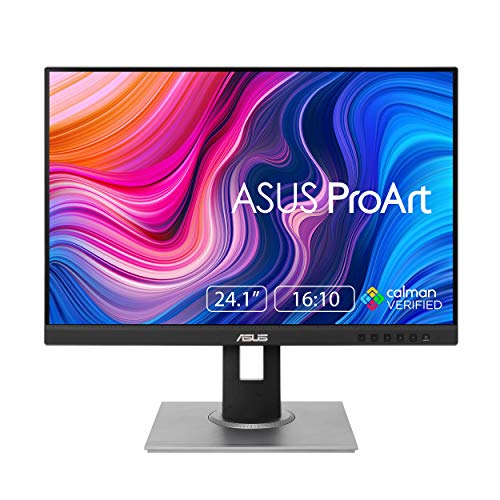
- Calman Verified with Delta E < 2
- 100% sRGB and Rec. 709 coverage
- 24.1-inch 16:10 screen with ergonomic stand
Best For: Small desks and editors who prefer a taller workspace
Budget Curved Starter Pick
Samsung 27" Essential S3 Curved FHD Monitor

- 27-inch curved screen for an immersive workspace
- 100Hz refresh rate for smoother scrolling and motion
- Blue light filter and flicker-free support long sessions
Best For: Budget editors and general creative work
Color-Accurate Creator Favorite
ASUS ProArt PA279CV 27" 4K USB-C Monitor
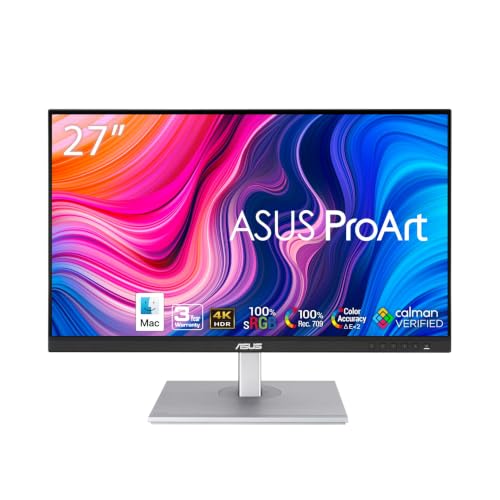
- 4K UHD panel with factory calibration and Calman verification
- 100% sRGB and 100% Rec. 709 for creator-friendly color
- USB-C with 65W power delivery and built-in USB hub
Best For: Color-focused editors who want reliable 4K accuracy
Wide-Gamut Pro Upgrade
ASUS ProArt PA279CRV 27" 4K USB-C HDR Monitor

- 99% DCI-P3 and 99% Adobe RGB for wide-gamut color work
- Calman Verified and Delta E < 2 factory calibration
- 96W USB-C plus daisy-chain support for pro setups
Best For: Pro editors needing wide-gamut color and flexible connectivity
Creator-Friendly 4K Value – Dell 27 Monitor S2725QS, 4K UHD IPS
If you want computer monitors for video editing that balance sharp detail with everyday comfort, the Dell S2725QS is built around a 27-inch 4K IPS panel, 99% sRGB coverage, and a 1500:1 contrast ratio. It also adds a 120Hz refresh rate, so timeline scrubbing and general desktop motion feel smoother than on a basic 60Hz display.
Best For: Editors who want a crisp 27-inch 4K display with strong sRGB coverage and a comfortable, versatile desktop setup.
Pros:
- 4K resolution on a 27-inch IPS panel keeps UI elements and footage looking sharp.
- 99% sRGB coverage supports color-sensitive editing work.
- 120Hz refresh rate can make navigation and scrubbing feel more fluid.
- Height, tilt, swivel, and pivot adjustments help dial in an ergonomic setup.
Cons:
- Designed around sRGB, so it is not aimed at wider-gamut creator workflows.
- Only 27 inches, which may feel compact for heavy timeline and panel use.
The Dell S2725QS is a practical pick if you want a clean 4K editing monitor with comfortable viewing features and enough color fidelity for mainstream creator work. It is especially appealing when you want strong everyday versatility without moving into premium pro pricing.
Color-Accurate Compact Pro – ASUS ProArt PA247CV 24 Inch 1080p USB-C
For computer monitors for video editing where color accuracy matters more than sheer size, the ASUS ProArt PA247CV focuses on factory calibration, Delta E < 2 accuracy, and 100% sRGB plus 100% Rec. 709 coverage. Its 24-inch 1080p panel is modest in resolution, but the creator-focused tuning and USB-C connectivity make it a solid practical workstation display.
Best For: Editors and creators who prioritize accurate Rec. 709/sRGB color on a compact, well-connected monitor.
Pros:
- Factory calibrated and Calman Verified for excellent Delta E < 2 accuracy.
- 100% sRGB and 100% Rec. 709 coverage suit creator workflows.
- USB-C with 65W power delivery simplifies laptop-based editing setups.
- Includes a USB hub and daisy-chain support for multi-monitor use.
Cons:
- 1080p resolution is less detailed than 4K options for editing timelines and footage.
- 24-inch screen size may feel small for complex video projects.
The PA247CV is a strong choice when accuracy and workflow convenience matter more than resolution. It makes the most sense for editors working in standard color spaces who want a reliable compact monitor with creator-friendly connectivity.
Large-Format Creator Workspace – Dell UltraSharp DELL-U3225QE
If you are shopping for computer monitors for video editing and want more room to work, the Dell UltraSharp DELL-U3225QE offers a 32-inch 4K IPS panel with a 2000:1 contrast ratio, 450 nits of brightness, and VESA DisplayHDR 600 support. Its large screen size and broad connectivity make it well suited to editing layouts that benefit from more space for timelines, bins, and preview windows.
Best For: Editors who want a spacious 32-inch 4K monitor with strong contrast, bright HDR support, and rich connectivity.
Pros:
- 32-inch 4K IPS display provides generous space for editing interfaces.
- 2000:1 contrast ratio and DisplayHDR 600 improve depth and highlight detail.
- Built-in USB-C, Thunderbolt, HDMI, and multiple USB ports support modern workflows.
- Ergonomic adjustments and anti-glare coating help long editing sessions.
Cons:
- Larger size needs more desk space than a 27-inch monitor.
- Response time is listed as 5 ms in one section and 8 ms in another, so specs are not perfectly consistent.
This Dell UltraSharp is aimed at users who want a premium-feeling editing workspace with more screen real estate and strong connectivity. For creators who value a larger canvas and sturdy image depth, it is the most expansive option in this group.
Well-Connected 4K Creator Display – LG 27UP850K-W 27-inch Ultrafine 4K UHD IPS
The LG 27UP850K-W is a sensible fit for computer monitors for video editing when you want 4K detail, wide color, and easy connectivity without stepping up to a huge panel. Its 27-inch IPS display covers up to 95% DCI-P3, supports VESA DisplayHDR 400, and includes USB-C with up to 90W power delivery, plus DisplayPort and dual HDMI.
Best For: Editors who want a 27-inch 4K monitor with DCI-P3 color, HDR support, and simple USB-C connectivity.
Pros:
- 4K 27-inch IPS panel gives sharp detail for editing and review.
- Up to 95% DCI-P3 coverage supports wider-gamut creator work.
- USB-C with up to 90W power delivery is useful for laptop setups.
- Height, tilt, and pivot adjustments help with comfortable long sessions.
Cons:
- 60Hz refresh rate is standard, not especially smooth for motion-heavy use.
- Contrast ratio is modest at 1200:1 compared with some higher-end panels.
The LG 27UP850K-W is a well-rounded editor’s monitor if you want wide-gamut color, 4K clarity, and modern USB-C convenience in a manageable 27-inch size. It is a strong everyday choice for creators who need flexibility more than specialty features.
Color-Accurate 27-Inch QHD Pick – ASUS ProArt PA278QV 27" 1440p QHD Monitor
If you want computer monitors for video editing that prioritize color accuracy over flashy extras, the ASUS ProArt PA278QV is built for that job. Its 27-inch WQHD IPS panel, 100% sRGB and Rec. 709 coverage, and Calman Verified factory tuning make it a practical choice for editing timelines, grading footage, and matching your work to standard color spaces.
Best For: Editors who want a reliable 27-inch QHD display with strong color accuracy and ergonomic flexibility.
Pros:
- Calman Verified with Delta E < 2 accuracy for dependable color work
- 100% sRGB and 100% Rec. 709 coverage for video editing and content creation
- 27-inch 2560 x 1440 IPS panel with wide viewing angles
- Ergonomic stand plus flicker-free, blue-light-filter eye care
Cons:
- 75Hz refresh rate is modest compared with gaming-oriented monitors
- Not a 4K panel, so it offers less pixel density than higher-resolution options
- Built-in speakers are included, but the focus is clearly on image work
Overall, this ProArt model is a strong fit if your editing workflow values dependable color, comfortable viewing, and flexible connectivity more than maximum resolution. It is a straightforward creative monitor that stays focused on the essentials.
4K Creator Upgrade – Samsung ViewFinity S7 27-Inch 4K UHD Monitor
For computer monitors for video editing where detail and workspace matter, the Samsung ViewFinity S7 brings a sharp 4K UHD panel to a 27-inch size. The high-resolution display, HDR10 support, and wide color focus make it well suited for creator workflows that benefit from seeing more of the timeline, more fine detail, and more nuanced contrast.
Best For: Creators who want a 27-inch 4K monitor with easy connectivity and built-in eye care.
Pros:
- 4K UHD resolution delivers more detail and screen space for editing
- HDR10 supports deeper contrast and more realistic-looking color
- Multiple ports including HDMI, DP, USB-A, and USB-B
- Easy Setup Stand installs without tools or screws
Cons:
- 60Hz refresh rate is aimed at productivity, not motion-heavy use
- Single 27-inch size may be a tighter fit for users who want a larger workspace
- Power consumption is higher than the more basic 1440p option here
This Samsung is a sensible step up if you want the extra detail of 4K without adding complexity to your desk setup. It balances creator-friendly features with simple assembly and broad device support.
Compact Color-Accurate Workhorse – ASUS ProArt PA248QV 24-Inch WUXGA Monitor
If you need computer monitors for video editing in a smaller workspace, the ASUS ProArt PA248QV offers a practical 24.1-inch 16:10 format with accurate color and a comfortable layout. Its WUXGA resolution, Calman Verified tuning, and 100% sRGB/Rec. 709 coverage make it a solid fit for editing, reviewing, and general creative work where dependable color matters more than headline specs.
Best For: Editors who want a compact, color-accurate monitor with a taller 16:10 screen.
Pros:
- Calman Verified with Delta E < 2 accuracy for trustworthy color reproduction
- 100% sRGB and Rec. 709 coverage for photo and video editing
- 16:10 WUXGA panel gives a bit more vertical workspace
- Ergonomic stand and anti-glare coating support long sessions
Cons:
- 1920 x 1200 resolution is lower than 4K alternatives
- 24.1-inch size may feel small for users wanting a larger timeline view
- Not as spacious as 27-inch monitors for multitasking
This model makes sense when accuracy and desk efficiency matter more than raw resolution. It is especially appealing if you prefer a compact monitor that still delivers professional-grade color behavior.
Budget Curved Starter Pick – Samsung 27" Essential S3 Curved FHD Monitor
If you want computer monitors for video editing on a tighter budget, this Samsung 27-inch curved display is a practical entry point. The 1080p resolution and 27-inch size give you a roomy workspace for timelines and preview windows, while the 100Hz refresh rate helps motion feel smoother during editing and general content work.
Best For: Budget-conscious editors who need a large screen for general editing, basic timelines, and mixed creative work.
Pros:
- 27-inch curved screen offers an immersive, distraction-reducing view
- 100Hz refresh rate can make scrolling and motion feel smoother
- Blue light filter and flicker-free tech support longer sessions
- Easy device connectivity with HDMI and D-Sub inputs
Cons:
- FHD 1080p resolution is less detailed than 4K options for video work
- Limited color-focused specs compared with pro creator monitors
- Only one HDMI port may feel restrictive for multi-device setups
For light editing or secondary use, this Samsung is more about size, comfort, and smooth everyday performance than color-critical accuracy. It makes sense if you need an affordable display that can handle creative projects without moving into professional-grade territory.
Color-Accurate Creator Favorite – ASUS ProArt PA279CV 27" 4K USB-C Monitor
Among computer monitors for video editing, this ASUS ProArt model stands out for creators who care about accuracy and connectivity. Its 27-inch 4K UHD panel, Calman verification, and factory calibration make it a strong fit when you need reliable color handling for editing, review, and finishing work.
Best For: Editors and creators who want a color-accurate 4K monitor with flexible USB-C connectivity.
Pros:
- 4K UHD resolution gives you sharp detail for editing and timeline work
- Factory calibrated and Calman Verified with Delta E < 2 accuracy
- 100% sRGB and 100% Rec. 709 coverage support creator workflows
- USB-C with 65W power delivery plus USB hub adds convenience
Cons:
- 60Hz refresh rate is standard rather than especially fast
- Brightness and gamut details in the supplied notes are somewhat inconsistent
- Best suited to color-focused work, not gaming-first use
This is a well-rounded creator monitor if you want dependable color accuracy and a clean single-cable setup. The long warranty and included pre-calibration report add extra confidence for serious editing workflows.
Wide-Gamut Pro Upgrade – ASUS ProArt PA279CRV 27" 4K USB-C HDR Monitor
If your workflow depends on strong color reproduction, this ASUS ProArt is one of the more compelling computer monitors for video editing in the group. The 27-inch 4K HDR panel, Calman verification, and wide 99% DCI-P3 and 99% Adobe RGB coverage make it a solid choice for detailed creator work and polished output.
Best For: Video editors and photo-video creators who want a wide-gamut 4K monitor with strong USB-C power delivery.
Pros:
- 99% DCI-P3 and 99% Adobe RGB coverage for vibrant, accurate color
- Factory pre-calibrated with Delta E < 2 for professional precision
- USB-C with 96W power delivery simplifies laptop-based setups
- Daisy-chain support helps expand a multi-monitor workspace
Cons:
- 60Hz refresh rate is fine for editing, but not ideal for high-motion tasks
- Premium creator features may be more than casual users need
- Built-in speaker mention is a plus, but audio is not the focus here
This model is the strongest fit if you want a monitor that prioritizes color depth, workflow flexibility, and pro-level connectivity. It is especially appealing for editors using a Mac or laptop who want one cable to handle both display and charging.
How We Picked the Best Computer Monitors for Video Editing
We focused on Computer Monitors for Video Editing that balance image accuracy, resolution, panel quality, and useful creator features. Priority went to IPS-based displays, strong sRGB and DCI-P3 coverage, sensible factory calibration, USB-C convenience, and stands that support height, tilt, swivel, and pivot. We also considered whether each monitor suits 1080p timelines, 4K workflows, or mixed-use editing setups.
Quick Comparison
Use 24-inch 1080p or WUXGA models if you want a compact, affordable secondary screen or work in tight spaces. Choose 27-inch 1440p if you want a good balance of detail and interface scaling. For most serious editors, 27-inch 4K is the sweet spot because it provides extra timeline space and better preview clarity without becoming overly large. If you handle high-end color work or larger projects, premium 32-inch 4K options offer more room for palettes and full-resolution monitoring.
Key Buying Factors for Computer Monitors for Video Editing
Resolution and Screen Size
Higher resolution matters because it lets you see more of your timeline and video frame at once. A 27-inch 4K display is often ideal for editing, while 24-inch 1080p models are better for budget-conscious setups or as secondary monitors.
Color Accuracy and Coverage
Look for wide color gamut support, solid factory calibration, and consistent panel performance. If you deliver for web, sRGB accuracy is essential. If you edit HDR or cinema-focused content, broader DCI-P3 coverage becomes more important.
Connectivity and Workflow
USB-C is especially useful for laptop editors because it can carry video, data, and charging through one cable. Extra HDMI and DisplayPort inputs help if you switch between a desktop, laptop, and external devices.
Ergonomics and Comfort
Long edit sessions are easier when a monitor has full stand adjustability and good anti-glare treatment. Eye comfort features can help, but they should not replace image quality as the main priority.
Who Should Buy Which Computer Monitors for Video Editing?
Budget-minded creators and students should lean toward smaller 24-inch options or entry-level 27-inch displays. Most independent editors and content creators will get the best value from 27-inch 4K models with USB-C and strong color support. Professionals who grade footage, work in mixed print/video workflows, or need a more premium workspace should consider higher-end displays with better panel uniformity, stronger brightness, and more advanced connectivity.
If you are comparing Computer Monitors for Video Editing, start with resolution, then narrow your shortlist by color performance, port selection, and how comfortably the screen fits your desk and editing style.