
Choosing an audio interface with MIDI input can simplify a home studio by combining microphone, instrument, monitor, and controller connections in one device. The right model depends on your input count, recording quality, software workflow, and available budget.
We’ve gathered 10 options ranging from compact two-channel interfaces to expandable models for bands and larger recording setups. Use the guide below to narrow the selection by features that matter in daily use.
Best 10 Audio Interface with Midi Input Picks for 2026
Best All-Around Pick

- 5-pin MIDI input and output
- Two combo inputs with 48V phantom power
- Five-year warranty and bundled software
Best For: Beginners and compact home studios
Best Budget USB-C Option

- USB-C bus-powered plug-and-play design
- Two combo inputs with phantom power
- 24-bit/192kHz recording and loopback
Best For: Portable laptop and mobile recording
Best for Flexible Routing

- 4-in/4-out USB-C connectivity
- MIDI I/O, loopback, and hardware monitoring
- LCD metering and two microphone preamps
Best For: Producers and podcasters needing extra I/O
Best for Large Studios

- 18x20 USB audio/MIDI connectivity
- Eight MIDAS microphone preamps
- ADAT I/O for system expansion
Best For: Bands and multi-microphone recording setups
Best Overall
Focusrite Scarlett 4i4 4th Gen

- MIDI I/O with four line inputs and outputs
- Two mic preamps and two Hi-Z inputs
- Up to 24-bit/192kHz with Auto Gain and Clip Safe
Best For: Flexible home studios needing multiple inputs and MIDI
Best for Vintage-Style Tone
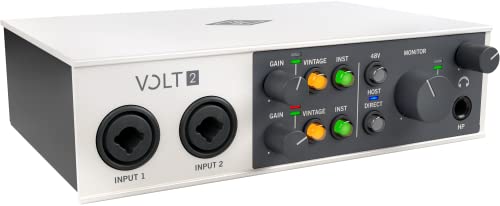
- 2x2 USB-C interface with MIDI
- Vintage mode emulates UA 610 preamp character
- 24-bit/192kHz recording with mobile-device support
Best For: Portable two-channel recording with vintage-style tone
Best for Low-Latency Monitoring
Yamaha URX22C USB-C Audio/MIDI Interface

- MIDI I/O with two combo inputs
- DSP monitoring with reverb and channel effects
- 32-bit integer/192kHz USB 3.0 recording
Best For: Musicians wanting durable hardware and onboard monitoring effects
Best with Extra Features
Focusrite Scarlett 2i2 4th Gen

- Two mic preamps and Hi-Z instrument inputs
- 24-bit/192kHz audio with 120dB dynamic range
- Auto Gain, Clip Safe, and bundled recording software
Best For: Solo musicians and compact home studios
Best Budget MIDI I/O
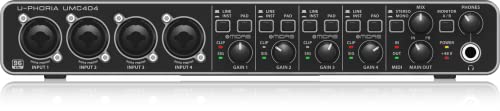
- Built-in MIDI input and output
- Four Midas mic preamps with 4-in/4-out USB audio
- 24-bit/192kHz support for macOS and Windows
Best For: Keyboard players and small multi-source setups
Best for Larger Setups

- Six-in/four-out audio with MIDI I/O
- 32-bit/192kHz support and four combo inputs
- DSP monitoring effects and Steinberg software included
Best For: Multi-input studios and hardware-rich music setups
Best All-Around Pick – Arturia MiniFuse 2
The Arturia MiniFuse 2 is a practical audio interface with MIDI input for home recording, songwriting, and portable setups. It combines two combo microphone/instrument/line inputs, 5-pin MIDI connectivity, loopback, and beginner-friendly software in a compact enclosure.
Best For: Beginners, guitarists, vocalists, and creators who want a flexible two-input interface with MIDI and bundled software.
Pros:
- Includes 5-pin MIDI input and output for synths, controllers, and drum machines.
- Offers two combo inputs with 48V phantom power plus balanced line outputs.
- Includes loopback, a USB hub, and a substantial software bundle.
- Backed by a five-year warranty and extensive reliability testing.
Cons:
- Only provides two primary recording inputs.
- USB connectivity and the compact design may be limiting for larger studio setups.
The MiniFuse 2 is a strong all-purpose choice when MIDI support, simple operation, and long-term value matter more than a high input count.
Best Budget USB-C Option – PIYONE Q2 Alloy Red
This PIYONE 2×2 interface is aimed at creators who need a straightforward audio interface with MIDI input-compatible studio setup, USB-C connection, and portable recording features. It supports 24-bit/192kHz recording, two combo inputs, phantom power, loopback, and direct monitoring.
Best For: Laptop and mobile creators seeking a compact two-channel interface for vocals, guitar, and basic home recording.
Pros:
- USB-C bus power and class-compliant plug-and-play operation require no drivers.
- Two combo inputs support microphones and Hi-Z guitar sources.
- Provides 24-bit/192kHz fidelity, 48V phantom power, and zero-latency direct monitoring.
- Includes loopback and a standard 3.5mm headphone connection.
Cons:
- The supplied notes do not specify built-in MIDI input or output.
- Offers only two channels and is listed with Windows operating-system compatibility.
- Has a two-year limited warranty.
Choose this model for simple USB-C recording and monitoring, but verify the MIDI connections before buying if hardware MIDI is essential to your setup.
Best for Flexible Routing – MOTU M4
The MOTU M4 is a capable audio interface with MIDI input for musicians, podcasters, and producers who need more routing flexibility than a basic two-input model. Its 4×4 USB-C design, two microphone preamps, hardware monitoring, LCD screen, and loopback support suit recording and streaming workflows.
Best For: Producers and podcasters who need four inputs and outputs, low-latency monitoring, and MIDI I/O.
Pros:
- Provides 4-in/4-out USB-C connectivity with MIDI I/O.
- Includes two microphone preamps and hardware monitoring.
- LCD metering helps monitor recording levels.
- Supports Mac, Windows 10, and iOS, with included production software and free content.
Cons:
- Its four-input layout may be more than needed for simple solo recording.
- The supplied notes do not detail the specific MIDI connector format.
- Warranty coverage is listed as two years.
The M4 is a well-rounded upgrade for users who want MIDI connectivity alongside multiple analog connections, loopback, and hands-on monitoring controls.
Best for Large Studios – Behringer UMC1820
The Behringer UMC1820 is a high-capacity audio interface with MIDI input for recording multiple microphones and instruments at once. It offers 18×20 USB connectivity, eight MIDAS-designed microphone preamps, ADAT I/O, and 48V phantom power for more expansive studio systems.
Best For: Bands, project studios, and recording setups that need many simultaneous inputs and expandable digital connections.
Pros:
- Offers 18 inputs and 20 outputs over USB 2.0.
- Includes eight MIDAS-designed microphone preamps with 48V phantom power.
- Provides ADAT I/O for system expansion.
- Works with popular recording software such as Pro Tools, Ableton Live, and Cubase.
Cons:
- Its larger rack-style design is less suited to portable recording.
- The supplied details contain conflicting sample-rate specifications, listing 24-bit/96kHz in the features and 48kHz in the details.
- The warranty information directs buyers to the manufacturer rather than specifying a duration.
For a full recording rig, the UMC1820 offers substantially more I/O and expansion potential than compact interfaces, making it the better fit for multi-mic sessions and larger setups.
Best Overall – Focusrite Scarlett 4i4 4th Gen
The Focusrite Scarlett 4i4 4th Gen is a versatile audio interface with MIDI input for musicians building a flexible home-studio setup. It combines two mic preamps, two Hi-Z inputs, four line inputs, and four line outputs with up to 24-bit/192kHz recording.
Best For: Home-studio users who need multiple inputs, MIDI connectivity, and room to expand.
Pros:
- Includes MIDI input and output alongside four line inputs and outputs.
- Two mic preamps and two Hi-Z inputs support microphones, guitars, and instruments.
- Offers 120dB dynamic range, Air mode, Auto Gain, and Clip Safe.
- Includes recording software, effects, instruments, and mastering tools.
Cons:
- Its broader I/O may be more than needed for simple two-channel recording.
- USB-C power supply requirements may add setup considerations for some users.
Choose the Scarlett 4i4 if you want MIDI plus a generous selection of analog connections in one studio hub. Its automatic level tools and bundled software also make it practical for developing recording setups.
Best for Vintage-Style Tone – Universal Audio Volt 2
The Universal Audio Volt 2 is a compact audio interface with MIDI input for musicians, podcasters, and streamers who mainly record two sources at a time. Its 2×2 USB-C design supports up to 24-bit/192kHz recording and includes a Vintage mode inspired by UA’s classic 610 preamps.
Best For: Musicians and creators who want a portable two-input interface with vintage-style preamp coloration.
Pros:
- Provides MIDI connectivity in a compact 2×2 interface.
- Vintage mode is designed to deliver the sound of UA’s classic 610 preamps.
- Supports up to 24-bit/192kHz recording and mixing.
- Works with macOS, Windows, iPad, and iPhone with the required accessories.
Cons:
- Two channels offer less expansion than larger interfaces.
- Mobile use may require an external power supply and, in some cases, an Apple Lightning to USB Camera Adapter.
- The listed manufacturer warranty is one year.
The Volt 2 is a focused choice when two inputs are sufficient and tonal character matters. Its portable design and broad device compatibility make it useful for recording away from a fixed desktop setup.
Best for Low-Latency Monitoring – Yamaha URX22C USB-C Audio/MIDI Interface
The Yamaha URX22C is an audio interface with MIDI input designed for musicians who want two combo inputs, DSP-powered monitoring, and high-resolution recording. Its 32-bit integer/192kHz USB 3.0 connection is paired with Class-A D-PRE preamps, phantom power, and built-in effects.
Best For: Musicians seeking durable construction and latency-free monitoring with onboard processing.
Pros:
- Includes MIDI input and output with 2×2 analog I/O.
- Two XLR/TRS combo inputs include Class-A D-PRE preamps, +48V phantom power, and one Hi-Z input.
- DSP-powered monitoring includes REV-X reverb, Channel Strip, and Guitar Amp Classics.
- Rugged full-metal housing is designed for durability.
Cons:
- Two inputs and two main outputs provide less I/O than larger interfaces.
- The listed warranty is one year and applies under Yamaha’s stated authorized-retailer conditions.
The URX22C is a strong fit for performers who value real-time monitoring effects and a sturdy chassis. Its included Steinberg software and cross-platform compatibility add useful flexibility for recording and production.
Best with Extra Features – Focusrite Scarlett 2i2 4th Gen
The Focusrite Scarlett 2i2 4th Gen is a streamlined choice for creators who need a compact audio interface with MIDI input alternatives handled through compatible software or external gear. It provides two mic/instrument inputs, high-resolution recording, and helpful level-management features for home recording.
Best For: Solo musicians, vocalists, and guitarists recording on a computer or compatible mobile device.
Pros:
- Two mic preamps and two Hi-Z instrument inputs
- 24-bit/192kHz recording with a 120dB dynamic range
- Auto Gain and Clip Safe help prevent poorly set recording levels
- Includes Ableton Live Lite, Cubase LE, Pro Tools Intro+, and other software
Cons:
- Only two audio inputs, limiting larger recording setups
- The supplied notes do not list built-in MIDI I/O
The 2i2 is a strong fit when simple two-channel recording matters more than extensive connectivity. Its Air mode and automatic level tools add convenience for beginners and streamlined home studios.
Best Budget MIDI I/O – Behringer U-PHORIA UMC404HD
Behringer U-PHORIA UMC404HD 4x4 USB Audio Interface, 24-Bit/192kHz, with 4 Midas Mic Preamps
Check Price On AmazonThe Behringer U-PHORIA UMC404HD is a practical audio interface with MIDI input and output built in, making it useful for keyboard players and hardware-based setups. Its four-input, four-output design also gives you more routing flexibility than a basic two-channel interface.
Best For: Musicians who need MIDI I/O, four mic preamps, and 4-in/4-out USB connectivity.
Pros:
- Built-in MIDI I/O for connecting compatible keyboards and gear
- Four Midas mic preamps and four audio inputs
- Supports 24-bit/192kHz recording
- Works with macOS and Windows
Cons:
- Heavier than the compact two-input option at 2.7 pounds
- The supplied notes provide limited information about included software
For buyers specifically seeking an audio interface with MIDI input without moving to a larger studio unit, the UMC404HD offers a straightforward feature set. Its four-channel layout is particularly useful for small ensembles, keyboards, and multi-source recording.
Best for Larger Setups – Yamaha URX44C USB-C Interface
The Yamaha URX44C combines an audio interface with MIDI input and output, six analog inputs, and DSP-powered monitoring. It is designed for musicians who need more connection options, while its Class-A D-PRE preamps, flexible outputs, and included software support a capable computer-based studio.
Best For: Multi-mic recording, keyboard and instrument setups, and creators who want onboard monitoring effects.
Pros:
- Six analog inputs, four combo inputs, and MIDI I/O
- 32-bit integer/192kHz support with USB 3.0 connectivity
- DSP monitoring includes REV-X reverb, Channel Strip, and Guitar Amp Classics
- Includes Cubase AI, Steinberg Plus, and dspMixFx
Cons:
- Larger feature set may be more than a basic two-input studio needs
- Listed warranty is one year and has authorized-retailer requirements
The URX44C is the most expandable option here for users who need both MIDI connectivity and multiple simultaneous audio sources. Its rugged metal housing and latency-free DSP monitoring further suit a more involved recording workflow.
How We Picked the Best Audio Interface with Midi Input
We evaluated these interfaces for the connections musicians and creators use most: MIDI input and output, microphone preamps, combo inputs, headphone monitoring, line outputs, USB connectivity, and expansion support. We also considered recording resolution, driver and software compatibility, portability, and whether the layout suits a beginner or a more demanding studio.
Specifications can vary by model and operating system, so confirm current manufacturer details before buying—especially for iOS support, USB-C requirements, bundled software, and ADAT compatibility.
Quick Comparison
| Best for | What to prioritize |
|---|---|
| Solo recording | Two quality inputs, low-latency monitoring, and a simple control layout |
| Synths and MIDI controllers | Reliable five-pin MIDI I/O plus enough line inputs for hardware |
| Small bands | Four or more mic inputs and independent monitor flexibility |
| Growing studios | Higher channel counts, ADAT expansion, and robust routing |
| Mobile recording | Bus power, compact construction, and compatible USB or iOS connections |
Key Buying Factors for an Audio Interface with Midi Input
MIDI Connections and Workflow
Check that the interface includes standard five-pin MIDI input and output if you use an external keyboard, drum machine, or hardware synthesizer. MIDI ports handle performance data, not audio, so hardware instruments may still need line inputs or separate monitoring connections.
Input and Output Count
Two inputs are usually sufficient for vocals, guitar, or one stereo keyboard. Four inputs provide more flexibility for multiple microphones, stereo hardware, or small ensemble recording. Interfaces with eight or more inputs are better suited to drum kits, bands, and expandable studios.
Audio Quality and Latency
24-bit recording is standard for serious home production, while higher sample rates can benefit particular workflows but are not a substitute for good microphones, room treatment, or gain staging. Stable drivers, direct monitoring, and useful mixer software often matter more than headline resolution.
Connectivity and Expansion
Verify the interface works with your computer and operating system. USB-C describes the connector, not necessarily the performance level. ADAT or additional line outputs can help a studio grow, while balanced monitor outputs reduce noise in a permanent setup.
Who Should Buy Which Audio Interface with Midi Input?
Choose a compact two-input model if you record vocals, guitar, podcasts, or a single stereo instrument. These interfaces are generally easier to carry and operate.
Choose a four-input interface if you use multiple microphones, stereo synths, or want room for future projects without moving to a rack unit.
Choose an eight-input or expandable model for drum recording, bands, rehearsal capture, or a studio that may add external preamps through ADAT. Before purchasing, count every source you want to record simultaneously and leave at least one or two inputs for future expansion.