
The best compact audio interfaces make it easier to record vocals, guitars, instruments, podcasts, and livestreams without giving up useful sound quality or essential controls. The right choice depends on your input needs, device compatibility, monitoring setup, and budget.
We selected 10 compact models ranging from straightforward single-input interfaces to feature-rich production hubs. Use the guide below to narrow the list by connectivity, recording workflow, and the kind of setup you plan to build.
Best 10 Compact Audio Interfaces Picks for 2026
Best Compact Starter
Focusrite Scarlett Solo 3rd Gen

- One XLR preamp and one Hi-Z instrument input
- Air mode and recording up to 24-bit/192kHz
- Includes a broad starter software bundle
Best For: Solo musicians and home recordists
Best All-in-One Production Hub
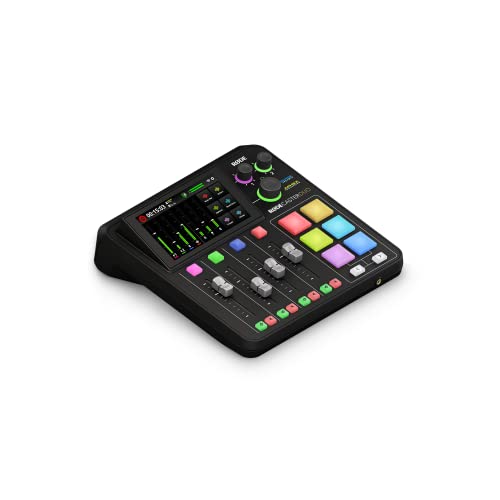
- Two combo inputs with high-gain Revolution Preamps
- Four faders, touchscreen, and six SMART pads
- Built-in APHEX processing and studio effects
Best For: Podcasters, streamers, and content creators
Best Updated Solo Interface
Focusrite Scarlett Solo 4th Gen

- 120dB dynamic range and 24-bit/192kHz support
- Improved Air modes for vocals and guitars
- Includes recording software and production plugins
Best For: Songwriters making solo recordings
Best Two-Input Monitoring

- Two preamps in a 2-in/2-out interface
- Hardware monitoring for direct listening
- 24-bit/192kHz operation with over 6GB of content
Best For: Home recordists needing two inputs
Studio-Ready Pick
Focusrite Scarlett 2i2 4th Gen

- 24-bit/192kHz recording with 120dB dynamic range
- Auto Gain, Clip Safe, and Air modes
- Includes a broad recording software bundle
Best For: Home musicians recording vocals and instruments
Budget Flexibility Pick
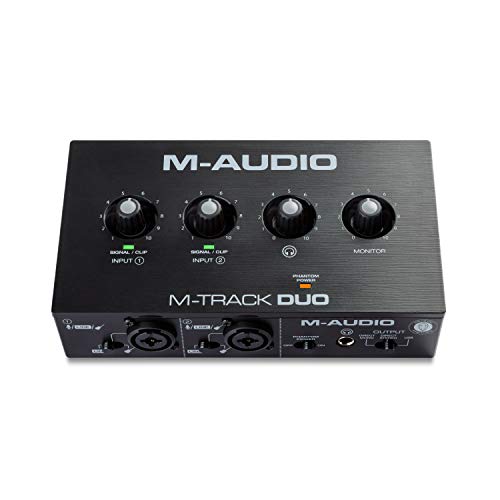
- Two combo XLR, line, and instrument inputs
- Zero-latency USB/Direct monitoring switch
- Includes MPC Beats production software
Best For: Beginners, podcasters, and live streamers
Simple Starter
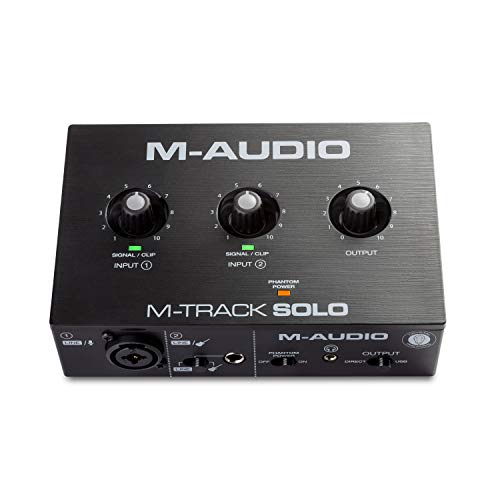
- Two-channel interface for mic, line, and instrument sources
- Zero-latency USB/direct monitoring with headphone and RCA outputs
- Includes MPC Beats and supports Mac, PC, iOS, and common DAWs
Best For: Beginners recording vocals, guitar, podcasts, or livestream audio
High-Resolution Creator

- 24-bit/192 kHz recording with 106 dB dynamic range
- Up to 56 dB gain, 48V phantom power, and instrument input
- ProStudio software adds virtual channels and loopback routing
Best For: Podcasters, musicians, and beginners who record and stream
Mobile Creator Hub
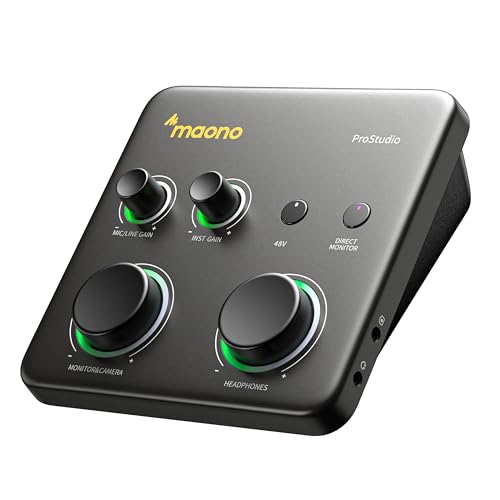
- Up to 70 dB gain and 24-bit/192 kHz recording
- Dual USB connectivity for computers and mobile devices
- ProStudio2 adds routing, VST effects, and loopback
Best For: Solo creators recording or streaming across desktop and mobile devices
Best Compact Starter – Focusrite Scarlett Solo 3rd Gen
The Focusrite Scarlett Solo 3rd Gen is a practical choice among compact audio interfaces for solo musicians, podcasters, and home recordists. It combines one XLR microphone preamp, one Hi-Z instrument input, Air mode, and recording support up to 24-bit/192kHz in a small USB-C-compatible setup.
Best For: Singer-songwriters and home users recording one microphone and one guitar or bass.
Pros:
- Air mode can add clarity to vocals and acoustic instruments.
- Dedicated Hi-Z input supports guitar and bass recording.
- Includes a useful software bundle with Pro Tools Intro+, Ableton Live Lite, Cubase LE, and Hitmaker Expansion.
- Offers low-noise balanced outputs and headphone monitoring.
Cons:
- Its one mic preamp limits simultaneous microphone recording.
- It is an older generation than the Scarlett Solo 4th Gen.
Choose this model if you want straightforward two-input recording and a generous starter software package without a complicated control layout.
Best All-in-One Production Hub – RØDECaster Duo
The RØDECaster Duo is a larger, feature-rich alternative to basic compact audio interfaces. It is designed as an all-in-one production studio for podcasting, streaming, music production, and content creation, with two combo inputs, physical faders, SMART pads, a touchscreen, and onboard processing.
Best For: Podcasters, streamers, and creators who want hands-on mixing and built-in effects.
Pros:
- Two Neutrik combo inputs accept microphones and instruments.
- Four broadcast-quality faders provide tactile level control.
- Includes six SMART pads, a touchscreen, and haptic feedback.
- Offers APHEX processing and studio-grade effects.
Cons:
- At 2 kg, it is less portable than simpler compact audio interfaces.
- Its extensive feature set may be more than a basic recording setup requires.
- It requires a power supply rather than relying solely on USB power.
The RØDECaster Duo makes the most sense when live control, routing, effects, and content-production features matter more than having the smallest possible footprint.
Best Updated Solo Interface – Focusrite Scarlett Solo 4th Gen
The Focusrite Scarlett Solo 4th Gen is a refined option among compact audio interfaces for recording vocals and instruments. Its 120dB dynamic range, 24-bit/192kHz support, improved Air modes, and USB-C connectivity are aimed at musicians who want a small setup with current-generation specifications.
Best For: Songwriters who record one microphone and one guitar or bass at a time.
Pros:
- Uses converters with a stated 120dB dynamic range.
- Improved Air modes add presence and harmonic drive to vocals and guitars.
- Provides one XLR mic preamp and one Hi-Z instrument input.
- Includes Pro Tools Intro+, Ableton Live Lite, Cubase LE, and Hitmaker Expansion.
Cons:
- One XLR input is limiting for multi-microphone sessions.
- It is focused on solo recording rather than larger recording setups.
For buyers comparing compact audio interfaces, this is the stronger Scarlett choice when updated conversion performance and newer Air modes are priorities.
Best Two-Input Monitoring – MOTU M2
The MOTU M2 is a compact two-input, two-output USB-C audio interface for musicians and producers who need a straightforward recording and monitoring setup. It includes two preamps, hardware monitoring, 24-bit/192kHz operation, and compatibility with macOS, Windows, and iOS.
Best For: Home recordists who want two preamps and direct hardware monitoring in a compact unit.
Pros:
- Provides two preamps for recording two sources.
- Supports 24-bit/192kHz audio.
- Includes hardware monitoring for a direct monitoring workflow.
- Comes with more than 6GB of free content.
Cons:
- The supplied details identify MOTU Drivers as the supported software.
- Its listed weight is 612 g, making it heavier than some very small interfaces.
- The notes provide fewer feature details than the competing models.
The M2 is a sensible pick if two-input recording and hardware monitoring are more important to you than bundled workflow features or extensive onboard processing.
Studio-Ready Pick – Focusrite Scarlett 2i2 4th Gen
The Focusrite Scarlett 2i2 4th Gen is a strong choice among compact audio interfaces for musicians who want two inputs, high-resolution recording, and helpful level-management features in a small desktop unit. Its two mic preamps, Hi-Z instrument inputs, Auto Gain, Clip Safe, and Air modes make it practical for recording vocals and guitar.
Best For: Home musicians recording vocals, guitars, and other two-channel sources.
Pros:
- 24-bit/192kHz recording with a 120dB dynamic range.
- Auto Gain and Clip Safe help simplify recording levels.
- Includes Pro Tools Intro+, Ableton Live Lite, Cubase LE, and Hitmaker Expansion.
- Compact 7.09-by-4.61-inch footprint and 1.3-pound weight.
Cons:
- Limited to two audio inputs.
- USB connectivity requires the included USB-A-to-C cable.
Choose the Scarlett 2i2 if recording quality and streamlined controls matter more than having numerous inputs. It is especially appealing for a focused vocal-and-instrument setup.
Budget Flexibility Pick – M-AUDIO M-Track Duo
The M-AUDIO M-Track Duo is one of the more straightforward compact audio interfaces for podcasting, recording, and live streaming. It combines two combo XLR/line/instrument inputs with phantom power, direct monitoring, and a simple USB connection for Mac or PC.
Best For: Beginners, podcasters, and streamers who need an uncomplicated two-input interface.
Pros:
- Two combo inputs support microphones, guitars, and line-level sources.
- USB/Direct switch enables zero-latency monitoring.
- Includes 1/4-inch headphone and stereo main outputs.
- Comes with MPC Beats software.
Cons:
- Maximum sample rate is 48kHz.
- Uses USB Type-B connectivity rather than USB-C.
- Warranty coverage is listed as one year.
The M-Track Duo makes sense when you want essential inputs and monitoring controls without a complicated setup. Its 48kHz resolution is suited to common podcasting, streaming, and basic recording workflows.
Creator Workflow Pick – MAONO P2 Hybrid Interface
The MAONO P2 is a compact audio interface designed for creators who record and stream across multiple devices. Its dual USB ports can connect a computer and a phone or iPad simultaneously, while loopback, Stream Mode, independent mute controls, and bundled ProStudio 2 software support flexible content workflows.
Best For: Podcasters, streamers, and musicians recording to computers and mobile devices.
Pros:
- Supports simultaneous computer and phone or iPad connectivity.
- Records at 24-bit/192kHz with dual XLR inputs and 56dB gain.
- Loopback and ProStudio 2 support routing desktop audio and VST effects.
- Aluminum housing and a 15-degree tilt suit desk-based setups.
Cons:
- Its feature set is geared toward creator and streaming workflows rather than a minimal recording setup.
- The supplied notes do not specify the interface’s physical dimensions or weight.
The P2 stands out among compact audio interfaces when mobile connectivity and content routing are priorities. It offers more creator-focused controls than a basic two-input recording box, particularly for streams, podcasts, and cover performances.
Simple Starter – M-Audio M-Track Solo
The M-Audio M-Track Solo is a practical choice among compact audio interfaces for basic recording, podcasting, and live streaming. Its two-channel layout includes a combo mic/line input with phantom power, a separate line/instrument input, and straightforward zero-latency monitoring.
Best For: Beginners recording vocals, guitar, podcasts, or livestream audio on Mac or PC.
Pros:
- Compact, lightweight design measuring 6.43 by 4.46 by 2.14 inches and weighing 10.6 ounces.
- Offers XLR, line, and instrument inputs, including phantom power for compatible condenser microphones.
- USB/direct monitoring switch helps provide zero-latency monitoring, with headphone and RCA outputs.
- Includes MPC Beats and additional production software support.
Cons:
- Maximum sample rate is 48 kHz, lower than some newer interfaces.
- Two-channel connectivity is better suited to solo recording than larger sessions.
The M-Track Solo focuses on essential connections and easy monitoring rather than advanced routing. It is a sensible compact option when you want an uncomplicated interface for a single microphone, guitar, or line-level source.
High-Resolution Creator – MAONO PS22 Lite
The MAONO PS22 Lite stands out among compact audio interfaces with 24-bit/192 kHz recording, a 106 dB dynamic range, and creator-focused routing. It combines microphone and instrument inputs with direct monitoring and software support for recording or live broadcasting.
Best For: Podcasters, voice actors, musicians, and beginners who want high-resolution recording with flexible streaming tools.
Pros:
- Supports 24-bit/192 kHz recording and provides up to 56 dB of preamp gain.
- Handles condenser and dynamic microphones with switchable 48V phantom power.
- Includes ProStudio routing software with virtual channels and loopback support.
- Compact design works with Mac, Windows, iPad, and compatible DAW software.
Cons:
- Its software-based routing may require additional setup for users seeking a simple plug-and-play workflow.
- Supplied information emphasizes solo creator and instrument use rather than large multi-input sessions.
The PS22 Lite offers more recording resolution and routing flexibility than a basic entry-level interface. Its intuitive modes, direct monitoring, and small footprint make it appealing for creators moving between recording and streaming.
Mobile Creator Hub – MAONO P1 USB Audio Interface
The MAONO P1 is one of the more flexible compact audio interfaces for creators who record across computers and mobile devices. It combines up to 70 dB of gain, 24-bit/192 kHz audio, dual USB connectivity, and software-based routing in a small desktop-friendly enclosure.
Best For: Solo podcasters, streamers, vocalists, and guitarists who switch between desktop and mobile recording.
Pros:
- Up to 70 dB of gain can support gain-hungry dynamic microphones without an external booster.
- Works with Mac, PC, iPhone, iPad, Android phones, and cameras through its hybrid workflow.
- ProStudio2 provides virtual routing, VST effects, noise reduction, and loopback functionality.
- Offers direct monitoring, independent headphone and monitor controls, and 48V phantom power.
Cons:
- Designed for focused solo recording rather than full-band sessions or large podcasts.
- Advanced routing and effects may take time to configure.
The P1 is particularly useful when portability and creator-oriented routing matter as much as basic recording. Its high gain and broad device compatibility give it an advantage for mobile content workflows, while the single focused input setup keeps it less suitable for multi-source productions.
How We Picked the Best Compact Audio Interfaces
We compared these Compact Audio Interfaces by looking at the features that matter most in everyday recording and streaming: input and output flexibility, preamp gain, monitoring controls, USB connectivity, portability, software compatibility, and overall suitability for different users. We also considered whether each model is better suited to solo recording, two-person sessions, podcasting, livestreaming, or mobile use.
Because compact interfaces vary widely in design, a higher feature count is not automatically better. A simple interface can be the smarter choice if you only record one microphone or instrument, while a more flexible unit may be worth the extra cost for collaborative sessions and content production.
Quick Comparison
| Best For | What to Look For | Recommended Type |
|---|---|---|
| Solo vocals or guitar | One quality preamp, instrument input, direct monitoring | Single-input interface |
| Two-person recording | Two combination inputs and independent gain controls | Dual-input interface |
| Podcasts and livestreams | Loopback, routing, headphone control, and easy mixing | Production or hybrid interface |
| Mobile recording | Phone or tablet support, compact power requirements | Mobile-compatible interface |
Key Buying Factors for Compact Audio Interfaces
Inputs and Recording Channels
Choose the number of simultaneous inputs rather than the total number of connectors. One input is enough for a solo creator, but two inputs are more practical for interviewing, stereo recording, or recording vocals and guitar together. Combination XLR/TRS inputs provide the most flexibility for microphones and line-level instruments.
Microphone Gain and Phantom Power
Condenser microphones require 48V phantom power, so confirm that the interface provides it if you plan to use one. Gain range also matters with quieter dynamic microphones. If you record with a gain-hungry mic, prioritize an interface with ample clean preamp gain or an appropriate inline booster.
Monitoring and Latency
Direct monitoring helps you hear an input without distracting delay. Separate headphone and monitor controls are useful when recording, while loopback and internal routing can simplify livestreams, screen recordings, and podcast production.
Connections and Compatibility
USB-C is common on newer computers, but check whether the included cable matches your setup. If you plan to connect an iPhone, iPad, or Android device, verify mobile support, power requirements, and any needed adapters before buying.
Size, Controls, and Software
A small footprint is valuable on crowded desks, but controls should remain easy to reach. Also check bundled recording software, driver support, and compatibility with your preferred digital audio workstation. These details can have a bigger impact on convenience than small differences in specifications.
Who Should Buy Which Compact Audio Interfaces?
For Solo Musicians and Beginners
Choose a single-input model if you mainly record one microphone or guitar at a time. It keeps the setup affordable and uncomplicated while still providing the essential features for home recording.
For Singers, Guitarists, and Two-Person Sessions
A two-input interface is the better long-term choice if you expect to record two sources simultaneously. It offers more flexibility for vocal-and-instrument arrangements, interviews, and stereo sources.
For Podcasters and Livestreamers
Look for a model with practical routing, multiple headphone options, loopback, and easy level control. These features reduce the need for extra mixers and make live production easier to manage.
For Mobile and Hybrid Creators
Prioritize phone and tablet compatibility, low power demands, and a durable compact design. A mobile-friendly interface is especially useful if you move between a home desk, rehearsal space, and remote recording location.